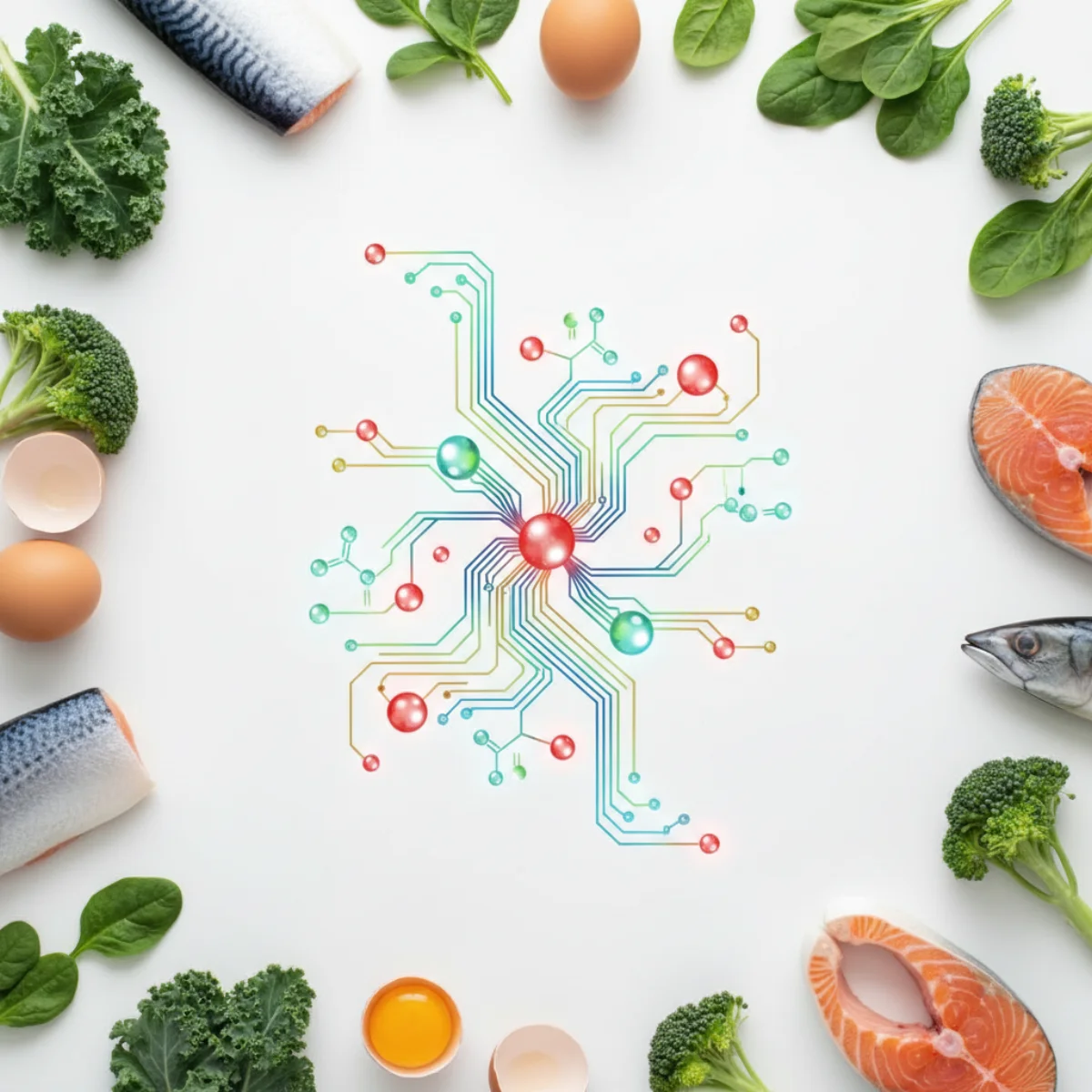
The methylation cycle is one of your body's most important but least understood biochemical processes. It's a series of interconnected reactions that happen in nearly every cell, transferring small chemical units called methyl groups (one carbon plus three hydrogen atoms) to regulate gene expression, produce neurotransmitters, break down hormones, and detoxify harmful compounds. Without a properly functioning methylation cycle, your mood, energy, immune function, and long-term health can suffer. This guide explains how methylation works, why it matters, and how nutrients and lifestyle support this essential pathway.
What Is the Methylation Cycle and How Does It Work?
Methylation is a chemical reaction in which a methyl group (CH₃) is added to another molecule. Your cells perform millions of methylation reactions every second to regulate hundreds of biological processes. The methylation cycle—also called the one-carbon cycle or folate cycle—is the metabolic pathway that generates and recycles these methyl groups for use throughout the body.
At the heart of the methylation cycle is an amino acid called homocysteine. Homocysteine sits at a critical junction: it can either receive a methyl group (becoming the amino acid methionine) or be converted into glutathione, a master antioxidant. If methylation is blocked or slow, homocysteine accumulates, and both methyl-group availability and antioxidant production suffer.
The cycle begins with methionine, an essential amino acid you get from protein-rich foods. Methionine is converted into S-adenosylmethionine (SAM), the body's primary methyl donor—a molecule packed with methyl groups ready to be transferred. SAM donates its methyl group to hundreds of target molecules, becoming S-adenosylhomocysteine (SAH), which is then broken down into homocysteine. From there, homocysteine has two main fates: it can be remethylated back into methionine (regenerating SAM), or it can enter a side pathway that produces glutathione.
This cycle depends on several critical nutrients acting as cofactors and coenzymes. Folate (vitamin B9) and vitamin B12 are the two most essential: folate provides the one-carbon unit needed to remethylate homocysteine, and B12 is the cofactor for the enzyme that catalyzes this reaction. Choline and betaine are also major methyl donors, as is vitamin B6, which helps process homocysteine down alternative pathways. Without adequate amounts of these nutrients, the cycle slows or stalls, and homocysteine rises.
Key Nutrients That Fuel the Methylation Cycle
Several nutrients are absolutely essential for methylation to proceed efficiently. A deficiency in any of them can compromise the entire cycle.
Folate (Vitamin B9)
Folate is perhaps the most critical nutrient in the methylation cycle. It exists in many dietary forms and is converted by your body into tetrahydrofolate (THF), the active form that carries one-carbon units. These carbon units are essential for remethylating homocysteine back into methionine. Methyl-folate (5-methyltetrahydrofolate, or MTHF), is the form closest to the final active cofactor in the cycle, making it bioavailable even for people with genetic variations in folate metabolism. Foods rich in folate include dark leafy greens, legumes, and asparagus. The recommended dietary allowance (RDA) is 400 mcg daily for adults, though some functional practitioners recommend higher amounts for those with methylation challenges.
Vitamin B12 (Cobalamin)
B12 is the essential cofactor for methionine synthase, the enzyme that remethylates homocysteine back to methionine. Without adequate B12, this critical step cannot proceed efficiently, causing homocysteine to accumulate and the methylation cycle to slow. B12 is found primarily in animal products—meat, fish, dairy, and eggs. The RDA is 2.4 mcg daily for adults, though older adults and people taking metformin may need higher amounts or supplemental forms. Methylcobalamin is the form already active in the methyl-donation pathway, while cyanocobalamin (the most common supplement form) must first be converted by the body. Both are effective, though methylcobalamin may have a slight advantage for methylation support.
Choline and Betaine
Choline is an essential nutrient (your body can make some, but not always enough) that serves as a major methyl donor in the cycle. Your body also converts choline into betaine, which is another potent methyl donor. Together, they provide an alternative pathway to remethylate homocysteine back to methionine, bypassing the folate-B12 route. This is especially important if someone has a genetic variation affecting folate metabolism. Choline is found in eggs, fish, poultry, and cruciferous vegetables. The adequate intake (AI) is 550 mg daily for adult men and 425 mg for adult women.
Vitamin B6 (Pyridoxal-5-Phosphate)
B6 is a cofactor for cystathionine beta-synthase (CBS), an enzyme that helps convert homocysteine into cystathionine on the way to producing glutathione and taurine. It also plays a role in the conversion of serine to glycine, another one-carbon donor. While B6 is found in chickpeas, salmon, bananas, and potatoes, supplemental forms should be pyridoxal-5-phosphate (P5P), the active form, rather than pyridoxine. The RDA is 1.3–1.7 mg daily for adults.
Genetic Variations That Affect Methylation
Your DNA contains genes that encode the enzymes responsible for methylation reactions. Genetic variations in these genes can slow enzyme activity, making some people naturally slower or faster methylators.
MTHFR Variants
The MTHFR gene encodes methylenetetrahydrofolate reductase, an enzyme that converts folate into the form (MTHF) ready to donate one-carbon units. Common variants—especially C677T and A1298C—reduce enzyme activity. People with these variants are often less able to convert regular dietary or supplemental folate into active forms, which is why they may benefit from methyl-folate supplementation. Approximately 30–40% of people carry at least one copy of the C677T variant. However, having a variant does not automatically mean you have poor methylation; many people with MTHFR variants have normal homocysteine and function well.
COMT Variants
The COMT gene encodes catechol-O-methyltransferase, an enzyme that uses SAM (the methyl donor) to methylate and break down neurotransmitters and hormones like dopamine, epinephrine, and estrogen. A common variant (Val158Met) creates a faster or slower COMT enzyme. Faster COMT variants consume methyl groups quickly, potentially lowering dopamine and norepinephrine (associated with focus and mood). Slower variants may accumulate neurotransmitters, potentially causing anxiety or overstimulation. Neither is