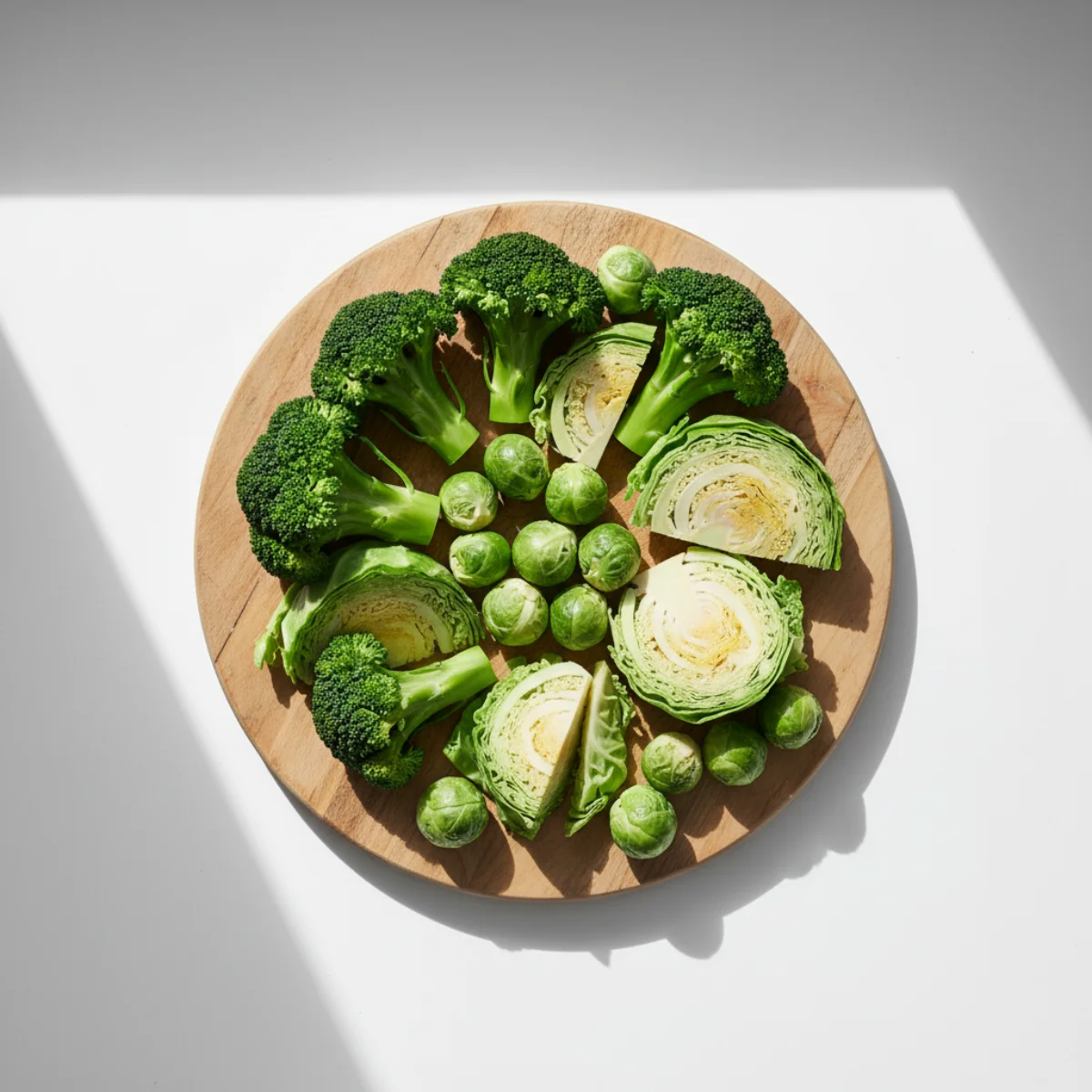
DIM—diindolylmethane—is a compound formed when you digest cruciferous vegetables like broccoli, Brussels sprouts, and cabbage. It has gained attention in supplement form because of its role in how the body processes estrogen, a key hormone affecting both men and women. While DIM supplements are often marketed for hormone balance and hormonal symptom support, the scientific picture is nuanced. This article reviews what we know about DIM's mechanisms, the evidence behind its claimed benefits, and how to use it safely and effectively.
What DIM Is and How It Works
DIM is a phytochemical—a plant-derived compound—created when you chew or digest cruciferous vegetables. It does not exist in raw plants; instead, it forms from the breakdown of glucosinolates, particularly a compound called glucobrassicin. When these plant fibers are processed in the digestive tract, they yield both DIM and another important metabolite called indole-3-carbinol (I3C), which itself converts to DIM in the acidic stomach environment.
Once absorbed, DIM is thought to exert its effects primarily through modulation of estrogen metabolism. The body breaks down estrogen through a multi-step detoxification process called Phase I and Phase II metabolism. Phase II pathways use enzyme systems—particularly the UDP-glucuronosyltransferases (UGTs) and sulfotransferases (SULTs)—to conjugate estrogen metabolites so they can be excreted. Preliminary research suggests DIM may favor pathways that produce 2-hydroxyestrone (a "favorable" estrogen metabolite) over 16-hydroxyestrone, though evidence in humans remains limited. This potential shift in the estrogen metabolite ratio is the theoretical basis for many of DIM's claimed benefits.
It is important to note that DIM itself is not estrogenic; rather, it appears to influence how the body handles estrogen already present. This distinction is crucial for understanding both its potential utility and its safety profile.
Evidence by Outcome
Hormonal Acne and Skin Health
Several small, open-label or pilot trials have examined DIM in people with hormonal acne. A 2013 study in the Journal of the American Academy of Dermatology found that women taking 100–200 mg of DIM daily for 30 days reported improvements in acne lesion count. However, these trials often lack placebo controls and are underpowered. While dermatologists and naturopathic practitioners cite DIM anecdotally for hormone-driven breakouts, robust randomized controlled evidence is lacking.
Menstrual Cycle Regularity and PMS Symptoms
Women experiencing irregular cycles or premenstrual symptoms have been studied in open-label trials using DIM supplementation, with some reporting improvements in cycle length, flow, and mood-related symptoms like irritability. A 2014 small trial suggested DIM may help support menstrual regularity, but again, blinded placebo-controlled replication is needed. Claims about PMS symptom reduction are largely anecdotal and mechanistically plausible rather than definitively proven.
Breast Health and Estrogen Exposure
Animal and in-vitro studies suggest that favorable shifts in estrogen metabolism (toward 2-hydroxyestrone) might reduce lifetime estrogen exposure in breast tissue. One human study found that women taking I3C (which converts to DIM) showed altered urinary estrogen metabolite ratios. However, direct evidence that DIM supplements reduce breast disease risk or support breast tissue health in humans is not yet available. Any claims in this domain should be understood as preliminary and mechanistically informed rather than clinically proven.
Hormonal Balance in Men
Less research exists on DIM in men, though some small studies suggest it may support healthy testosterone levels and prostate health through estrogen pathway modulation. These findings are speculative, and high-quality trials are absent.
Detoxification and General Wellness
DIM is sometimes promoted as a "detoxifier" that supports Phase II liver function broadly. While it does interact with estrogen-metabolizing enzymes, evidence that DIM meaningfully supports overall detoxification or liver health—beyond estrogen metabolism—is limited.
Bioavailability and Dose Forms
A critical factor in DIM supplement efficacy is bioavailability—how much reaches the bloodstream and tissues where it exerts effects. Plain DIM powder has poor absorption because it is lipophilic (fat-soluble) and is poorly soluble in the aqueous intestinal environment. This has driven manufacturers to develop improved formulations.
Standard forms include simple powder capsules, which typically achieve modest absorption. Micronized DIM increases surface area and absorption somewhat. More significantly, lipid-based delivery systems—such as microemulsions, liposomal forms, or DIM combined with rice bran oil or other lipids—improve bioavailability substantially. Studies comparing a standard DIM capsule to a lipid-enhanced version found 2–5 fold higher blood levels with the latter.
For practical purposes, look for DIM products labeled as "enhanced absorption," "microemulsion," or "with lipid delivery" if maximum bioavailability is the goal. Taking DIM with a meal containing fat also improves absorption. The typical supplement dose range in trials is 100–200 mg daily, though some formulations recommend higher amounts.
Safety and Interactions
DIM has a favorable safety profile in most populations. Trials and post-market surveillance data show it is well-tolerated. Common side effects, when reported, are mild and transient: nausea, headache, or gastrointestinal upset, usually in the first few days of use. These often resolve with continued dosing or taking DIM with food.
Contraindications and cautions:
- Pregnancy and nursing: DIM should be avoided during pregnancy and lactation due to insufficient safety data and its effects on estrogen metabolism.
- Hormone-sensitive conditions: People with a personal or family history of hormone-sensitive cancers (breast, ovarian, uterine, prostate) should consult their oncologist or primary care provider before using DIM, despite mechanistic plausibility for benefit.
- Hormone therapy interactions: DIM may theoretically reduce the effectiveness of birth control pills or hormone replacement therapy by promoting estrogen clearance. People taking hormonal contraceptives or HRT should discuss DIM with their prescriber.
- Estrogen-dependent disorders: Women with endometriosis or uterine fibroids (which are estrogen-responsive) should seek professional guidance, as DIM's net effect in these conditions is unclear.
- Drug interactions: DIM is metabolized by liver cytochrome P450 enzymes (CYP3A4, CYP2C19). While significant interactions are rare, people taking drugs with narrow therapeutic windows (certain anticoagulants, immunosuppressants) should mention DIM to their pharmacist.
DIM does not appear to accumulate in tissues and has a short half-life (1–2 hours in blood), meaning missed doses do not require compensation and chronic toxicity is not expected.
Who Should Consider DIM
Potentially suitable:
- Women with mild to moderate hormonal acne interested in a natural adjunct to skincare.
- Those with irregular or heavy menstrual cycles seeking hormone support (with professional guidance).
- People wanting to eat more cruciferous vegetables but interested in concentrated supplemental support.
- Athletes and fitness enthusiasts interested in hormone optimization.
- Women in perimenopause seeking general hormonal balance (though evidence for menopausal symptoms specifically is weak).
Not suitable or requiring medical clearance:
- Pregnant or nursing individuals.
- Those on hormonal contraceptives or HRT without prescriber approval.
- People with a history of hormone-sensitive cancer.
- Individuals with active endometriosis, fibroids, or PCOS should consult their gynecologist first.
Dosing and Duration
The most common and research-backed dose is 100–200 mg daily, divided into one or two doses. Some protocols use higher amounts (up to 400 mg), but evidence supporting increased efficacy at higher doses is not robust. DIM is fat-soluble, so taking it with a fat-containing meal or snack enhances absorption.
DIM typically takes 1–3 months to produce noticeable effects; do not expect overnight results. Most studies assessed outcomes at 4–12 weeks, making that a reasonable trial period. If no benefit is perceived after 8–12 weeks, continuing use is unlikely to help.
Practical Buying and Use Notes
Purity and third-party testing: Verify that DIM supplements are tested by an independent lab (USP, NSF, or ConsumerLab) for potency and contaminants. Some products contain fillers or impurities that reduce efficacy.
Delivery system: As noted, lipid-enhanced or microemulsion forms are superior to plain powder for absorption. If a product does not specify enhanced bioavailability, it is likely less effective.
Storage: DIM is stable at room temperature in a dry place, though some manufacturers recommend refrigeration. Check the label.
Stacking with I3C: Some people combine DIM with indole-3-carbinol (I3C), the parent compound from which DIM forms. I3C itself is absorbed poorly and requires an acidic environment to convert to DIM, so supplementing with both in the same dose may be redundant. If considering this strategy, seek guidance from a practitioner versed in botanicals.
Combining with other supplements: DIM is commonly used alongside other hormone-supportive herbs (chasteberry, vitex, spearmint tea for antiandrogen effects). No major interactions are documented, but individual responses vary. Introduce one new supplement at a time to isolate any effects.
When to Consult a Healthcare Provider
Before starting DIM, discuss it with your doctor if you:
- Are taking hormone-related medications (birth control, HRT, tamoxifen).
- Have abnormal menstrual bleeding or changes in bleeding patterns.
- Are trying to conceive or suspect pregnancy.
- Have a personal or family history of breast, ovarian, or other hormone-sensitive cancers.
- Have active endometriosis, uterine fibroids, or PCOS.
- Take medications metabolized by liver enzymes (check with your pharmacist).
DIM is a supplement, not a medical treatment, and should be viewed as a potential support for hormone balance rather than a stand-alone solution for hormonal disorders. A qualified clinician—whether conventional or integrative—can help determine if DIM is right for your individual situation and monitor progress.