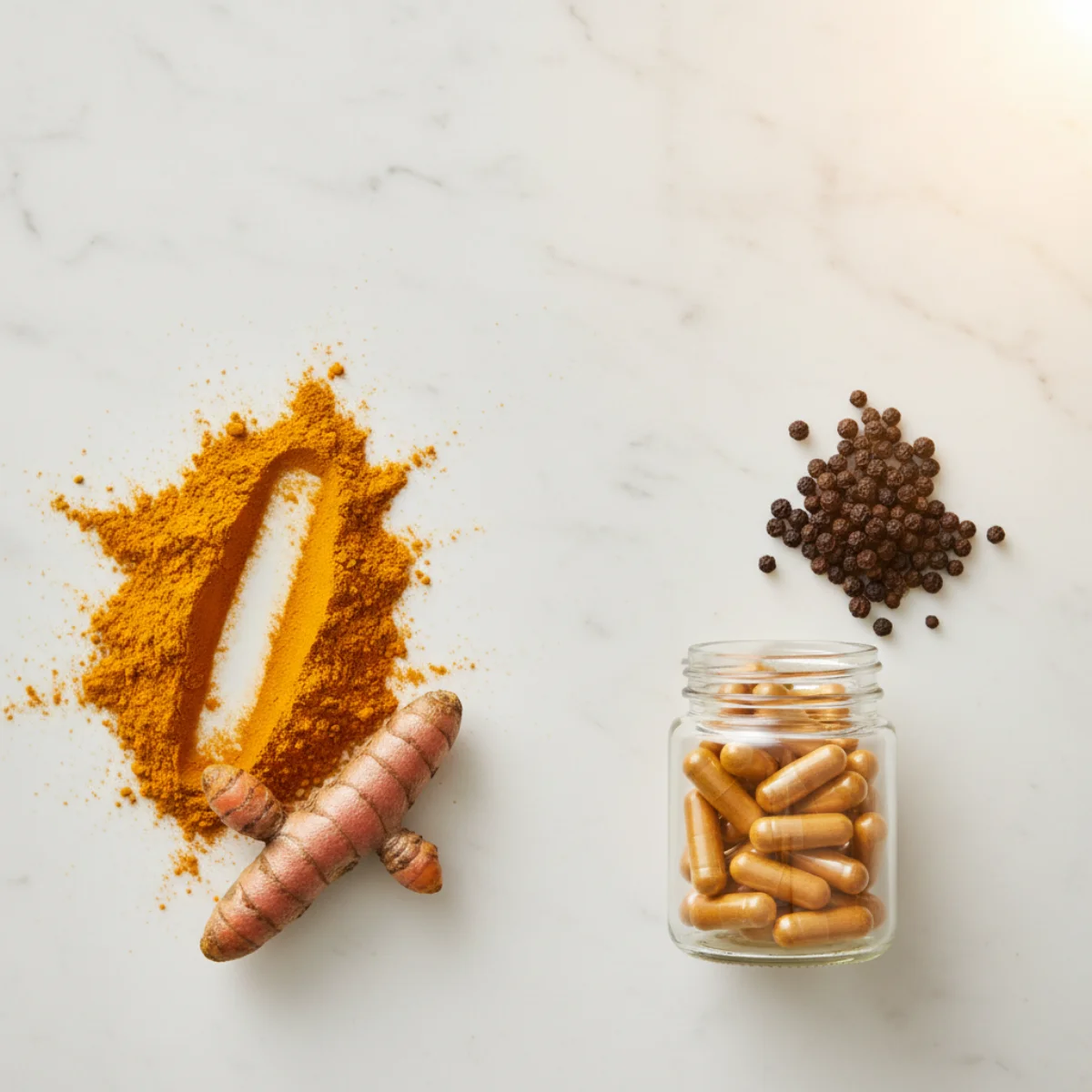
Curcumin vs Turmeric: What's the Difference
Turmeric is a spice containing curcumin, its active compound. Learn how they differ in potency, bioavailability, and which form works best for your health goals.
By dietarysupplement.ai·Article
Turmeric and curcumin are often used interchangeably, but they're not the same thing—and the difference matters if you want consistent results. Turmeric is a golden spice from the rhizome of Curcuma longa that has been used in traditional medicine for centuries. Curcumin is the single bioactive compound responsible for much of turmeric's health-supporting properties, but it makes up only 2–8% of whole turmeric powder by weight. Understanding this distinction is essential for choosing whether whole turmeric powder, curcumin extract, or a standardized supplement suits your needs.
What Each Is and How It Works
Turmeric is a dried and ground rhizome (underground stem) that contains hundreds of compounds: curcuminoids (including curcumin, demethoxycurcumin, and bisdemethoxycurcumin), essential oils, polysaccharides, and other plant constituents. When you add turmeric powder to food or take it as a simple extract, you're consuming the whole plant profile. This
Frequently asked questions
How much curcumin is actually in turmeric powder?
Standard turmeric powder contains about 2–8% curcumin by weight. A typical teaspoon (about 3 grams) of ground turmeric provides roughly 60–240 mg of curcumin—much less than a concentrated curcumin supplement. This is why culinary use alone rarely delivers research-level doses.
Why is curcumin so poorly absorbed from the gut?
Curcumin is lipophilic (fat-soluble) and has low aqueous solubility, meaning your digestive tract struggles to dissolve and absorb it. Without enhancement strategies, only 1–3% of ingested curcumin reaches the bloodstream intact. Black pepper (piperine) and fat-based delivery systems dramatically improve absorption.
Will adding black pepper to turmeric really help absorption?
Yes. Piperine, the active alkaloid in black pepper, can enhance curcumin bioavailability by up to 2000% in some studies. A small pinch of black pepper powder with turmeric or curcumin significantly improves blood levels, which is why quality supplements include it.
Can I use turmeric and curcumin together?
Yes, combining whole turmeric powder with a curcumin supplement is safe and may be synergistic. Whole turmeric provides the minor curcuminoids and other plant compounds that concentrated curcumin isolates lack, while the supplement ensures a reliable dose of curcumin itself.
Are there interactions with medications I should know about?
Curcumin supplements may interact with blood thinners (warfarin, dabigatran) and may affect the metabolism of certain medications via cytochrome P450 enzymes. If you take medications regularly or have a bleeding disorder, discuss curcumin supplements with your healthcare provider before starting.
How long does it take to feel the effects?
Turmeric's effects are often subtle and cumulative. Most research on curcumin for joint comfort, antioxidant support, and inflammatory response shows benefits after 4–8 weeks of consistent use, though some people notice changes sooner.
Disclaimer: This article is for informational purposes only and is not medical advice. Always consult a qualified healthcare provider before starting, stopping, or combining supplements. These statements have not been evaluated by the Food and Drug Administration. Supplements are not intended to diagnose, treat, cure, or prevent any disease.