NFL Star's Achilles Tear Spotlights Tendon Recovery Supplements
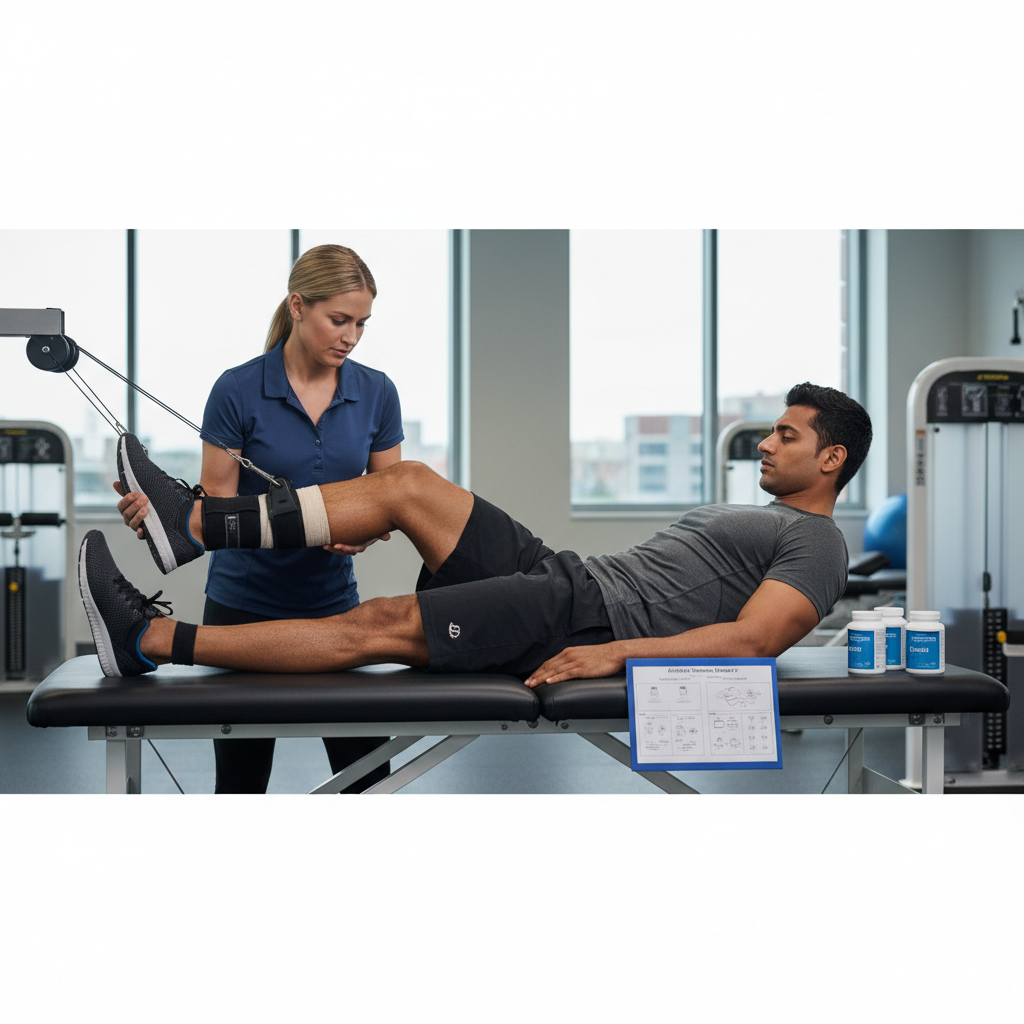
New York Giants defensive lineman Roy Robertson-Harris suffered a torn Achilles tendon during organized team activities in May 2024, according to ESPN. The injury—one of the most catastrophic in professional football—has renewed focus on dietary supplements that may support collagen synthesis, reduce post-injury inflammation, and accelerate the 9–12 month rehabilitation timeline. While no supplement replaces physical therapy or surgical repair, emerging evidence suggests that specific nutrients including hydrolyzed collagen, amino acids, vitamin C, and omega-3 fatty acids may play a meaningful role in tendon remodeling and functional recovery for athletes mounting a comeback.
What happened
Robertson-Harris, a 6'2", 305-pound defensive lineman in his eighth NFL season, tore his Achilles tendon during spring OTAs at the Giants' facility. Per NFL.com, the injury occurred during practice drills and required immediate surgical repair. Achilles tears are among the most severe injuries in football, with typical recovery windows of 12–18 months for elite athletes to return to competitive play.
The timing of the injury—during the offseason preparation phase—means Robertson-Harris faces a grueling rehabilitation period spanning 2024–2025. His case is emblematic of a broader issue in professional sports: athletes and team medical staffs are increasingly exploring evidence-based nutritional strategies to optimize healing alongside standard orthopedic and physiotherapy protocols.
What the research says
Clinical evidence for supplement-assisted tendon repair, while promising, remains mixed. Hydrolyzed collagen (also called collagen peptides) has emerged as a focal point in tendon recovery research. A 2019 controlled trial examined 24 athletes with patellar tendinopathy who received 10 grams of collagen peptides daily for 12 weeks alongside resistance training. Participants showed statistically significant improvements in pain and functional loading compared to placebo. Critically, the collagen group demonstrated enhanced type I collagen cross-linking—a biomarker associated with tendon strength.
Vitamin C (ascorbic acid) is essential for hydroxylation of proline and lysine residues in collagen triple helix formation. Standard recommendations for injured athletes range from 500–1000 mg daily, a dose that exceeds typical dietary intake (75–90 mg RDA). A small 2015 pilot study in 15 athletes with acute soft-tissue injuries found that 500 mg daily vitamin C, paired with standardized mobilization, reduced swelling and pain more rapidly than mobilization alone.
Branched-chain amino acids (BCAAs)—leucine, isoleucine, and valine—support muscle preservation during immobilization, a critical concern in the first 4–8 weeks post-injury when athletes cannot load the injured limb. Research on BCAAs in sports injury is sparse, but leucine specifically upregulates mTOR signaling, promoting protein synthesis in muscle tissue adjacent to the injury site. Most protocols use 5–10 grams of BCAAs daily, often compared to broader BCAA versus essential amino acid supplementation strategies.
Omega-3 fatty acids (EPA and DHA) address post-injury inflammation. A 2020 meta-analysis of 17 trials found that EPA/DHA supplementation (1–2 grams daily combined) modestly but consistently reduced inflammatory markers including TNF-α and IL-6. While no study has specifically tracked Achilles repair outcomes with omega-3s, the anti-inflammatory effect supports tissue remodeling in the early healing phase.
Beyond the headline
Robertson-Harris's injury arrives amid broader acceptance of nutrition-based injury prevention and recovery in elite sports. The NFL, NBA, and professional soccer leagues now employ sports dietitians and supplement protocols as standard medical practice. Unlike the 1990s and early 2000s, when supplements were viewed as peripheral additions, major teams now integrate collagen, BCAAs, and micronutrient testing into injury management pathways.
Achilles tears in NFL defensive linemen are not rare. The position—requiring explosive lateral cuts and weight-bearing on one leg during tackles—creates high shear stress on the Achilles. Isolated Achilles injuries have sidelined players including Marcus Mariota (2017), Delanie Walker (2018), and Jarvis Landry (2022), each requiring 12+ months of recovery. Robertson-Harris's case mirrors these precedents but represents an opportunity to examine whether supplemental nutrient intake accelerates typical healing curves.
The scientific understanding of tendon repair has also shifted. Whereas older literature treated tendons as relatively static structures with minimal metabolic turnover, contemporary tendon biology recognizes rapid collagen remodeling—particularly in the first 12 weeks post-injury. This remodeling phase is when nutrient availability (amino acids, vitamin C, micronutrients) may exert the greatest effect.
What this means for consumers
For athletes or active individuals managing Achilles or other severe tendon injuries, the evidence suggests several targeted actions:
- Collagen supplementation: Doses of 10–20 grams daily of hydrolyzed collagen peptides, taken consistently during the first 3–6 months post-injury, align with the most robust evidence. Timing near meals or with vitamin C may enhance absorption. Discuss this approach with your physician or sports dietitian before starting, as they can evaluate your individual injury severity, surgical protocol, and any medications that might interact.
- Vitamin C dosing: Aim for 500–1000 mg daily (from food and/or supplement) during acute and early-remodeling phases. This exceeds RDA but falls within safe ranges (tolerable upper intake is 2000 mg daily). Citrus, berries, and fortified sources can contribute dietary vitamin C.
- Protein and amino acids: Maintain adequate total protein intake (1.6–2.2 grams per kilogram body weight daily) to preserve muscle mass during immobilization. If eating whole protein is difficult due to pain or immobility, BCAAs (5–10 grams daily) or essential amino acids (EAAs) may be pragmatic interim measures. Ask your athletic trainer about timing relative to your physical therapy sessions.
- Omega-3 fatty acids: A fish oil or algal oil supplement providing 1–2 grams of combined EPA/DHA daily for 2–3 months post-injury may reduce inflammatory cytokines and support early healing phases. Monitor for any gastrointestinal effects or interactions with anticoagulant medications.
- Individual lab testing: Athletes with severe injuries benefit from baseline micronutrient testing (25-hydroxyvitamin D, zinc, iron, B vitamins). Deficiency in any of these impairs collagen cross-linking and immune function. Targeted repletion, if needed, can be integrated into a recovery protocol under professional guidance.
Critically, supplements are adjuncts to—not replacements for—surgical repair, physical therapy, and load progression. The evidence does not support any supplement as a primary driver of healing. Rehabilitation protocols set by orthopedic surgeons and athletic trainers remain the primary determinant of outcome.
What to watch next
Robertson-Harris's return timeline will offer a real-world case study. The Giants will likely announce a targeted return-to-play date in late 2024 or early 2025. Observing whether his recovery tracks earlier (or later) than historical Achilles tear baselines—and what nutrition and supplementation protocols the team deploys—will provide informal evidence for elite-level injury management.
On the research front, larger randomized controlled trials comparing collagen peptide dosing (5 g vs. 10 g vs. 20 g daily) in athletes with acute tendon injuries are needed. Current evidence is built on small samples and heterogeneous injury types. A 100+ athlete trial specifically in Achilles tear recovery would provide far more definitive guidance than the scattered pilot studies available today.