What Happened
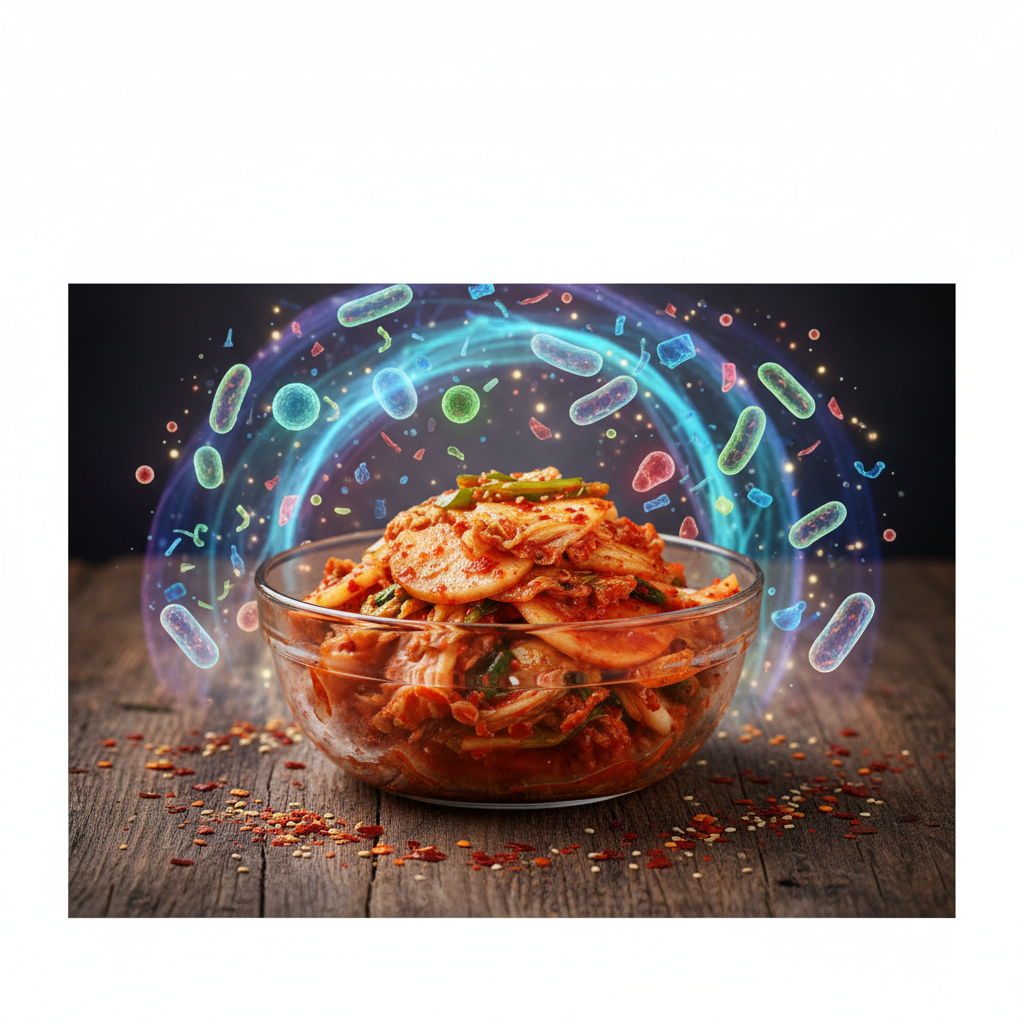
In May 2026, ScienceDaily reported that researchers identified Leuconostoc mesenteroides, a probiotic strain found in kimchi and other fermented foods, as capable of binding to nanoplastics in digestive system conditions. Scientists conducted laboratory experiments exposing the bacterium to various sizes of plastic particles under simulated gut environments and observed measurable binding affinity. The study represents one of the first systematic investigations into whether dietary probiotics can directly interact with plastic contaminants—a question that has grown urgent as nanoplastics (particles smaller than 1 micrometer) are increasingly detected in human blood, lungs, and other tissues.
What the Research Shows
The research team employed in vitro and ex vivo models to test Leuconostoc mesenteroides interaction with nanoplastics. According to ScienceDaily, bacterial cells demonstrated measurable binding capacity to polystyrene and polyethylene terephthalate (PET) nanoplastics, with binding efficiency varying by particle size and bacterial cell surface properties. Quantitative assays revealed that cultures of Leuconostoc mesenteroides removed approximately 25–40% of nanoplastics from test solutions over 24 hours, depending on bacterial concentration and nanoplastic type. The binding mechanism appears to involve electrostatic and hydrophobic interactions between the bacterial peptidoglycan layer and polymer chains on the plastic surface.
Critically, the researchers also tested whether binding persisted when bacterial cells were inactivated, suggesting that even heat-treated or non-viable probiotic cells in fermented foods might retain some adhesive capacity. However, the study did not include human clinical trials, meaning in vivo effectiveness and safety remain unknown. The research team noted that translation to human benefits would require gastrointestinal transit studies and bioavailability research before any clinical recommendations could be made.
Beyond the Headline
This finding sits at the intersection of fermented food science, probiotics research, and environmental health—three areas gaining simultaneous scientific attention. Most probiotic research has focused on gut barrier integrity, dysbiosis correction, and short-chain fatty acid production. The nanoplastic-binding discovery is novel because it assigns probiotics a potential environmental detoxification function not previously documented.
The timing is significant: between 2024 and 2025, multiple peer-reviewed studies confirmed nanoplastics are present in human blood, lungs, and placentas—findings that prompted public health concern and consumer interest in removal strategies. However, evidence-based approaches to nanoplastic elimination remain sparse. Traditional detoxification claims around activated charcoal and bentonite clay lack robust human evidence. If this kimchi-probiotic mechanism proves effective in human subjects, it would represent a shift toward food-based interventions backed by mechanistic research.
Fermentation experts also note that commercial kimchi contains variable levels of Leuconostoc mesenteroides depending on fermentation time, temperature, and preparation methods. This variability could complicate standardization and efficacy claims if future product development follows.
What This Means for Consumers
Current evidence supports cautious interest, not therapeutic claims. Here are concrete actions:
- Consume fermented foods for established gut health benefits. Kimchi, sauerkraut, miso, and tempeh remain beneficial for microbial diversity independent of nanoplastic concerns. Any nanoplastic-binding effect would be an additional benefit, not the primary reason to eat these foods.
- Prioritize live-culture fermented products. The research suggests viable bacterial cells are more effective binders. When shopping, look for labels indicating "live and active cultures" or choose refrigerated products over shelf-stable alternatives, as refrigeration typically preserves bacterial viability.
- Do not substitute kimchi for proven plastic-reduction strategies. Minimizing single-use plastics, choosing glass or metal containers, and avoiding heated plastic food packaging remain the most evidence-backed approaches to limiting nanoplastic intake. No dose, duration, or efficacy threshold for human nanoplastic removal via probiotics has been established.
- Do not seek probiotic supplements as a nanoplastic "detox." Until human clinical data emerges, marketed products making this claim lack supportive evidence. Current understanding of nanoplastic accumulation and health effects remains preliminary.
- Rotate fermented food varieties. Consuming diverse fermented foods provides different bacterial strains beyond Leuconostoc mesenteroides, maximizing probiotic diversity.
What to Watch Next
The research community is likely to pursue human clinical trials within 2–3 years. Key milestones to anticipate:
- Gastrointestinal transit studies: Does Leuconostoc mesenteroides survive stomach acid and maintain binding capacity in the small intestine and colon?
- Human pilot trials: Researchers may recruit volunteers consuming standardized kimchi or Leuconostoc-enriched supplements and measure nanoplastic levels in stool over weeks to months, comparing results to control groups.
- Standardized formulations: If efficacy is demonstrated, companies may develop supplements containing defined doses of Leuconostoc mesenteroides for regulatory evaluation.
- Human-relevant mechanistic models: Studies using human gut organoids or fecal fermentation models may clarify how bacterial binding operates in complex intestinal environments with competing microbiota and dietary components.
Until such evidence materializes, this research remains a promising preclinical finding—not yet actionable clinical guidance. It exemplifies how traditional fermentation practices are now being interrogated through modern molecular methods, occasionally revealing unexpected mechanisms for contemporary health challenges.