Slippery Elm: Mucilage-Rich Herbal Support for Throat & Digestive Comfort
60-Second Summary
Slippery elm (Ulmus rubra) is a North American tree whose inner bark has been used traditionally to soothe irritated mucous membranes in the throat and digestive tract. The bark contains mucilage—a soothing polysaccharide that coats and protects inflamed tissues. While evidence for slippery elm remains preliminary and limited to small studies, it is commonly used to support throat comfort, digestive soothing, and occasional digestive upset. It is generally well-tolerated with minimal side effects, though robust long-term human data is lacking.
What is Slippery Elm?
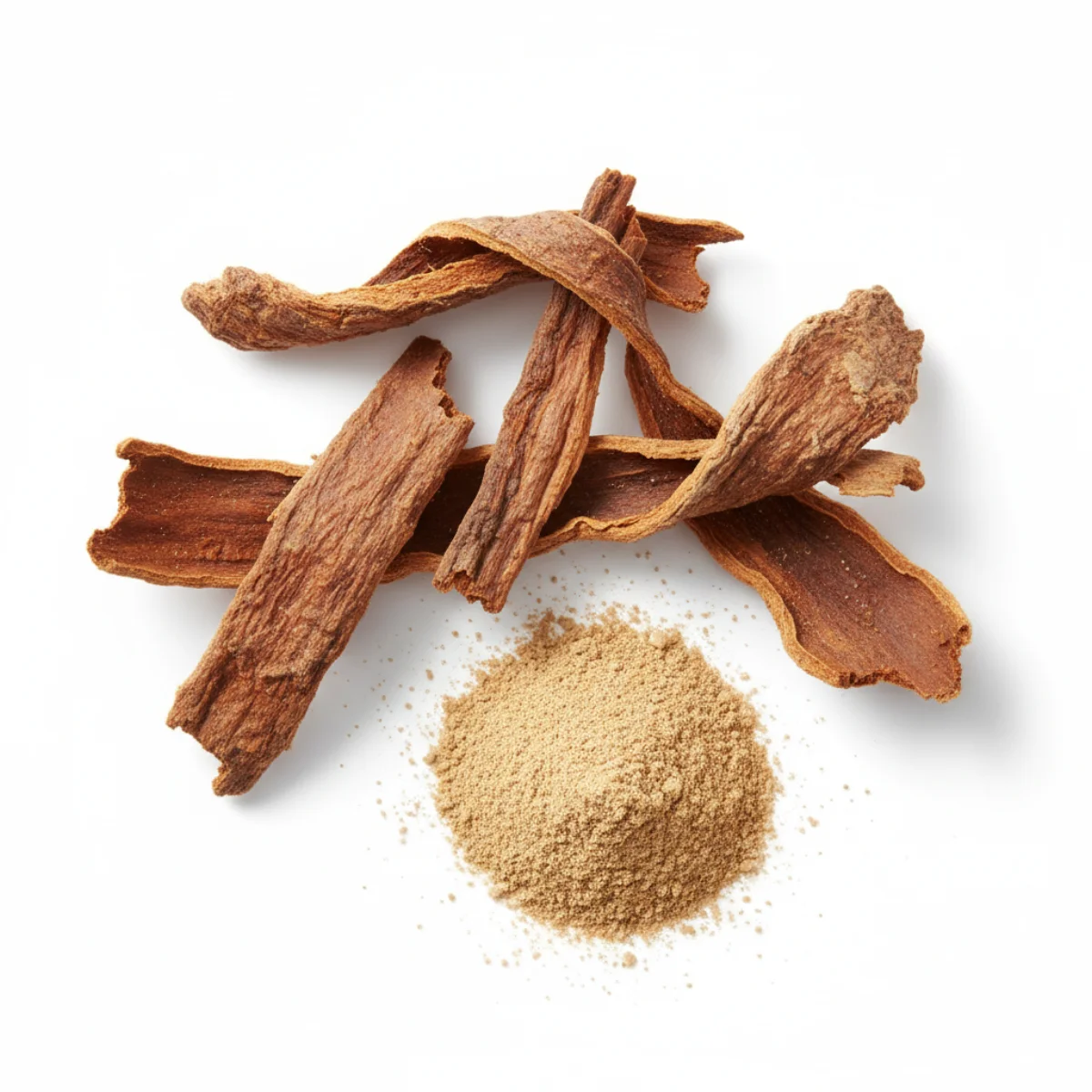
Slippery elm is the inner bark of Ulmus rubra, a deciduous tree native to eastern North America. The bark contains high concentrations of mucilage—a polysaccharide matrix that becomes viscous and gel-like when mixed with water. This mucilaginous quality is the basis for its traditional and contemporary use in herbal medicine.
The primary mechanism by which slippery elm is thought to work involves coating and protecting inflamed or irritated mucous membranes. When ingested, the mucilage is believed to form a protective layer over tissues in the throat and gastrointestinal tract, potentially reducing irritation and supporting comfort during inflammatory states. The bark also contains tannins and other plant compounds that may contribute antioxidant and astringent effects, though research on these additional constituents remains limited.
Slippery elm bark is typically harvested, dried, and ground into a fine powder that is then formed into capsules, lozenges, or dissolved into drinks. The powder does not require digestion to exert its soothing effects; rather, it works topically as it passes through the digestive and respiratory tracts.
Evidence-based benefits of Slippery Elm
Evidence supporting slippery elm is modest and primarily observational or from small, open-label studies. The strongest traditional indication is soothing of throat irritation and cough, though rigorous controlled trials are scarce. Below are the main areas in which slippery elm is used and studied.
Throat Soothing & Cough Support
Slippery elm lozenges are widely used in folk practice and by herbalists to soothe sore throats and support cough. The mucilage is thought to coat the throat and reduce irritation. Small studies and patient reports suggest potential benefit, but no large randomized controlled trials have established efficacy in humans. Many throat lozenges combine slippery elm with other botanicals such as honey or echinacea.
Digestive Tract Comfort & IBS Support
Traditional use of slippery elm extends to supporting digestive comfort, particularly in cases of occasional gastric irritation or inflammatory conditions such as irritable bowel syndrome (IBS). The soothing mucilage may support the integrity of the intestinal lining, though mechanistic studies in humans remain preliminary. Some herbalists recommend it as part of a broader digestive support protocol. Evidence is mostly anecdotal and derived from small uncontrolled studies.
Mouth & Esophageal Irritation
Slippery elm may be used to support comfort in the mouth and esophagus, particularly in cases of minor irritation or after dental work. The topical soothing action of the mucilage is thought to help, but clinical evidence in this area is limited. It is often used as an adjunctive measure rather than as a primary remedy.
General Mucous Membrane Support
Because of its mucilage content, slippery elm is sometimes used in herbal formulations aimed at supporting the health and integrity of mucous membranes throughout the body. This reflects traditional herbalism rather than robust clinical evidence. Practitioners may recommend it in combination with other demulcent or anti-inflammatory botanicals.
Supplement forms of Slippery Elm, compared
Slippery elm bark powder is the primary commercial form, available in capsules, as loose powder for mixing into beverages, and in throat lozenges (often combined with other ingredients such as licorice, honey, or slippery elm extract). All forms derive from the same inner bark and operate via the same mucilage mechanism, with choice depending on personal preference and intended use (capsules for convenience, lozenges for throat-targeted delivery, powder for cost and flexibility).
How much Slippery Elm should you take?
There is no established RDA for slippery elm, as it is an herbal supplement rather than an essential nutrient. Typical supplemental doses in clinical studies and commercial products have ranged from 1.5–3 grams per day in divided doses, though some formulations use higher amounts. Throat lozenges typically contain 100–500 mg per lozenge and may be used as directed on the label.
- General digestive support: 1.5–3 g per day in capsules or powder, divided into 2–3 doses.
- Throat lozenges: 1–2 lozenges every 2–4 hours as needed for throat comfort, up to 6–8 per day depending on product.
- Powder form: 1 teaspoon (approx. 5 g) mixed into warm water 2–3 times daily, consumed slowly to allow coating of the throat.
- No established upper limit: Long-term safe dosing has not been rigorously defined in controlled trials.
Slippery elm powder should ideally be taken on an empty stomach or at least 2 hours apart from other medications or supplements, as the mucilage may interfere with absorption of other substances. For throat benefit, lozenges should be dissolved slowly rather than chewed. If using powdered form, mix with warm (not hot) water and consume within a few minutes to preserve the mucilage structure.
Safety, side effects, and risks
Slippery elm has a long history of traditional use and is generally regarded as safe and well-tolerated in most adults. No major serious adverse events have been reported in the medical literature, and side effects are uncommon and typically mild. However, long-term controlled safety data in humans is limited, and certain populations should use caution.
Common Side Effects
Minor gastrointestinal effects such as mild nausea, constipation, or bloating have been reported occasionally, particularly when taken in high doses or on an empty stomach. These effects are typically mild and self-limiting. Some individuals may experience minor skin itching or rash if allergic to tree bark compounds, though true allergy is rare.
Serious Risks (Rare)
Contamination of slippery elm products with the fungus Ophiostoma ulmi (Dutch elm disease) has been a theoretical concern, though actual documented cases of illness are extremely rare. High-quality suppliers test for this contamination. Aspiration risk may be a theoretical concern in individuals with severe swallowing difficulties, as the mucilage could coat the airway, though no cases have been widely reported.
Pregnancy & Lactation
Data on slippery elm safety in pregnancy and lactation is very limited. While it is used traditionally by some herbalists during pregnancy as a demulcent, formal safety studies are lacking. Pregnant or nursing women should consult a healthcare provider before using slippery elm, particularly in high doses.
Important Safety Note
Talk to a clinician if you have difficulty swallowing, severe gastrointestinal conditions (such as inflammatory bowel disease requiring medical management), or are taking medications that require precise timing of absorption. Although slippery elm is generally gentle, it is a botanical substance and not appropriate for all individuals or all health states.
Drug and nutrient interactions
- Oral medications (general): The mucilage in slippery elm may coat the digestive tract and potentially reduce absorption of other medications. Separate doses of slippery elm from other oral medications by at least 2 hours.
- Diabetes medications: Slippery elm is sometimes combined with other botanicals for blood sugar support, but it has not been shown to significantly affect blood glucose on its own. Monitor blood sugar if combining with diabetes medications or other blood-sugar-lowering supplements.
- Lithium: Any substance that reduces medication absorption may indirectly affect lithium levels; maintain consistent dosing and separation of timing.
- Digestive enzyme supplements: Taking slippery elm at the same time as digestive enzymes may reduce enzyme efficacy, as the mucilage can coat the GI tract before enzymes act. Space doses 1–2 hours apart.
- Iron supplements: The tannins and mucilage in slippery elm may reduce iron absorption. Take iron supplements at least 2 hours away from slippery elm.
- Antacids: Simultaneous use of antacids and slippery elm may alter the protective coating effect; space doses 2 hours apart for optimal effect.
For a comprehensive check of potential interactions with your specific medications and supplements, consult the interaction checker tool or speak with a pharmacist.
Who might benefit — and who shouldn't self-supplement without guidance
| Most Likely to Benefit from Supplementing | Use with Caution or Seek Medical Guidance First |
|---|---|
| People with occasional sore throat or mild throat irritation seeking botanical soothing support. | Individuals with severe swallowing difficulties or aspiration risk; the mucilage may coat the airway. |
| Those with mild, occasional digestive discomfort or seeking gentle mucous membrane support. | People with diagnosed inflammatory bowel disease (Crohn's, ulcerative colitis); medical supervision is advised. |
| Individuals looking for a traditional herbal throat lozenge as an adjunct during cold or flu season. | Pregnant or nursing women; data is insufficient to establish safety in these populations. |
| Herbalism practitioners and those using slippery elm as part of a broader digestive or respiratory protocol. | People taking medications that require precise timing or absorption; slippery elm may interfere. |
| Those seeking a well-tolerated, gentle botanical with minimal reported side effects. | Individuals with known allergies to elm tree bark or products; true allergy is rare but possible. |
Frequently asked questions
Is slippery elm safe to take daily for months or years?
Slippery elm has a long history of traditional use and is generally well-tolerated, but long-term human safety data from controlled studies is limited. Many people use it for extended periods without reported harm, though it is wise to consult a healthcare provider if you plan long-term daily use, particularly at higher doses.
Can I take slippery elm with my medications?
Slippery elm may reduce the absorption of other medications because the mucilage coats the digestive tract. Separate slippery elm from other oral medications by at least 2 hours, and consult your pharmacist or doctor if you take lithium, diabetes medications, or iron supplements.
How long does it take to feel the effects of slippery elm?
For throat soothing, lozenges may provide comfort within minutes to hours as the mucilage coats irritated tissues. For digestive support, effects may take days to weeks of consistent use, as with most herbal remedies. Individual response varies, and some people may not notice a clear benefit.
Is slippery elm the same as licorice root or marshmallow root?
All three are demulcent botanicals used to soothe inflamed mucous membranes, but they are distinct plants with slightly different mucilage profiles and tannin content. Some herbalists use them interchangeably or in combination; the choice often depends on individual tolerance and the specific condition being addressed.
Can slippery elm help with IBS or inflammatory bowel disease?
Slippery elm is used traditionally for digestive comfort and is promoted for IBS, but evidence is preliminary and mostly anecdotal. For IBD (Crohn's or ulcerative colitis), medical supervision is essential; slippery elm should not replace evidence-based medical treatment.
What is the difference between slippery elm powder, capsules, and lozenges?
All forms contain the same active mucilage from the inner bark. Powder offers flexibility and lower cost but requires mixing; capsules are convenient and portable; lozenges are targeted for throat comfort and often combined with other ingredients. Choose based on your intended use and preference.
Does slippery elm interact with probiotics or digestive enzymes?
Slippery elm does not directly inhibit probiotics, but the mucilage may coat the digestive tract and reduce enzyme efficacy if taken simultaneously. Space digestive enzyme doses 1–2 hours away from slippery elm for optimal benefit.
Related ingredients
Digestive Enzymes
Related ingredient — see the Digestive Enzymes reference page.
Echinacea
Related ingredient — see the Echinacea reference page.
Chamomile
Related ingredient — see the Chamomile reference page.
Bone Broth Protein
Related ingredient — see the Bone Broth Protein reference page.
Disclaimer: This information is for educational purposes only and should not replace medical advice. Always consult a qualified healthcare provider before starting any supplement, especially if you have a medical condition, are pregnant, or take prescription medications. These statements have not been evaluated by the Food and Drug Administration. This product is not intended to diagnose, treat, cure, or prevent any disease.