Sea Moss (Irish Moss): Iodine-Rich Seaweed for Thyroid & Mineral Support
60-Second Summary
Sea moss, also known as Chondrus crispus or Irish moss, is a nutrient-dense red seaweed harvested from Atlantic coastal waters. It is traditionally used as a whole-food source of iodine, minerals, and polysaccharides to support thyroid function, digestive health, and general nutritional status. While sea moss is trending in wellness circles, robust human clinical evidence remains limited; most benefits are inferred from its mineral composition and preliminary in vitro or animal studies.
What is Sea Moss?
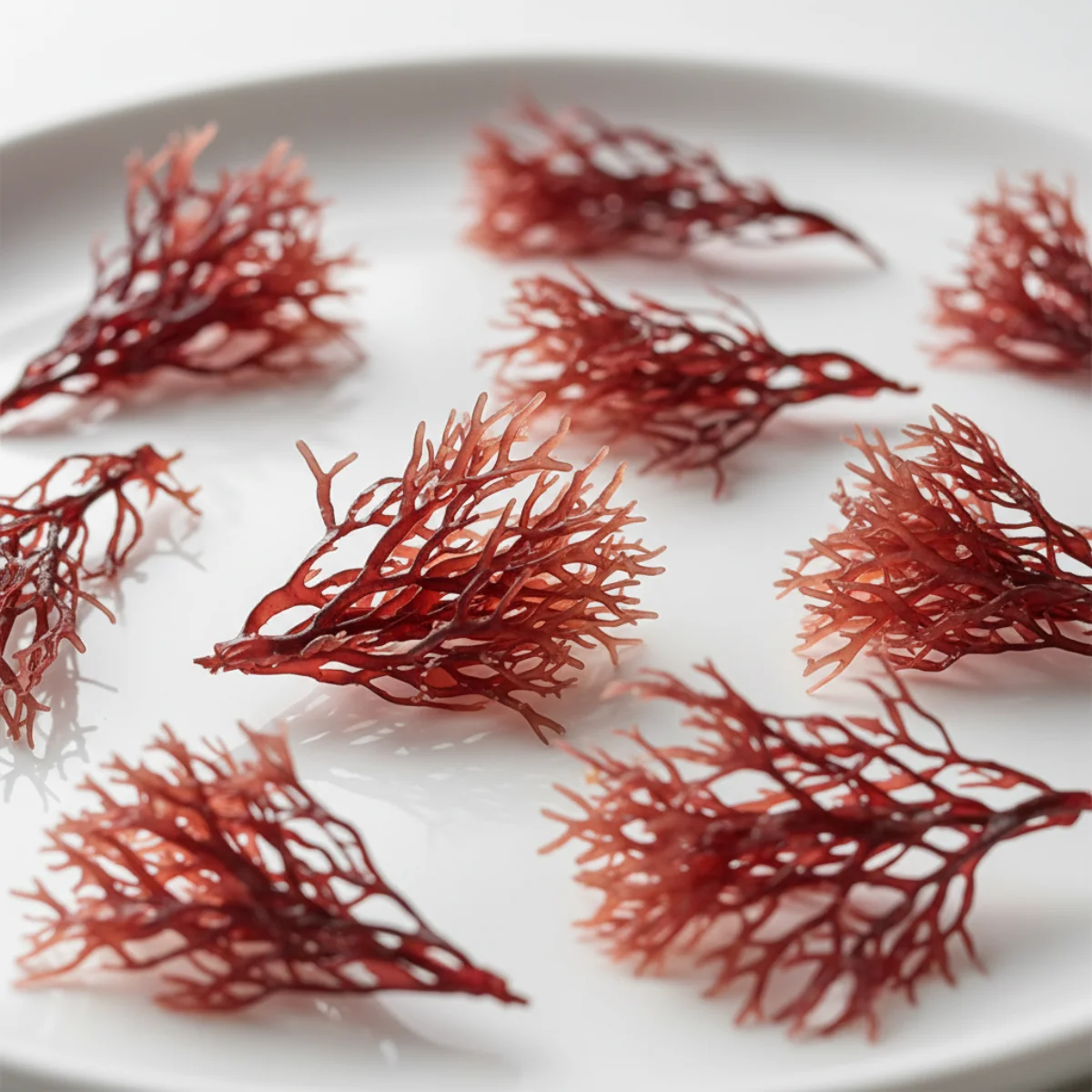
Sea moss (Chondrus crispus) is a red macroalgae species native to the rocky Atlantic coasts of Europe and North America, commonly harvested and dried for supplement use. It belongs to the Rhodophyceae class and contains naturally high concentrations of iodine, potassium, calcium, magnesium, and selenium, along with trace minerals and bioactive polysaccharides called carrageenans.
In traditional Irish and Caribbean folk medicine, sea moss has been consumed as a mineral-rich food and general tonic for centuries. When dried and powdered or prepared as a gel (by soaking and blending), it becomes bioavailable as a whole-food supplement. The iodine content varies depending on water composition and harvest location, typically ranging from 400–8,000 μg per gram of dried seaweed—a significant quantity that can easily exceed recommended daily intake when supplemented.
Sea moss is also sold under the trade name Eucheuma cottonii in some regions, though that species is distinct; the term "Irish moss" typically refers to Chondrus crispus. The supplement is often marketed as a vegan source of trace minerals and as a prebiotic due to its carrageenan polysaccharides, which may support gut microbiota.
Evidence-based benefits of Sea Moss
Sea moss is studied primarily for its mineral and polysaccharide content rather than for specific isolated compounds. Most proposed benefits rest on its nutritional profile and a small body of preliminary research; large-scale randomized controlled trials in humans are lacking.
Thyroid & Iodine Status Support
Sea moss contains substantial iodine, which is essential for thyroid hormone synthesis and metabolic regulation. For individuals with mild iodine inadequacy, sea moss may help restore iodine status; however, those with existing thyroid disease or on levothyroxine should exercise caution, as excess iodine can trigger thyroid dysfunction. Evidence is primarily nutritional-biochemical rather than from clinical trials.
Mineral & Trace Element Intake
The seaweed supplies potassium, calcium, magnesium, and selenium—minerals involved in bone health, nervous function, and antioxidant defense. Animal and in vitro studies suggest these minerals support various physiological processes, though human supplementation trials are sparse. Sea moss may be beneficial as a mineral-dense food for those following restrictive diets or seeking whole-food mineral sources.
Digestive & Prebiotic Function
Carrageenans in sea moss are polysaccharides that may act as prebiotics, selectively promoting beneficial gut bacteria. Some animal studies hint at improved gut barrier function and reduced inflammation; however, carrageenan itself is controversial—some in vitro evidence suggests it may promote intestinal inflammation at high doses, though food-grade carrageenan used in supplements is generally recognized as safe in normal amounts. Human prebiotic studies with sea moss are limited.
Skin & Connective Tissue Health
Sea moss contains amino acids and minerals that support collagen synthesis. Preliminary research suggests iodine and trace elements may support skin elasticity and wound healing, but robust human trials comparing sea moss supplementation to placebo are absent. Claims about "glowing skin" are largely anecdotal.
General Immune & Antioxidant Support
The polysaccharides and mineral content (especially selenium and magnesium) may support general immune function and reduce oxidative stress. Evidence is mechanistic and preliminary; no large human trials demonstrate clinically meaningful immune benefits from sea moss supplementation alone.
Supplement forms of Sea Moss, compared
Sea moss is most commonly sold as dried whole seaweed (flakes or powder), raw gel (soaked and blended), encapsulated powder, or as an ingredient in blended supplement formulas. The bioavailability of minerals and iodine may vary slightly depending on whether the seaweed is raw, sun-dried, or processed; gel and powder forms are equivalent in nutritional profile, with form choice mainly a matter of convenience and taste preference.
How much Sea Moss should you take?
A typical supplemental dose of sea moss ranges from 1–4 grams of dried powder daily, or approximately 1–2 tablespoons of prepared gel. Iodine intake from sea moss is highly variable and often not disclosed; because iodine content can be substantial (400–8,000 μg per gram depending on source), unsupervised daily supplementation risks exceeding the Tolerable Upper Intake Level (UL) of 1,100 μg/day for adults.
- General wellness dose: 1–2 grams (or ~1 tablespoon gel) daily, mixed into smoothies, soups, or water.
- Iodine-conscious dosing: limit to 2–3 grams daily if iodine status is a concern; consider testing baseline iodine or TSH before prolonged use.
- No official RDA for sea moss itself; iodine RDA is 150 μg/day for adults, UL 1,100 μg/day.
- Pregnant and lactating individuals: sea moss may contribute excess iodine; medical guidance is advised.
Sea moss can be consumed with or without food. Some users take it in the morning mixed into a beverage for convenience. If using sea moss alongside other iodine sources (iodized salt, dairy, eggs, other seaweeds), monitor total iodine intake and consider periodic TSH testing. Do not stack with high-dose iodine supplements or other kelp/seaweed products without medical oversight.
Safety, side effects, and risks
Sea moss is generally recognized as safe when consumed in food amounts; however, its high iodine content introduces safety considerations, particularly for those with thyroid conditions or iodine sensitivity. Allergic reactions are rare but possible in individuals sensitive to iodine or shellfish-cross-reactive proteins.
Side Effects & GI Tolerance
Mild digestive upset, nausea, or appetite suppression may occur, especially at higher doses or in sensitive individuals. Because sea moss contains carrageenan, some people report bloating or loose stools. Start with a small dose and increase gradually to assess tolerance.
Iodine Excess & Thyroid Risk
Excessive iodine intake (above 1,100 μg/day) can trigger iodine-induced hyperthyroidism, thyroiditis, or hypothyroidism in susceptible individuals, particularly those with underlying autoimmune thyroid disease (Hashimoto's, Graves'). Individuals on levothyroxine or with a history of thyroid dysfunction should consult a clinician before supplementing with sea moss.
Allergic Reactions & Iodine Sensitivity
Iodine allergy (distinct from shellfish allergy, though both may co-occur) can manifest as rash, itching, or anaphylaxis in severe cases. Discontinue and seek immediate care if hives, breathing difficulty, or severe swelling develop.
Pregnancy & Lactation
Although iodine is essential during pregnancy and lactation, excess iodine may impair fetal thyroid development. Pregnant and nursing individuals should discuss sea moss supplementation with their obstetrician or midwife and have iodine status monitored.
Medical Supervision Hedge
Talk to a clinician if you have a thyroid condition, are taking thyroid medication, have iodine sensitivity, are pregnant or lactating, or take other mineral supplements. Regular TSH and iodine testing may be warranted with chronic sea moss use.
Drug and nutrient interactions
- Levothyroxine and other thyroid medications: Excess iodine from sea moss may reduce levothyroxine absorption or interfere with thyroid hormone balance; separate dosing by 4+ hours and monitor TSH regularly.
- Amiodarone (cardiac antiarrhythmic): Amiodarone is high in iodine; adding sea moss increases iodine load and risk of thyroid dysfunction; avoid combination without cardiologist approval.
- ACE inhibitors and potassium-sparing diuretics: Sea moss is high in potassium; concurrent use increases hyperkalemia risk in individuals with renal impairment; monitor serum potassium.
- Anticoagulants (warfarin, DOACs): No direct interaction, but sea moss's mineral content may marginally affect absorption kinetics; maintain consistent intake if used together.
- Radioactive iodine (medical use): High dietary iodine from sea moss may interfere with radioactive iodine uptake scans or therapy; discuss timing with your physician if undergoing thyroid imaging or treatment.
- Other seaweeds and iodine supplements: Combining sea moss with kelp, dulse, nori, or dedicated iodine supplements risks iodine excess; do not stack without medical oversight.
For a comprehensive check of sea moss interactions with your specific medications and supplements, use our interaction checker tool.
Who might benefit — and who shouldn't self-supplement without guidance
| Most Likely to Benefit from Supplementing | Use with Caution or Seek Medical Guidance First |
|---|---|
| Individuals on a plant-based diet seeking whole-food mineral sources, particularly iodine | Those with Hashimoto's, Graves', or other autoimmune thyroid conditions |
| People in iodine-deficient regions (rare in North America, more common globally) | Individuals taking levothyroxine or other thyroid medications |
| Those interested in prebiotic fiber and gut health from whole-food sources | Pregnant or lactating individuals (iodine excess risk to fetus/infant) |
| Vegans and vegetarians seeking plant-based mineral supplementation | Those with known iodine allergy or severe iodine sensitivity |
| Individuals with generally low trace mineral intake or restrictive diet patterns | People with chronic kidney disease (potassium accumulation risk) |
Frequently asked questions
How much iodine is in a typical dose of sea moss?
Iodine content varies widely (400–8,000 μg per gram of dried seaweed) depending on harvest location and processing. Most commercial sea moss powders provide 200–2,000 μg per serving, which can easily exceed the recommended daily intake of 150 μg. Test your product or consult the manufacturer's iodine analysis before regular use, especially if you have thyroid concerns.
Can I take sea moss if I have hypothyroidism?
If you have hypothyroidism managed with levothyroxine, excess iodine from sea moss may interfere with your medication or TSH control. Check with your endocrinologist or primary care doctor before starting sea moss, and have your TSH rechecked after 4–6 weeks of use if approved.
Is sea moss safe to take long-term?
Occasional or low-dose sea moss use is generally safe; however, long-term daily supplementation at higher doses risks iodine overload and thyroid disruption. If you plan to use sea moss indefinitely, periodic iodine and TSH testing is advisable, and medical monitoring is recommended.
What is the difference between sea moss and kelp?
Both are seaweeds and mineral-dense, but kelp (especially brown kelp) tends to be even higher in iodine than sea moss, and kelp is more commonly used as a dedicated iodine supplement. Sea moss is marketed more as a general mineral and prebiotic source. Do not combine them without medical guidance.
How long does sea moss take to work, and for what?
Sea moss provides minerals and polysaccharides immediately upon consumption; however, clinical benefits like improved digestion, energy, or skin health are not well-documented in rigorous trials. Most users report subtle changes (if any) over 2–4 weeks. Expectations should be modest and individual results vary.
Can I mix sea moss gel with other supplements?
Yes, in general—sea moss can be mixed into smoothies with protein powder, greens, or other supplements. However, avoid combining it with other seaweed products, high-dose iodine, or potassium supplements without checking for iodine and potassium overload, especially if you have kidney or thyroid concerns.
Is sea moss suitable for vegans and vegetarians?
Yes, sea moss is entirely plant-based and is popular among vegans and vegetarians as a whole-food source of hard-to-find minerals like iodine and selenium. It is often used to boost nutrient density in plant-based diets, though it should not be relied upon as the sole source of these nutrients.
Related ingredients
Electrolyte Powder
Related ingredient — see the Electrolyte Powder reference page.
Chlorella
Related ingredient — see the Chlorella reference page.
Chlorella Cracked Cell
Related ingredient — see the Chlorella Cracked Cell reference page.
Beta Glucan
Related ingredient — see the Beta Glucan reference page.
Disclaimer: This information is for educational purposes only and should not replace medical advice. Always consult a qualified healthcare provider before starting any supplement, especially if you have a medical condition, are pregnant, or take prescription medications. These statements have not been evaluated by the Food and Drug Administration. This product is not intended to diagnose, treat, cure, or prevent any disease.