Saffron Extract: Traditional Mood & Menstrual Symptom Support
60-Second Summary
Saffron extract (Crocus sativus) is a concentrated form of the vibrant red stigmas from the saffron crocus flower, traditionally used in Persian and Ayurvedic medicine. Several small randomized controlled trials suggest saffron extract may support mood balance, reduce symptoms of depression and anxiety, and help ease premenstrual syndrome (PMS) symptoms. Evidence is preliminary and generally comes from short-term studies; more robust, long-term human research is needed to confirm efficacy and establish optimal dosing.
What is Saffron Extract?
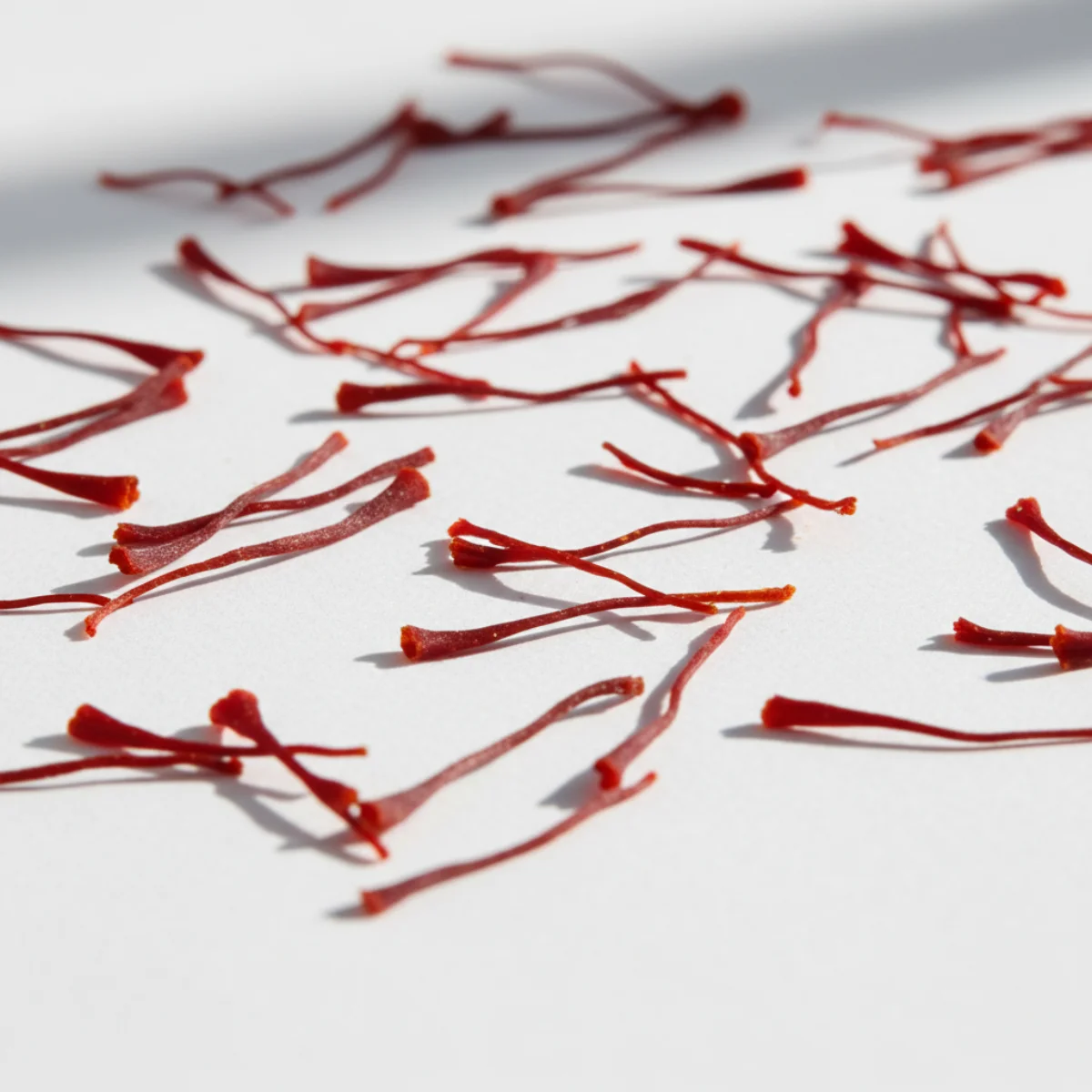
Saffron extract is derived from the dried stigmas (thread-like female reproductive structures) of the Crocus sativus flower, native to Iran and cultivated in limited regions worldwide. The extract concentrates bioactive compounds—primarily crocin and safranal—that give saffron its distinctive golden-red color and earthy aroma. These compounds are fat-soluble and lipophilic, allowing them to cross the blood-brain barrier and interact with central nervous system pathways.
Saffron has been used in traditional Persian, Indian Ayurvedic, and traditional Chinese medicine systems for centuries, primarily for mood, digestive comfort, and women's health. Modern supplements typically offer standardized extracts containing 2–5% crocin and safranal, ensuring consistent potency across batches.
The primary proposed mechanisms involve modulation of monoamine neurotransmitters (serotonin, dopamine, and norepinephrine) and potential anti-inflammatory and antioxidant effects within the brain. Some research suggests saffron may influence GABA signaling and reduce oxidative stress markers in mood-related brain regions.
Evidence-based benefits of Saffron Extract
Saffron extract is studied for its potential effects on mood, emotional resilience, and hormonal-related symptoms. Small randomized controlled trials have examined its use in depression, anxiety, and premenstrual syndrome, with some showing modest benefits compared to placebo or standard interventions. Evidence remains preliminary and future research is needed to clarify which populations benefit most and which dose and duration optimize outcomes.
Mood & Depression Support
Several small RCTs suggest saffron extract may provide mild mood-lifting effects comparable to certain antidepressant medications in short-term use (4–12 weeks). One frequently cited meta-analysis of mood trials reported modest effect sizes favoring saffron over placebo, though individual studies were heterogeneous in design and population. The mechanism is thought to involve serotonin enhancement and reduction of neuroinflammation. Evidence is encouraging but not yet definitive; larger, longer-term trials are needed.
Anxiety & Stress Perception
Early-stage research indicates saffron extract may reduce self-reported anxiety and subjective stress in some individuals. A few controlled trials in university students and clinical anxiety populations showed reductions in anxiety scores with saffron supplementation over 4–12 weeks. The effect sizes are generally small to moderate, and dropout rates or methodological limitations in some studies temper confidence. More robust evidence in diverse populations would strengthen these findings.
Premenstrual Syndrome (PMS) Symptom Relief
Small randomized trials in women with PMS have reported reductions in emotional symptoms (irritability, anxiety, depression) and physical symptoms (bloating, breast tenderness) when taking saffron extract during the luteal phase or continuously for 2–3 menstrual cycles. Effect sizes range from small to moderate. These studies are few in number and often conducted in single centers; larger, multi-site replication would clarify generalizability. Saffron may be particularly useful for mood-related PMS symptoms.
Cognitive Function & Memory
Animal studies and a small number of human trials suggest saffron's antioxidant and anti-inflammatory properties may support cognitive performance and memory in healthy individuals or in aging populations. Evidence in humans remains preliminary and limited to short-term observation. No robust clinical trials in neurodegenerative disease have been completed to date.
Eye Health & Visual Function
Some preliminary evidence suggests saffron crocin may protect retinal cells and support visual function in age-related macular degeneration (AMD). A few controlled trials showed modest improvements in visual acuity in AMD patients, though study sizes are small and follow-up is short-term. This indication requires further investigation before routine recommendation.
Supplement forms of Saffron Extract, compared
Saffron extract is available primarily as a standardized concentrate (tablets, capsules, or powders) containing 2–5% crocin and safranal by weight, derived from saffron stigma. Some commercial products are labeled as "Affron" (a proprietary saffron extract), while others use generic saffron extract. A single standardized form dominates the market; differences between brands are mainly in standardization level, excipients, and price rather than fundamentally different delivery mechanisms. Whole saffron stigma (threads) is also sold as a culinary spice but is less bioavailable than concentrated extract for supplement purposes.
How much Saffron Extract should you take?
No established RDA or upper limit (UL) exists for saffron extract, as it is not an essential micronutrient. Dosing in published trials has varied widely, ranging from 15 mg to 100+ mg of standardized saffron extract daily, typically taken for 4–12 weeks. Most mood and PMS studies used 15–30 mg daily of a standardized extract (2–5% crocin).
- Typical mood or anxiety support: 15–30 mg daily of standardized saffron extract (2–5% crocin), divided into 1–2 doses.
- PMS symptom relief: 15–30 mg daily, taken continuously or during the luteal phase (second half of the menstrual cycle), for 2–3 consecutive cycles to assess benefit.
- General wellness/cognitive support: 10–20 mg daily for adults, though evidence at lower doses is sparse.
Saffron extract may be taken with or without food, though lipophilic compounds (crocin) are better absorbed with dietary fat. If taking capsules, splitting the daily dose into morning and evening may improve tolerability. Saffron is sometimes combined with other mood-supporting herbs (e.g., ashwagandha) but no specific stacking protocols have been formally studied; consult a healthcare provider before combining multiple active botanicals.
Safety, side effects, and risks
Saffron extract has a favorable safety profile in short-term use (weeks to a few months) at typical supplement doses. Serious adverse events are rare. Gastrointestinal side effects (nausea, dry mouth, appetite changes) occur in some users, particularly at higher doses. Long-term safety (years of continuous supplementation) has not been extensively studied in humans. Pregnant and nursing individuals should seek medical guidance before use, as safety data are limited. If you have liver or kidney disease, take anticoagulants, or are pregnant or nursing, consult a clinician before starting saffron extract.
Common Side Effects
Mild and transient gastrointestinal effects (nausea, dry mouth, appetite suppression) are reported in some users, particularly at doses above 50 mg daily. Headache and dizziness are reported occasionally. Most adverse effects are self-limited and resolve upon dose reduction or discontinuation.
Serious or Rare Risks
Allergic reactions to saffron are uncommon but possible. Very high doses (well above typical supplement dosing) have been associated with more serious effects in animal studies, but human toxicity data at extreme doses are sparse. Saffron contains compounds that may affect uterine contractility; pregnant women should avoid supplemental use.
Pregnancy & Lactation
Safety data are limited. Some traditional use suggests saffron may stimulate uterine contractions; pregnant individuals should avoid supplemental doses. Lactation safety is not well-studied; nursing mothers should consult a healthcare provider before use.
Important Safety Note
This information is educational and not a substitute for professional medical advice. Talk to your doctor or a qualified healthcare provider before starting saffron extract, especially if you are pregnant, nursing, taking blood thinners, have liver or kidney disease, or have a history of hormone-sensitive conditions.
Drug and nutrient interactions
- Monoamine Oxidase Inhibitors (MAOIs): Saffron may enhance serotonergic activity; concurrent use with MAOIs (e.g., phenelzine, tranylcypromine) could theoretically increase serotonin syndrome risk. Medical oversight is advised.
- Selective Serotonin Reuptake Inhibitors (SSRIs) and Serotonin-Norepinephrine Reuptake Inhibitors (SNRIs): Additive serotonergic effects are possible when saffron is combined with these antidepressants. Risk of serotonin syndrome is low at typical supplement doses but increases with higher doses or rapid escalation. Inform your prescriber if you plan to use saffron alongside SSRIs or SNRIs.
- Anticoagulants & Antiplatelet Agents: Limited evidence suggests saffron may have mild anticoagulant or antiplatelet properties. Concurrent use with warfarin, dabigatran, aspirin, or clopidogrel warrants caution and medical monitoring.
- Benzodiazepines & CNS Depressants: Saffron may potentiate central nervous system depression or sedation. Combined use with benzodiazepines, barbiturates, or alcohol should be approached cautiously.
- Dopamine Antagonists: Antipsychotic or metoclopramide use may counteract saffron's dopaminergic effects. Consult a clinician if you use these agents.
- Estrogen-Sensitive Conditions: Some saffron compounds may have mild hormonal activity; caution is advised in individuals with estrogen-dependent cancers or conditions. Medical guidance is recommended.
This is not an exhaustive list. For a comprehensive, personalized interaction check based on your medications and health conditions, use our interaction checker tool.
Who might benefit — and who shouldn't self-supplement without guidance
| Most Likely to Benefit from Supplementing | Use with Caution or Seek Medical Guidance First |
|---|---|
| Adults with mild to moderate mood symptoms or subclinical depression interested in a botanical alternative | Individuals taking SSRIs, SNRIs, or MAOIs (risk of serotonin syndrome; requires medical oversight) |
| Women experiencing emotional or physical symptoms related to premenstrual syndrome | Pregnant or nursing individuals (safety data limited; consult healthcare provider) |
| People with general anxiety seeking a gentle, traditional herbal approach | Anyone with liver or kidney disease (metabolism and clearance concerns) |
| Older adults interested in cognitive support and antioxidant protection | Individuals taking anticoagulants or antiplatelet drugs (potential additive effects) |
| Those exploring mood-supportive supplements with a good safety profile in short-term use | People with a personal or family history of hormone-sensitive cancers |
Frequently asked questions
How long does it take for saffron extract to work?
Most studies showing mood or anxiety benefits used saffron for 4–12 weeks before assessing outcomes. Some users report noticing effects within 2–4 weeks, while others require a full 8–12 weeks. Individual response varies; consistent daily use is recommended before concluding whether it is effective for you.
Is saffron extract safe to take long-term?
Safety data for long-term continuous use (beyond a few months) are limited. Short-term use (up to 12 weeks) appears well-tolerated in research. If you plan to use saffron extract for months or years, discuss this with your healthcare provider, as long-term safety and optimal dosing intervals are not well-established.
Can I take saffron extract with my antidepressant?
Saffron may enhance serotonergic activity similar to SSRIs or SNRIs. While serious interactions are rare at typical supplement doses, combining saffron with antidepressants increases the theoretical risk of serotonin syndrome. Always inform your prescriber if you are considering adding saffron extract, and do not start without medical approval.
What form of saffron supplement is best—whole threads or extract?
Standardized saffron extract (capsules or tablets) is more consistent in potency and bioavailability than whole threads. Whole saffron threads are primarily used as a culinary spice and may not deliver reliable doses of active compounds for supplement purposes. Standardized extracts (2–5% crocin) are preferred for clinical use.
Does saffron extract help with PMS symptoms?
Small randomized trials suggest saffron extract may reduce emotional symptoms (irritability, anxiety, mood swings) and some physical symptoms (bloating, breast tenderness) during the menstrual cycle. Effects are generally modest and most apparent when taken over 2–3 consecutive cycles. Results vary between individuals.
Are there side effects from saffron extract?
Mild gastrointestinal effects (nausea, dry mouth, reduced appetite) are the most common, particularly at higher doses (above 50 mg daily). Headache and dizziness are reported occasionally. Serious side effects are rare at supplement doses. If you experience persistent or severe symptoms, discontinue use and consult a healthcare provider.
Can saffron extract be stacked with other mood-supporting supplements?
Saffron is sometimes combined with ashwagandha, 5-HTP, or other herbal or amino acid supports. However, combining multiple serotonergic or CNS-active agents increases the risk of interactions and side effects. Consult a healthcare provider before stacking saffron with other supplements, particularly if you are also taking medications.
Related ingredients
Ashwagandha
Related ingredient — see the Ashwagandha reference page.
5 Htp
Related ingredient — see the 5 Htp reference page.
Curcumin
Related ingredient — see the Curcumin reference page.
Bacopa Monnieri
Related ingredient — see the Bacopa Monnieri reference page.
Chasteberry Vitex
Related ingredient — see the Chasteberry Vitex reference page.
Disclaimer: This information is for educational purposes only and should not replace medical advice. Always consult a qualified healthcare provider before starting any supplement, especially if you have a medical condition, are pregnant, or take prescription medications. These statements have not been evaluated by the Food and Drug Administration. This product is not intended to diagnose, treat, cure, or prevent any disease.