NAD+: The Cellular Energy Coenzyme for Aging & Mitochondrial Health
60-Second Summary
NAD+ (nicotinamide adenine dinucleotide) is a coenzyme found in every living cell that plays a critical role in energy metabolism, DNA repair, and cellular signaling. Research suggests NAD+ declines with age, and supplementing with NAD+ precursors like NMN or NR may support mitochondrial function, energy production, and markers of healthy aging. While human evidence is promising but still emerging, NAD+-boosting strategies are studied for cognition, endurance, and longevity support.
What is NAD+?
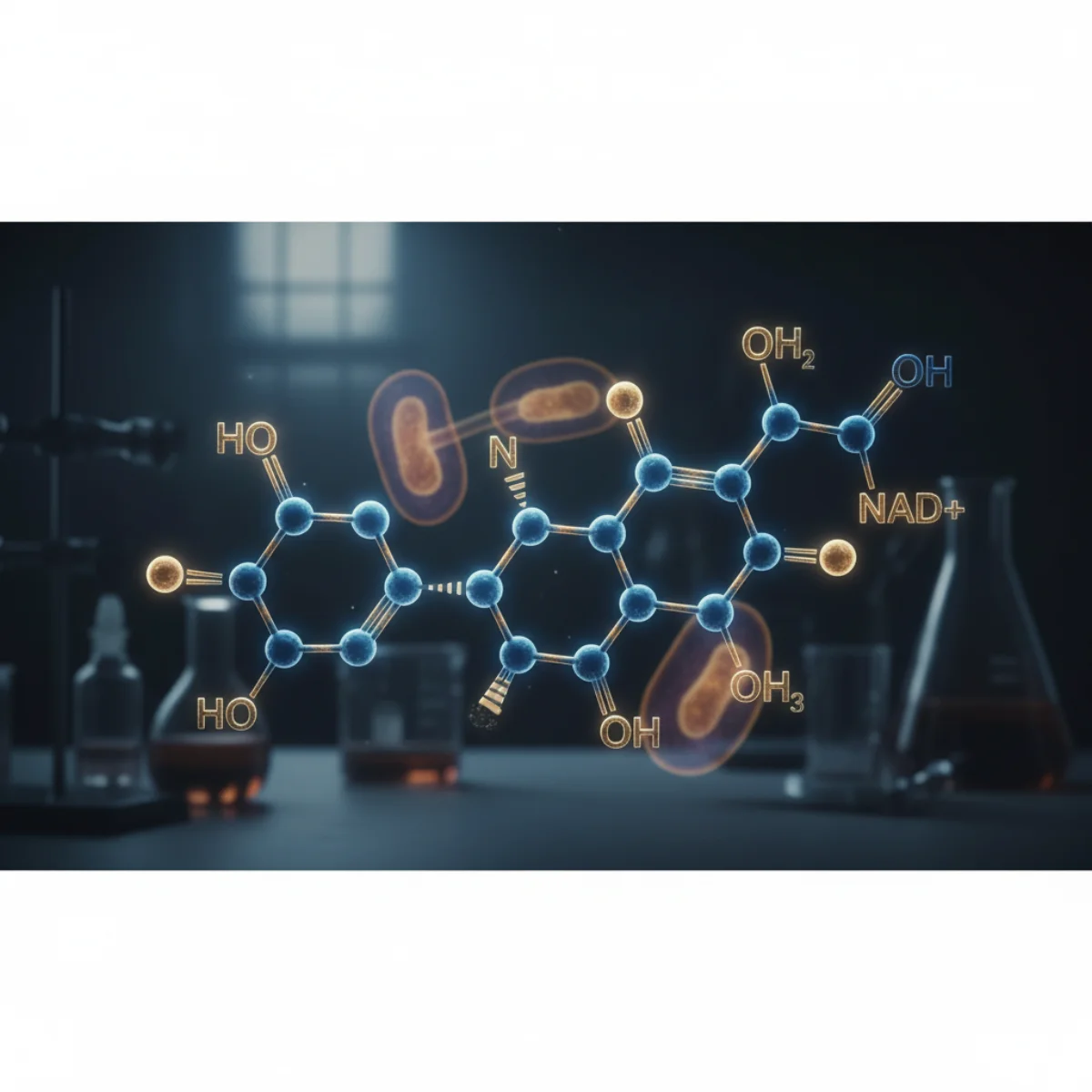
NAD+ is a coenzyme—a helper molecule that enzymes require to function—composed of nicotinamide and adenine dinucleotide. It exists in two interconvertible forms: NAD+ (oxidized) and NADH (reduced), and this NAD+/NADH ratio is central to cellular energy production and redox balance.
NAD+ is synthesized endogenously from the amino acid tryptophan and from dietary precursors such as niacin (vitamin B3). It is found in small amounts in foods like beef, chicken, tuna, and yeast, but whole-body NAD+ pools decline significantly with age—dropping by roughly 50% between young adulthood and old age. This decline is associated with impaired mitochondrial function, reduced DNA repair capacity, and increased cellular stress.
The primary mechanism of NAD+ involves its role in the electron transport chain (where it shuttles electrons to power ATP synthesis) and in activation of sirtuins and PARP enzymes, which regulate stress resistance, inflammation, and longevity pathways. Because direct NAD+ supplementation has poor oral bioavailability, most research focuses on precursors like nicotinamide mononucleotide (NMN) and nicotinamide riboside (NR), which are metabolized to NAD+ inside cells.
Evidence-based benefits of NAD+
NAD+ precursors are studied for their role in maintaining cellular energy metabolism and supporting several age-related health domains. Evidence is still largely preliminary in humans, with most robust data coming from animal models and small clinical trials.
Mitochondrial Function & Energy Production
NAD+ is essential for ATP synthesis in the mitochondria. Preliminary human studies suggest that NMN and NR supplementation may increase NAD+ levels and improve markers of mitochondrial efficiency. Small trials in older adults have reported improved exercise capacity and muscle energy metabolism, though larger confirmation studies are needed.
Endurance & Physical Performance
Animal research shows NAD+ boosting enhances oxidative metabolism and endurance capacity. A few small human RCTs suggest NMN or NR may modestly improve time-to-fatigue in exercise tests and aerobic capacity in sedentary individuals. The effect sizes are modest, and more studies in trained athletes are warranted.
Cognitive Function & Brain Health
NAD+-dependent sirtuins and PARPs are involved in neuroplasticity and neuroprotection. Preclinical evidence suggests NAD+ may support synaptic function and mitochondrial health in neurons. Human cognitive trials are very limited; current evidence is preliminary and observational rather than from large RCTs.
Cellular Stress Resistance & DNA Repair
NAD+ activates PARP enzymes (poly-ADP-ribose polymerase), which are central to DNA damage sensing and repair. In cell and animal models, NAD+ boosting enhances repair capacity and resistance to oxidative stress. Human evidence is not yet robust, but mechanistic support is solid.
Cardiovascular & Metabolic Health
NAD+-dependent pathways regulate endothelial function, glucose homeostasis, and lipid metabolism. Some small studies in humans with metabolic syndrome or prediabetes have reported modest improvements in insulin sensitivity and blood pressure markers with NMN. Evidence remains preliminary.
Muscle Health & Sarcopenia
NAD+ is required for muscle protein synthesis and mitochondrial function in muscle. Emerging evidence from small human trials suggests NMN may support muscle strength and oxidative capacity in older adults. Larger confirmation studies in sarcopenia patients are underway.
Supplement forms of NAD+, compared
NAD+ itself is not stable for oral supplementation. Instead, commercial products deliver NAD+ precursors—most commonly nicotinamide mononucleotide (NMN) and nicotinamide riboside (NR)—which are efficiently absorbed and converted to NAD+ inside cells.
How much NAD+ should you take?
Typical supplemental doses of NMN range from 250 mg to 1,000 mg per day, while NR doses commonly range from 250 mg to 1,000 mg daily. Some human trials have used doses as high as 1,000–2,000 mg/day without serious safety signals, though long-term safety data beyond 12 months is limited.
- Standard maintenance dose: 250–500 mg/day of NMN or NR
- Higher research doses: 500–1,000 mg/day (used in most published human trials)
- Onset: NAD+ levels may rise within hours to days; physiological effects (energy, endurance) typically require weeks to months of consistent supplementation
- RDA/UL: No official RDA exists for NAD+ precursors; no established upper limit, though intakes above 2,000 mg/day lack safety data
NAD+ precursors can be taken with or without food, though some users report better tolerance with meals. Splitting doses (e.g., 250 mg twice daily) may optimize absorption, though this is not definitively proven. Stacking with other longevity compounds (e.g., resveratrol, metformin) is popular in longevity circles but requires medical supervision if you take other medications.
Safety, side effects, and risks
NAD+ precursors (NMN and NR) have a favorable safety profile in short-term human trials (up to 12 months), with most users tolerating doses of 500–1,000 mg/day without adverse events. However, long-term safety data beyond 1–2 years is limited, and some theoretical concerns exist regarding potential effects on certain cell types at very high doses.
Common Side Effects
Mild and infrequent side effects include nausea, headache, and gastrointestinal discomfort, typically at higher doses. These resolve quickly and are generally well tolerated.
Rare or Theoretical Concerns
In cell culture and animal models, extremely high NAD+ levels have been associated with impaired autophagy and altered sirtuin signaling in some contexts. Additionally, some preclinical evidence suggests that very high NAD+ may promote proliferation in certain cancer cell lines, though this has not been observed in human trials. This remains theoretical and should not alarm users of standard supplemental doses, but longer-term human safety monitoring is warranted, especially in cancer survivors.
Pregnancy & Lactation
Safety in pregnant and breastfeeding women has not been established. Pregnant or nursing women should avoid NAD+ precursor supplements unless advised by their obstetrician.
Medical Supervision
Talk to a clinician before starting NAD+ precursor supplementation if you have a personal or family history of cancer, are undergoing chemotherapy, have severe liver or kidney disease, or take medications that interact with niacin metabolism. Individuals with gout or hyperuricemia should use caution, as NAD+ metabolism can influence uric acid levels.
Drug and nutrient interactions
- Nicotinamide (niacinamide): May compete with NMN/NR for absorption and conversion pathways; combining high doses of both may reduce efficacy of each.
- Niacin (nicotinic acid): The parent form of NAD+ metabolism; concurrent high-dose niacin supplementation may reduce the relative benefit of NMN/NR.
- Metformin: May modulate NAD+ metabolism indirectly via AMPK; combination with NAD+ boosters has not been extensively studied in humans, but is often used together in longevity protocols under medical supervision.
- Statins: May affect NAD+ metabolism and mitochondrial function; discuss with your healthcare provider before combining.
- Resveratrol: Both activate sirtuins downstream of NAD+; combining may have additive but unpredictable effects; synergy is theoretical.
- Alcohol: Chronic high alcohol consumption impairs NAD+ recovery; heavy drinkers may derive less benefit from NAD+ supplementation.
For a comprehensive check of your personal supplement and drug interactions, use our supplement interaction checker.
Who might benefit — and who shouldn't self-supplement without guidance
| Most likely to benefit from supplementing | Use with caution or seek medical guidance first |
|---|---|
| Healthy older adults (50+) interested in healthy aging, mitochondrial support, and longevity optimization | Individuals with a personal or family history of cancer |
| Athletes or active individuals seeking improved endurance and exercise recovery | People with gout, hyperuricemia, or elevated uric acid levels |
| People with metabolic syndrome or prediabetes (preliminary evidence for glucose control) | Pregnant or breastfeeding women |
| Those with age-associated cognitive concerns and interest in neuroprotection | Cancer patients or recent cancer survivors (before or during treatment) |
| Individuals with low energy or fatigue related to mitochondrial dysfunction | People taking medications that interact with niacin or folate metabolism (check with clinician) |
Frequently asked questions
What is the difference between NAD+, NMN, and NR?
NAD+ is the coenzyme itself, but it is poorly absorbed orally. NMN (nicotinamide mononucleotide) and NR (nicotinamide riboside) are precursors that are absorbed through the intestine and converted to NAD+ inside cells. Both NMN and NR are viable precursor forms; NMN may have slightly better absorption in some tissues, but differences are small in humans.
How long does it take NAD+ supplementation to work?
NAD+ levels may rise within hours, but noticeable improvements in energy, endurance, or cognition typically require 4–12 weeks of consistent supplementation. Individual response varies based on age, baseline NAD+ status, dose, and lifestyle factors.
Can I take NAD+ precursors long-term?
Short-term safety data (up to 12 months) is good, but long-term (>2 years) human safety studies are limited. Most longevity-focused individuals use NAD+ precursors as part of a sustained protocol, but regular check-ins with a healthcare provider are advisable.
Is NAD+ supplementation safe for cancer patients?
This is a critical question. Preclinical evidence shows mixed results, with some studies suggesting high NAD+ may promote growth in certain cancer cell lines. No clinical trials have proven safety or harm in human cancer patients. Cancer patients should discuss NAD+ supplementation with their oncologist before starting.
Can I stack NAD+ precursors with other supplements like resveratrol or metformin?
Many longevity practitioners combine NAD+ boosters with resveratrol, metformin, and other compounds, as they target complementary pathways. However, long-term safety of these combinations in humans is not well studied. Discuss stacking strategies with a functional medicine provider.
What is the best time of day to take NAD+ precursors?
There is no strong evidence for an optimal time. Some users prefer morning dosing to support daytime energy; others take it with meals for better tolerance. Consistency matters more than timing.
Does NAD+ supplementation interact with prescription medications?
NAD+ precursors may interact indirectly with medications that affect niacin metabolism, statins, or AMPK-based pathways. Always disclose NAD+ supplementation to your doctor or pharmacist, especially if you take cardiovascular or metabolic medications.
Related ingredients
Coq10 Coenzyme Q10
Related ingredient — see the Coq10 Coenzyme Q10 reference page.
Alpha Lipoic Acid Ala
Related ingredient — see the Alpha Lipoic Acid Ala reference page.
D Ribose
Related ingredient — see the D Ribose reference page.
Creatine
Related ingredient — see the Creatine reference page.
Cordyceps
Related ingredient — see the Cordyceps reference page.
Astaxanthin
Related ingredient — see the Astaxanthin reference page.
Disclaimer: This information is for educational purposes only and should not replace medical advice. Always consult a qualified healthcare provider before starting any supplement, especially if you have a medical condition, are pregnant, or take prescription medications. These statements have not been evaluated by the Food and Drug Administration. This product is not intended to diagnose, treat, cure, or prevent any disease.