Molecular Hydrogen (H₂): Selective Antioxidant for Cellular Health & Oxidative Stress
60-Second Summary
Molecular hydrogen (H₂) is a colorless, odorless gas that acts as a selective antioxidant by neutralizing harmful free radicals, particularly reactive oxygen species (ROS). Available in supplement form as hydrogen-enriched water, tablets, and generators, H₂ is studied for its potential to support cellular recovery, exercise performance, and inflammatory responses. While emerging research suggests promise in animal models and small human studies, evidence in humans remains preliminary and further rigorous clinical trials are needed to establish efficacy and optimal dosing.
What is Molecular Hydrogen?
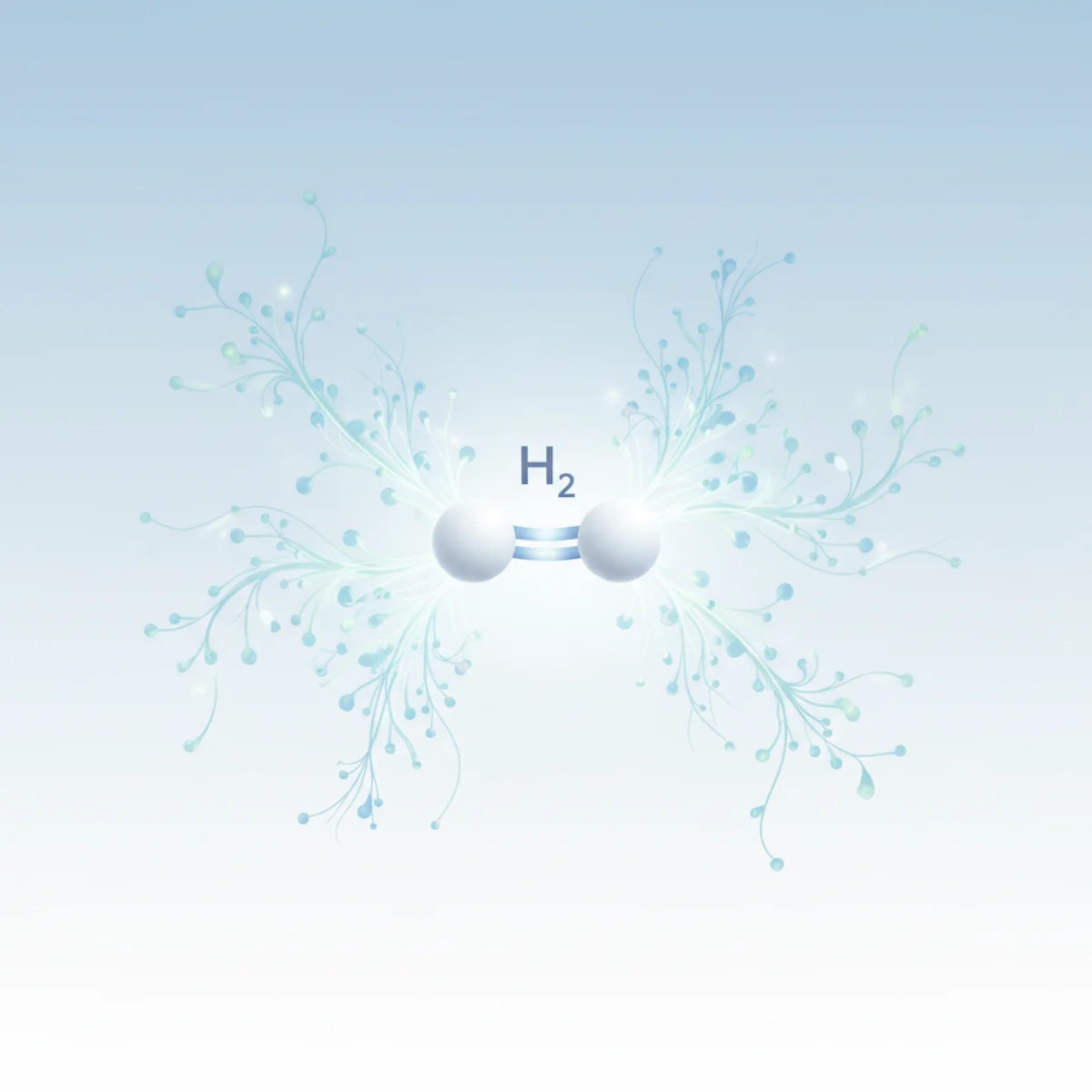
Molecular hydrogen (H₂) is the smallest and lightest molecule in the universe—consisting of just two hydrogen atoms bonded together. Unlike other antioxidants that neutralize all reactive oxygen species (ROS) indiscriminately, H₂ selectively targets the most damaging free radicals, particularly hydroxyl radicals and peroxynitrite, while leaving beneficial ROS signaling pathways relatively intact. This selectivity is thought to be a key advantage, as some ROS are necessary for normal cellular signaling and immune function.
H₂ crosses cell membranes and the blood-brain barrier readily due to its small size and lipid solubility, allowing it to reach mitochondria and the nucleus where oxidative damage often occurs. Once inside cells, H₂ reacts with harmful radicals to form water, a benign byproduct. Commercially, molecular hydrogen is delivered via hydrogen-enriched water (infused with pressurized H₂ gas), tablet formulations that generate H₂ when dissolved in water, or through specialized water electrolysis generators.
The body does not produce H₂ endogenously in meaningful amounts, though some hydrogen may be generated in the gut through bacterial fermentation of dietary fiber. Most H₂ supplementation is therefore exogenous, and the gas is absorbed through the gastrointestinal tract and exhaled or metabolized within hours, making it non-accumulative.
Evidence-based benefits of Molecular Hydrogen
Research into molecular hydrogen is still in its early stages in humans, though animal models and small clinical trials suggest potential benefits in several areas. Most evidence comes from in vitro and animal studies; human studies are typically small and preliminary.
Oxidative Stress & Antioxidant Defense
H₂ is studied as a selective antioxidant that may help reduce markers of oxidative stress in tissues. Small human studies suggest it may lower levels of reactive oxygen species and inflammatory markers, though effect sizes and clinical relevance remain to be firmly established. The selectivity of H₂ for harmful radicals over beneficial ROS may offer an advantage over non-selective antioxidants.
Exercise Recovery & Performance
Several small RCTs in athletes and active individuals suggest H₂-enriched water may support muscle recovery and reduce exercise-induced fatigue markers. A few studies report improved time-to-fatigue in cycling and running tasks, though the sample sizes are modest and results are not yet replicated consistently across all populations.
Inflammatory Markers & Joint Health
Preliminary evidence from small human trials suggests molecular hydrogen may support a healthy inflammatory response, with some studies showing modest reductions in pro-inflammatory markers like TNF-α and IL-6. H₂ is being explored for musculoskeletal recovery and joint comfort, though robust clinical evidence is still emerging.
Cognitive & Neurological Function
H₂ crosses the blood-brain barrier and is studied for potential neuroprotective effects. Animal models suggest it may support mitochondrial function and reduce oxidative stress in neurons, but human evidence is very limited. Small preliminary studies hint at possible benefits for cognitive function and fatigue, though much more research is needed.
Metabolic & Metabolic Endotoxemia Support
A few small studies suggest H₂ may have modest effects on fasting glucose and insulin sensitivity markers, and on endotoxin-related inflammatory responses. These findings are preliminary and require larger, well-controlled human trials to establish clinical significance.
Supplement forms of Molecular Hydrogen, compared
Molecular hydrogen supplements are available primarily in three commercially relevant forms: hydrogen-enriched water (bottled or freshly infused), effervescent or powder tablets that generate H₂ when dissolved in water, and home electrolysis water generators. All deliver H₂ gas for absorption; differences lie mainly in convenience, cost, and freshness of H₂ (gas can dissipate over time in liquid storage).
How much Molecular Hydrogen should you take?
There is no established RDA or UL for molecular hydrogen, as it is not a nutrient. Dosing in published studies varies widely, reflecting the early-stage nature of the research.
- Hydrogen-enriched water: Typically 0.5–2 liters daily (containing 0.5–1.6 mg H₂ per liter), consumed over the course of the day.
- H₂ tablets: Usually 1–2 tablets dissolved in water once or twice daily, generating approximately 1–2 mg H₂ per dose.
- Electrolysis generators: Protocols vary; many users consume 500–1000 mL of generated hydrogen water daily.
- Acute dosing for exercise: Some athletic protocols use single doses 30 minutes to 2 hours before activity.
H₂ is very volatile and dissipates rapidly in air and over time in liquid; freshly prepared hydrogen water is more potent than stored product. There is no clinical evidence of toxicity or overdose from molecular hydrogen at any practical dose, as excess H₂ is simply exhaled. However, since human evidence remains preliminary, prudent practice is to start with lower doses and monitor individual tolerance and any effects. H₂ tablets are often consumed with meals for convenience, though food does not appear to substantially impair absorption. H₂ does not require special stacking with other supplements, though it may be combined with other antioxidants or recovery-supporting nutrients if desired.
Safety, side effects, and risks
Molecular hydrogen is non-toxic and has an excellent safety profile. It is a natural gas, chemically inert under physiological conditions, and excess H₂ is simply exhaled via the lungs. No serious adverse events have been reported in published human studies, and the mechanism of action (reduction to water) produces no toxic metabolites.
Side Effects
Human studies have reported few to no side effects. Theoretically, some individuals might experience minor gastrointestinal symptoms (bloating, stomach discomfort) if drinking large volumes of hydrogen water, but this is attributable to the volume of fluid rather than H₂ itself. Allergic reactions are extremely rare but not impossible.
Pregnancy & Lactation
There are no safety data on molecular hydrogen supplementation in pregnant or breastfeeding individuals. It is prudent to avoid H₂ supplementation during pregnancy and lactation unless specifically recommended by a healthcare provider, given the early stage of human research.
Special Populations
Molecular hydrogen is generally well tolerated, and there are no known contraindications in healthy individuals. However, if you have a chronic inflammatory disease, neurological condition, or metabolic disorder and are considering H₂ supplementation as part of your routine, consult a clinician to ensure it does not interact with your condition or current medications.
Drug and nutrient interactions
- Non-selective antioxidants (vitamins C, E, alpha-lipoic acid, coenzyme Q10): Molecular hydrogen's selective antioxidant action suggests it may work synergistically with other antioxidants, though there is no clinical evidence of harmful interactions. Combining multiple antioxidant supplements should be discussed with a healthcare provider to avoid excessive ROS suppression.
- Corticosteroids: No direct interaction is known, but because H₂ may modulate inflammatory markers, individuals on long-term corticosteroids should consult a clinician before adding H₂ supplementation.
- Metformin & diabetes medications: Some animal studies suggest H₂ may affect glucose metabolism; individuals on diabetes medications should consult a healthcare provider before supplementing.
- Anti-inflammatory medications (NSAIDs, TNF inhibitors): H₂ may have mild anti-inflammatory effects; concurrent use with these drugs warrants medical discussion to avoid unintended interactions or redundancy.
Molecular hydrogen does not appear to have major interactions with most dietary supplements or drugs, but because human research is limited, discuss any new supplement regimen with your healthcare provider, especially if you are on prescription medications. For a detailed interaction check, visit our interaction-checker tool.
Who might benefit — and who shouldn't self-supplement without guidance
| Most Likely to Benefit from Supplementing | Use with Caution or Seek Medical Guidance First |
|---|---|
| Competitive athletes or active individuals seeking post-exercise recovery support | Pregnant or breastfeeding individuals (insufficient safety data) |
| Individuals interested in experimental antioxidant support for cellular health | People with diabetes or taking glucose-regulation medications (H₂ may affect glucose metabolism) |
| Those with elevated exercise-induced inflammatory markers or recovery issues | Individuals on anti-inflammatory medications or immunosuppressants (consult healthcare provider) |
| Older adults interested in antioxidant & mitochondrial support | Anyone with a serious neurological or metabolic condition (limited human evidence; medical guidance recommended) |
| People curious about early-stage, well-tolerated research compounds with low toxicity risk | Individuals taking corticosteroids long-term (potential for unintended interaction) |
Frequently asked questions
How does molecular hydrogen work as an antioxidant?
Molecular hydrogen (H₂) acts as a selective antioxidant that targets harmful free radicals, particularly hydroxyl radicals and peroxynitrite, converting them to water. Unlike non-selective antioxidants, H₂'s selectivity means it leaves beneficial ROS signaling largely intact, which may preserve the body's natural defense mechanisms. Its small size allows it to penetrate cell membranes and even the blood-brain barrier easily.
What form of molecular hydrogen is best: water, tablets, or a generator?
All three forms deliver H₂ gas for absorption; the choice depends on convenience and budget. Hydrogen water and tablets offer portability and simplicity, while generators are cost-effective for daily long-term use but require access to electricity. Freshly prepared H₂ is more potent than stored product, since the gas dissipates over time in liquid.
Is molecular hydrogen safe to take long-term?
Molecular hydrogen has an excellent safety profile with no known toxicity or serious adverse effects reported in human studies. Excess H₂ is simply exhaled, making accumulation impossible. However, because long-term human safety data remain limited, it is prudent to consult a healthcare provider if you plan to supplement regularly, especially if you have a chronic condition.
Can I combine molecular hydrogen with other antioxidant supplements?
Molecular hydrogen can likely be combined with other antioxidants, but because human evidence is limited and excessive ROS suppression might impair normal cellular signaling, it is wise to discuss any antioxidant stacking regimen with a clinician before starting.
How much molecular hydrogen do I need, and does it really work?
Published studies use doses ranging from 0.5 to 2 liters of hydrogen water daily or 1–2 tablets once or twice daily. While animal models and small human trials suggest potential benefits for exercise recovery and oxidative stress, human evidence is still preliminary, and larger, well-controlled studies are needed to confirm efficacy and optimal dosing.
Will molecular hydrogen affect my medications?
No major interactions between H₂ and common medications are known. However, because H₂ may have mild anti-inflammatory or glucose-metabolic effects, individuals on diabetes medications, corticosteroids, or anti-inflammatory drugs should consult a healthcare provider before starting H₂ supplementation.
When should I take molecular hydrogen—before, after, or with meals?
H₂ can be taken with or without food; food does not significantly impair absorption. For exercise recovery, some studies used doses 30 minutes to 2 hours before activity, while others distributed doses throughout the day. Consistency is more important than precise timing.
Related ingredients
Coq10 Coenzyme Q10
Related ingredient — see the Coq10 Coenzyme Q10 reference page.
Alpha Lipoic Acid Ala
Related ingredient — see the Alpha Lipoic Acid Ala reference page.
Astaxanthin
Related ingredient — see the Astaxanthin reference page.
Egcg
Related ingredient — see the Egcg reference page.
Curcumin
Related ingredient — see the Curcumin reference page.
Creatine
Related ingredient — see the Creatine reference page.
Disclaimer: This information is for educational purposes only and should not replace medical advice. Always consult a qualified healthcare provider before starting any supplement, especially if you have a medical condition, are pregnant, or take prescription medications. These statements have not been evaluated by the Food and Drug Administration. This product is not intended to diagnose, treat, cure, or prevent any disease.