CDP-Choline (Citicoline): Brain Energy & Neurotransmitter Support
60-Second Summary
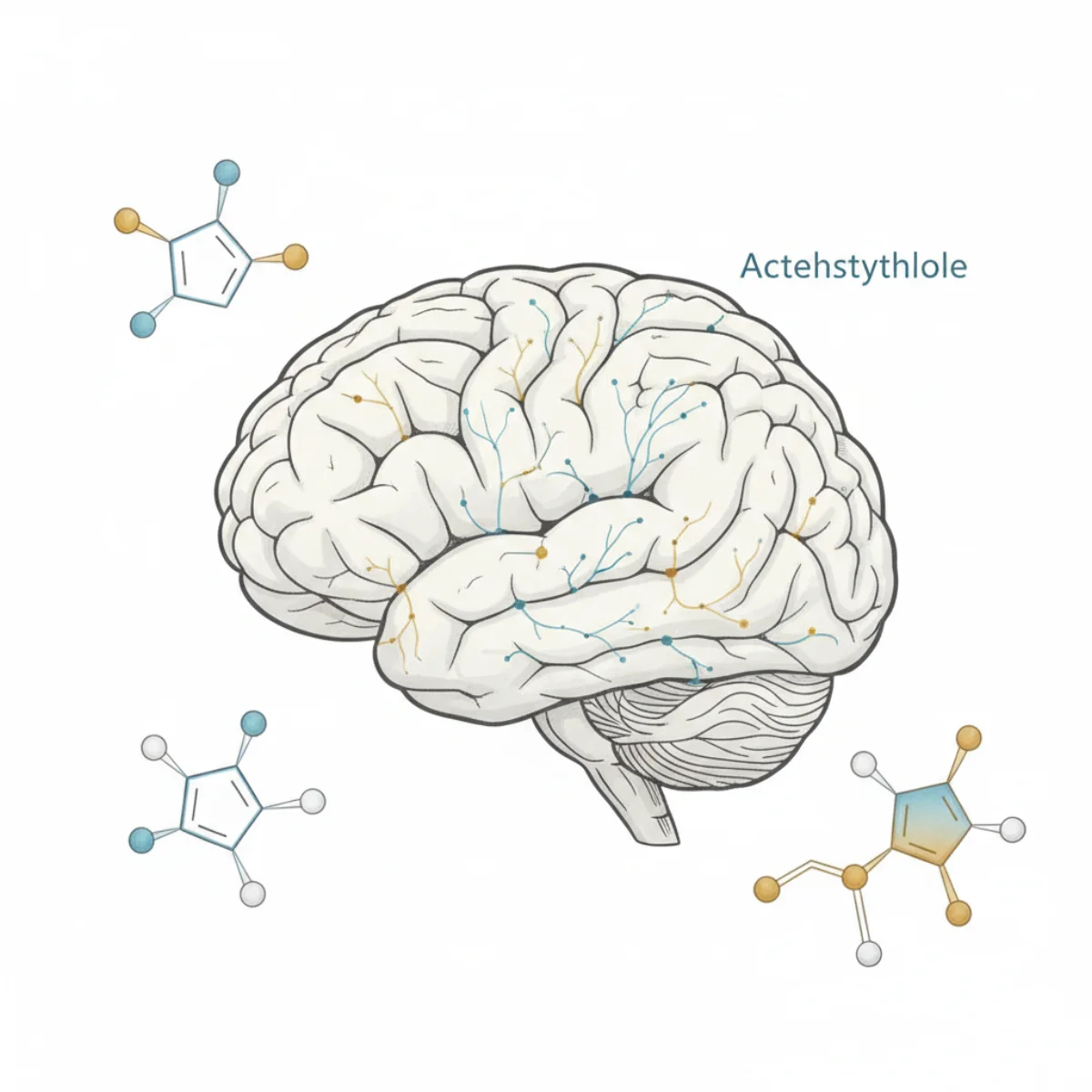
CDP-Choline, also known as citicoline, is a naturally occurring compound that serves as a precursor to acetylcholine and phosphatidylcholine, two molecules essential for brain cell integrity and neurotransmission. It is studied primarily for its potential to support cognitive function, attention, and memory, particularly in aging adults and those with age-related cognitive decline. Evidence from animal studies and preliminary human trials suggests benefit, though large-scale confirmatory trials remain limited; it is generally well-tolerated with a favorable safety profile.
What is CDP-Choline?
CDP-Choline is an endogenous nucleotide compound found naturally in all cells, particularly concentrated in the brain and other organs. It is the cytidine diphosphate salt of choline, a molecule that exists at the intersection of lipid and neurotransmitter metabolism. In the body, CDP-Choline is cleaved into cytidine and free choline, which are then utilized in separate metabolic pathways.
As a dietary supplement, CDP-Choline is typically derived from synthetic manufacturing rather than food sources, though choline is abundant in eggs, beef, and fish. Once absorbed and transported across the blood–brain barrier, CDP-Choline replenishes pools of phosphatidylcholine, a major phospholipid in neuronal cell membranes. This process supports both membrane fluidity and the synthesis of acetylcholine, a key neurotransmitter involved in attention, learning, and memory formation.
The mechanism of cognitive benefit is thought to operate through dual pathways: restoration of membrane structural integrity and enhancement of acetylcholine availability in the central nervous system. Unlike free choline supplements, CDP-Choline may bypass some hepatic metabolism, potentially allowing more efficient delivery to the brain.
Evidence-based benefits of CDP-Choline
CDP-Choline is studied for several cognitive and neurological endpoints. Evidence comes predominantly from observational cohorts, small randomized controlled trials, and mechanistic animal studies; very few large-scale human trials have been published.
Memory and Learning
Small randomized trials and observational studies suggest that CDP-Choline may support memory encoding and recall, particularly in older adults. The proposed mechanism involves increased acetylcholine production and restoration of neuronal membrane phospholipid composition. Most positive findings come from doses of 500–2000 mg daily, though effect sizes in human trials are modest and not consistent across all studies.
Attention and Focus
Preliminary evidence suggests CDP-Choline may enhance sustained attention and processing speed in some populations. Several small controlled trials report improvements in reaction time and vigilance tasks, but sample sizes are typically under 100 participants and confidence intervals are wide. The effect is most commonly observed when combined with other cognitive interventions or in individuals with declining attention spans.
Age-Related Cognitive Decline
CDP-Choline is most frequently studied in the context of age-related mild cognitive impairment or vascular cognitive decline. A modest body of evidence, primarily from European and East Asian trials, suggests supplementation may slow cognitive trajectory or improve performance on standardized neuropsychological batteries. However, no robust long-term prospective trials in cognitively normal aging populations exist, limiting generalizability.
Stroke Recovery and Brain Injury
Some evidence from small trials and case series suggests CDP-Choline may support recovery of motor or cognitive function following acute ischemic stroke. The proposed mechanism involves reduction of secondary neuronal damage and enhancement of neuroplasticity. Evidence is preliminary and benefit is not yet standard of care; consult a clinician for acute or post-stroke use.
Attention Deficit Conditions
A small number of studies have examined CDP-Choline in ADHD or ADHD-like symptoms in children and adolescents, with mixed results. Some trials report modest improvements in attention span and impulsivity, while others show no significant effect over placebo. Evidence is not sufficient to recommend supplementation as a primary intervention.
Supplement forms of CDP-Choline, compared
CDP-Choline is commercially available in a single dominant form: oral capsules or tablets, typically dosed at 250–500 mg per unit. The supplement is sometimes branded as Cognizin, a patented form. No significant bioavailability variation between brands is well-documented in published literature; choice among products is primarily determined by dose strength, capsule size, and price.
How much CDP-Choline should you take?
Effective doses in published studies range from 500 mg to 2000 mg daily, divided into one to three administrations. Most cognitive trials used 500–1000 mg per day. No established Recommended Dietary Allowance (RDA) or upper limit (UL) exists for supplemental CDP-Choline, as it is not a recognized essential nutrient; dosing is informed by trial data and safety monitoring.
- Standard cognitive support: 500–1000 mg daily, split into one or two doses
- Higher-range studies (post-stroke, age-related decline): 1000–2000 mg daily, typically divided into two or three doses
- Pediatric or adolescent use: limited evidence; typical trial doses ranged from 200–500 mg daily, but medical guidance is recommended
CDP-Choline may be taken with or without food, though consistent timing may aid adherence. Some practitioners recommend taking it in the morning to support daytime attention, though no gold-standard timing protocol is established. There are no known nutrient–nutrient interactions that would necessitate separating doses from other supplements; however, combining with other choline sources (e.g., Alpha-GPC) is not typically recommended without medical oversight, as it may elevate total choline intake above studied levels.
Safety, side effects, and risks
CDP-Choline has a favorable safety profile in short- and medium-term use (weeks to months), with adverse events reported in clinical trials occurring at rates similar to placebo. It is generally well-tolerated, and serious adverse events are rare. As with any supplement, individual tolerance varies and certain populations require additional caution.
Common Side Effects
The most frequently reported side effects in trials are mild and gastrointestinal in nature: nausea, heartburn, diarrhea, and constipation. Headache and dizziness have been reported occasionally. These effects are typically dose-dependent and often resolve with dose reduction or adjusted timing of intake. Transient insomnia or increased alertness has been noted in sensitive individuals, particularly when dosed later in the day.
Serious Risks (Rare)
No serious organ toxicity, hepatotoxicity, or nephrotoxicity has been reported in available trials, even at doses of 2000 mg daily for several months. However, individuals with bipolar disorder have anecdotally reported mood destabilization with choline precursors; this is not well-studied and evidence is limited. Very high intakes of choline-source supplements have been associated with a fishy body odor (trimethylamine metabolism) in susceptible individuals, though this is not a safety concern per se.
Pregnancy and Lactation
Choline is essential during pregnancy and lactation for fetal neurodevelopment and milk production. CDP-Choline, as a choline precursor, may theoretically contribute to this need. However, formal safety studies in pregnant and lactating women are limited, and use should be discussed with an obstetrician or midwife before supplementation. Most clinical guidelines recommend obtaining choline from whole-food sources (eggs, fish, meat) during pregnancy rather than from supplements, unless deficiency is documented.
Special Populations
Individuals with liver disease should use CDP-Choline cautiously, as hepatic metabolism of choline metabolites is impaired. Those with a history of bipolar disorder or mood instability should consult a psychiatrist before supplementing. Patients taking anticholinergic medications (e.g., for urinary incontinence or Parkinson's disease) should inform their clinician, as additive effects are theoretically possible though not well-documented.
Talk to a clinician if you have a history of bipolar disorder, liver disease, trimethylaminuria, or are pregnant or nursing before starting CDP-Choline supplementation.
Drug and nutrient interactions
- Anticholinergic medications (e.g., benztropine, diphenhydramine, anticholinergics for urinary incontinence): CDP-Choline may have weak cholinergic effects; additive effects are theoretically possible, though not well-documented clinically. Monitoring by a clinician is prudent.
- Cholinesterase inhibitors (e.g., donepezil, rivastigmine, used in Alzheimer's disease): These drugs block the breakdown of acetylcholine. Combining with CDP-Choline may raise acetylcholine levels; this is often intentional in clinical use, but dosing should be coordinated with a neurologist.
- Other choline precursors (e.g., Alpha-GPC, lecithin, betaine): Combining multiple choline sources without medical oversight may raise total choline intake above studied levels. Coordinate with a clinician if stacking these supplements.
- Lithium (mood stabilizer): Choline and lithium can compete for renal reabsorption, potentially altering lithium levels. If you take lithium, consult your psychiatrist before using CDP-Choline.
For a comprehensive review of interactions specific to your medication profile, visit our drug–supplement interaction checker.
Who might benefit — and who shouldn't self-supplement without guidance
| Most likely to benefit from supplementing | Use with caution or seek medical guidance first |
|---|---|
| Older adults (55+) with mild age-related cognitive slowing or concern about memory | Individuals with bipolar disorder or a history of mood instability |
| People with reduced dietary choline intake (strict vegan diet, limited egg/fish consumption) | Patients on cholinesterase inhibitors (donepezil) or anticholinergic medications |
| Adults interested in cognitive optimization or brain health maintenance | Those with liver disease or significantly impaired hepatic metabolism |
| Individuals recovering from stroke or mild cognitive impairment (under medical supervision) | Pregnant or nursing women (use whole-food choline sources instead, unless advised otherwise) |
| Students or professionals seeking attention and focus support for high-demand periods | Individuals with undiagnosed trimethylaminuria or sensitivity to choline metabolites |
Frequently asked questions
Is CDP-Choline the same as choline or Alpha-GPC?
No, they are related but distinct compounds. Choline is the parent molecule; Alpha-GPC and CDP-Choline are both choline precursors that deliver choline to the brain via different metabolic pathways. CDP-Choline may have a slight bioavailability advantage for brain delivery compared to free choline. All three are studied for cognitive support, but have different pharmacokinetics and may not be interchangeable.
How long does it take to notice a benefit from CDP-Choline?
Effects are typically gradual. In published trials, cognitive improvements often become apparent over 4–12 weeks of consistent supplementation. Some users report subjective improvements in focus within days, but this is anecdotal. Patience and consistent dosing are advised; if no benefit is perceived after 8–12 weeks, discontinuation and discussion with a clinician may be warranted.
Can I take CDP-Choline long-term?
Short- and medium-term safety (weeks to several months) is favorable in published trials. Long-term safety (years) has not been extensively studied in large prospective cohorts. Routine medical check-ins are sensible if you plan to supplement continuously. Discontinue and consult a clinician if you develop persistent side effects or mood changes.
What is the difference between Cognizin and generic CDP-Choline?
Cognizin is a branded, patented form of CDP-Choline used in many published clinical trials. Generic CDP-Choline supplements contain the same active compound but may differ in excipients, absorption rate, or manufacturing consistency. Both forms deliver citicoline to the body; choice is often determined by price and perceived quality assurance, not efficacy differential.
Should I take CDP-Choline with food or on an empty stomach?
CDP-Choline can be taken either way; food does not significantly impair absorption based on available pharmacokinetic data. Taking it with food may reduce mild nausea if that is a concern. Consistent timing—morning or with breakfast—is often recommended for cognitive support, though no formal evidence mandates this approach.
Can CDP-Choline help with ADHD?
Evidence is preliminary and mixed. A small number of pediatric and adult trials have examined citicoline in ADHD, with some reporting modest improvements in attention and a few showing no significant effect over placebo. It is not a standard treatment and should not replace evidence-based ADHD interventions like behavioral therapy or prescription stimulants. Discuss with a psychiatrist if interested.
Is CDP-Choline safe to combine with caffeine or nootropics?
Yes, combining CDP-Choline with caffeine is safe and relatively common in nootropic stacks. Both may synergistically support attention and focus. Avoid combining with other choline precursors (Alpha-GPC, lecithin) without medical oversight. Always inform a clinician of all supplements you are taking to check for drug interactions.
Related ingredients
Alpha Gpc
Related ingredient — see the Alpha Gpc reference page.
Choline
Related ingredient — see the Choline reference page.
Acetyl L Carnitine Alcar
Related ingredient — see the Acetyl L Carnitine Alcar reference page.
Bacopa Monnieri
Related ingredient — see the Bacopa Monnieri reference page.
Coq10 Coenzyme Q10
Related ingredient — see the Coq10 Coenzyme Q10 reference page.
Disclaimer: This information is for educational purposes only and should not replace medical advice. Always consult a qualified healthcare provider before starting any supplement, especially if you have a medical condition, are pregnant, or take prescription medications. These statements have not been evaluated by the Food and Drug Administration. This product is not intended to diagnose, treat, cure, or prevent any disease.