Burdock Root: Traditional Herb for Skin Health, Digestion & Detox Support
60-Second Summary
Burdock root (Arctium lappa) is a traditional herb used in Asian and European folk medicine for its potential to support digestive health, skin quality, and general detoxification. Rich in inulin and polyphenols, burdock root is studied for antioxidant and anti-inflammatory properties, though human clinical evidence remains limited. It is generally well-tolerated as a food and supplement, but pregnant women and those with certain medical conditions should consult a healthcare provider before use.
What is Burdock Root?
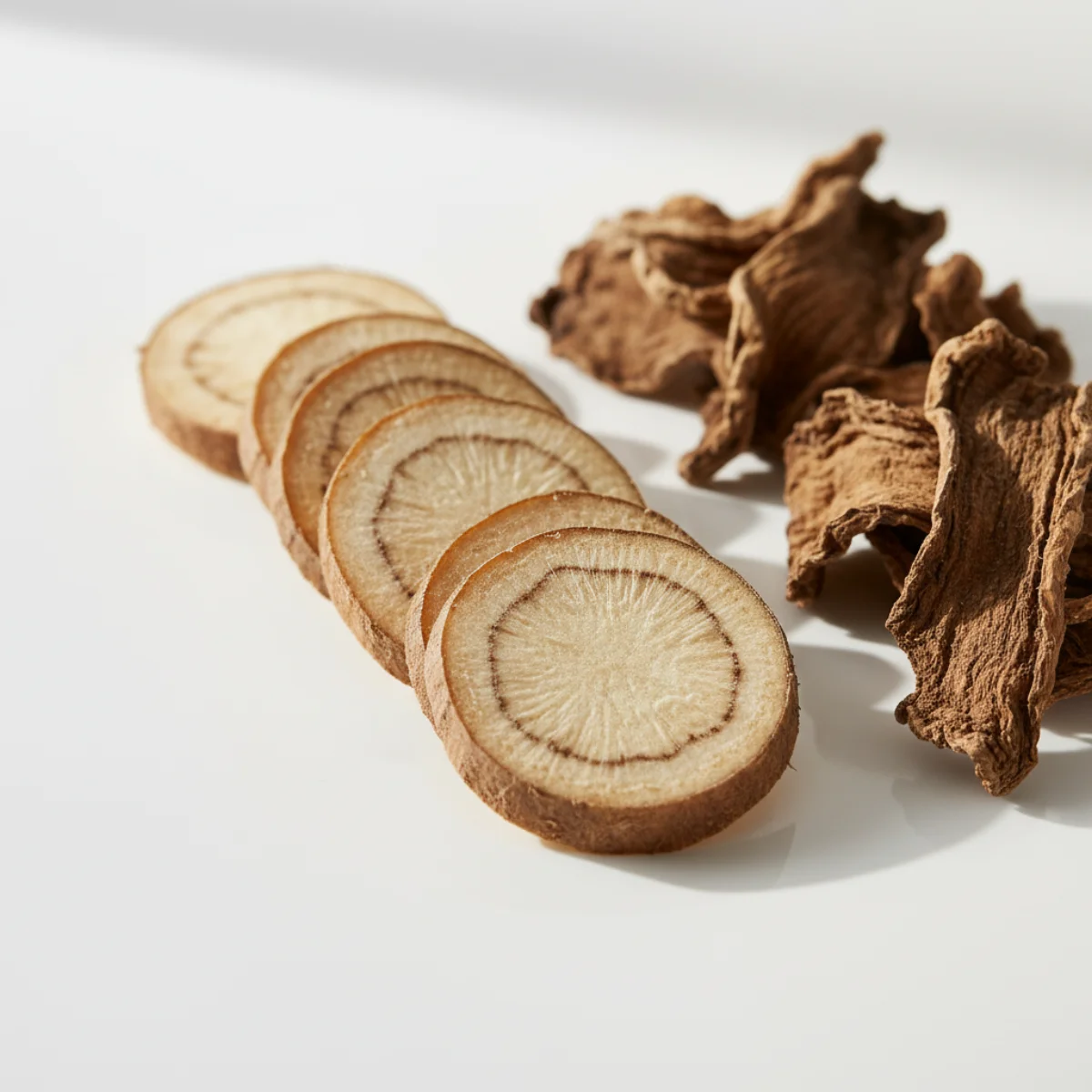
Burdock root is the underground taproot of Arctium lappa, a biennial plant native to northern Europe and Asia. It has been used for centuries in traditional Chinese medicine, Ayurveda, and European herbalism as both a food (particularly in Japanese cuisine, where it is called "gobo") and a botanical medicine. The plant grows to maturity in its first year, developing a long, starchy root rich in fiber and plant compounds.
Chemically, burdock root contains significant amounts of inulin (a prebiotic fiber), phenolic acids, volatile oils, and lignans. These compounds are thought to be responsible for its traditional uses in supporting digestion, liver function, and skin health. The root is typically prepared as a decoction, tincture, or dried powder for supplement form, allowing compounds to be extracted and concentrated.
The mechanism by which burdock may exert health effects likely involves its polyphenol content (which may reduce oxidative stress), its prebiotic fiber (which feeds beneficial gut bacteria), and potential anti-inflammatory activity in the digestive and hepatic systems. However, most of these mechanisms are supported by laboratory and animal studies rather than robust human trials.
Evidence-based benefits of Burdock Root
While burdock root has a long history of traditional use, robust clinical evidence in humans is limited. The following benefits are supported by preliminary research, traditional use, or in-vitro/animal studies, but should not be interpreted as proven medical claims.
Digestive Support & Prebiotic Action
Burdock root is high in inulin, a soluble fiber that acts as a prebiotic. Small human studies and traditional use suggest that inulin may increase beneficial gut bacteria (particularly Bifidobacterium), improve bowel regularity, and support overall digestive comfort. However, high-dose inulin can cause gas and bloating in some individuals, especially if introduced too rapidly.
Antioxidant & Anti-inflammatory Properties
Laboratory research has identified polyphenols and other antioxidants in burdock root extracts that reduce oxidative stress markers and inflammatory cytokines in cell cultures and animal models. While this suggests potential anti-inflammatory benefit in humans, direct clinical evidence is lacking. No large randomized controlled trials in humans have definitively shown anti-inflammatory benefit at any particular dose.
Skin Health & Detoxification
Traditional herbalism associates burdock root with skin clearance and "detoxification," and some herbal preparations combine it with other depurative herbs. A small number of human studies suggest burdock may have mild antimicrobial and wound-healing properties, though evidence for acne or dermatological conditions is anecdotal rather than robust. The term "detox" is not scientifically precise; burdock may support normal hepatic and renal function through its antioxidant content, but does not "cleanse" the body in a literal sense.
Liver Function Support
Animal and in vitro studies indicate that burdock polyphenols may protect hepatocytes and support normal liver enzyme activity. One small human study reported improved liver function markers in patients taking burdock extract, but the study size and design were limited. More rigorous clinical trials are needed to establish efficacy and optimal dosing for liver support.
Blood Sugar Regulation
Preliminary research suggests inulin and other constituents in burdock may have mild effects on postprandial glucose and insulin response. Some animal studies show improved glucose tolerance with burdock administration. However, human evidence is sparse, and burdock should not be relied upon as a primary intervention for blood sugar management without medical supervision.
Supplement forms of Burdock Root, compared
Burdock root is commercially available in several forms: dried root powder (for decoctions or capsules), standardized extracts, tinctures, and fresh or dried root for culinary use. Most supplement products contain either dried root powder or a liquid/powdered extract; bioavailability does not differ dramatically between forms, so choice often depends on convenience and individual preference.
How much Burdock Root should you take?
Burdock root has no established RDA or UL, as it is classified as a food in many regions. Traditional and supplement-based dosing ranges are based on historical use and limited human studies rather than rigorous dose-response trials.
- Dried root decoction: 1–2 teaspoons (3–6 g) of dried root, steeped in hot water, once or twice daily.
- Root powder in capsules: 1–3 g per day, typically divided into 1–2 doses.
- Standardized extract: 300–500 mg per day, depending on the product's polyphenol content and manufacturer guidance.
- Tincture (1:5 ratio): 2–4 mL (roughly 40–80 drops) once or twice daily, often taken with a small amount of water.
- Fresh culinary root: 3–10 g per serving as a food; no upper limit, as it is widely eaten in Asian cuisines.
Burdock is best taken with meals to minimize potential gastrointestinal effects and to aid absorption of fat-soluble compounds. Start with a lower dose and increase gradually, especially if using high-inulin products, to allow the digestive microbiota to adapt and reduce bloating. There is no evidence that splitting doses throughout the day enhances efficacy; once- or twice-daily dosing is typical. Do not combine burdock with other hepatic support herbs or supplements without consulting a healthcare provider, as safety data on combinations are limited.
Safety, side effects, and risks
Burdock root is generally recognized as safe (GRAS) when consumed as food or in traditional supplement doses. It has a long history of culinary and medicinal use with a low incidence of serious adverse events in humans. However, like all herbal supplements, it can cause side effects and interact with medications in certain individuals.
Common Side Effects
The most frequent adverse effects relate to its high inulin content and are gastrointestinal: bloating, gas, abdominal discomfort, and loose stools, especially when first introduced or at high doses. These effects typically resolve with dose reduction or gradual acclimatization. Allergic reactions are rare but possible, particularly in individuals with known sensitivity to plants in the Asteraceae family (ragweed, chrysanthemum, artichoke).
Serious or Rare Risks
Cases of burdock root contamination with atropine-containing plants (e.g., belladonna) have been reported in some herbal preparations, causing anticholinergic toxicity. This risk is mitigated by sourcing burdock from reputable suppliers with established quality control. Additionally, burdock may have diuretic properties and could theoretically increase urine output; individuals on diuretic medications should monitor kidney function and electrolytes if taking high-dose burdock.
Pregnancy & Lactation
Although burdock is eaten as food, there is insufficient clinical data on the safety of concentrated supplements in pregnancy. Some herbals classify burdock as potentially uterotonic (stimulating the uterus). It is prudent for pregnant or breastfeeding women to avoid supplemental burdock and to consult their obstetrician or midwife before consuming it in large quantities.
YMYL Disclaimer
This information is for educational purposes and is not a substitute for professional medical advice. If you have liver disease, kidney dysfunction, diabetes, an allergy to Asteraceae plants, are pregnant or nursing, or are taking medications (especially diuretics, anticoagulants, or diabetes drugs), consult your healthcare provider before supplementing with burdock root. Do not use burdock root as a replacement for evidence-based medical treatment.
Drug and nutrient interactions
- Diuretics (e.g., furosemide, hydrochlorothiazide): Burdock may have mild diuretic properties, potentially additive with prescription diuretics. Monitor fluid and electrolyte balance if combining.
- Anticoagulants & Antiplatelet Agents (e.g., warfarin, aspirin): Some herbals in the Asteraceae family have been associated with bleeding risk; burdock has not been formally studied in this context, but caution is warranted. Consult your healthcare provider if on blood thinners.
- Diabetes Medications (e.g., metformin, insulin, sulfonylureas): Burdock inulin and polyphenols may lower blood glucose; concurrent use with diabetes drugs could theoretically increase hypoglycemia risk. Monitor blood sugar closely.
- Hepatotoxic Drugs: If taking medications metabolized heavily by the liver (e.g., acetaminophen, statins), burdock's potential hepatoprotective effect is largely theoretical. Do not assume burdock mitigates drug hepatotoxicity without medical guidance.
- Other Hepatic Support Herbs (e.g., milk thistle, turmeric, dandelion root): No formal interaction studies exist; combining multiple hepatic herbs without professional oversight may lead to unpredictable effects.
For a comprehensive check of interactions between burdock root and your specific medications or supplements, use our supplement interaction checker.
Who might benefit — and who shouldn't self-supplement without guidance
| Most Likely to Benefit from Supplementing | Use with Caution or Seek Medical Guidance First |
|---|---|
| Generally healthy adults seeking digestive support, prebiotic fiber, or antioxidant supplementation with a traditional herb. | Pregnant or breastfeeding women; burdock's uterotonic potential warrants medical clearance. |
| Individuals with mild, occasional digestive sluggishness or bloating who tolerate inulin-rich foods. | People with diagnosed inflammatory bowel disease (IBD) or irritable bowel syndrome (IBS); inulin can exacerbate symptoms in some cases. |
| Those interested in general skin health and antioxidant support, as part of a broader wellness regimen. | Anyone with an allergy or sensitivity to plants in the Asteraceae family (ragweed, artichoke, chrysanthemum). |
| Individuals with subclinical or metabolic imbalances seeking a gentle, food-derived supplement with historical safety. | People taking diuretics, anticoagulants, or antidiabetic medications; require medical oversight to avoid adverse interactions. |
Frequently asked questions
Is burdock root safe to take long-term?
Burdock root is generally well-tolerated for long-term use at moderate doses, given its history as a food and traditional medicine. However, long-term safety data in humans are limited. If you plan to take burdock regularly for more than a few months, discuss it with a healthcare provider, especially if you have liver, kidney, or digestive conditions.
Can burdock root help with acne or skin problems?
Traditional herbalism has used burdock for skin conditions, and some preliminary studies suggest it has antimicrobial and anti-inflammatory properties. However, robust clinical evidence for acne is lacking. Burdock may be a helpful addition to a comprehensive skin care regimen, but should not replace dermatologically proven treatments like topical retinoids or benzoyl peroxide.
What is the difference between burdock root and burdock seed?
Burdock root and seed come from the same plant but are different parts with distinct properties. Burdock root is the main dietary supplement form, rich in inulin fiber and polyphenols. Burdock seed (Arctium lappa seed) is used less commonly in modern supplements but has been studied for different traditional indications. Most commercial supplements and culinary uses refer to the root.
Does burdock root cause bloating or gas?
Yes, bloating and gas are common side effects, especially when first taking burdock or at high doses, because of its high inulin content. To minimize this, start with a low dose and increase gradually over a week or two, drink plenty of water, and take it with meals. If bloating persists, reduce the dose or discontinue.
How long does it take to feel effects from burdock root?
If burdock root has an effect on digestion or energy, it may take 1–2 weeks of consistent daily use to notice mild changes. More research is needed to define the onset of any clinical benefit. Do not expect dramatic changes; any benefits are typically subtle and cumulative.
Can I take burdock root with other herbs like milk thistle or turmeric?
Although no formal interaction studies exist, combining multiple liver-support and antioxidant herbs is generally considered safe at normal supplement doses. However, check with a healthcare provider before stacking multiple herbal supplements, as individual responses vary and some people may experience digestive upset.
Is burdock root the same as dandelion root?
No, burdock root and dandelion root are from different plants, though both are traditional herbal foods and supplements with antioxidant and digestive properties. They are sometimes used together in herbal blends but have distinct chemical profiles and slightly different traditional indications. Both are generally safe, but consult a practitioner if combining multiple root preparations.
Related ingredients
Dandelion Root
Related ingredient — see the Dandelion Root reference page.
Artichoke Extract
Related ingredient — see the Artichoke Extract reference page.
Curcumin
Related ingredient — see the Curcumin reference page.
Astragalus
Related ingredient — see the Astragalus reference page.
Disclaimer: This information is for educational purposes only and should not replace medical advice. Always consult a qualified healthcare provider before starting any supplement, especially if you have a medical condition, are pregnant, or take prescription medications. These statements have not been evaluated by the Food and Drug Administration. This product is not intended to diagnose, treat, cure, or prevent any disease.