Akkermansia Muciniphila: Gut Barrier Support & Metabolic Health Probiotic
60-Second Summary
Akkermansia muciniphila is a gram-negative bacterium naturally present in the human gut microbiome that plays a key role in maintaining the intestinal mucus layer and supporting gut barrier integrity. Early-stage research suggests supplementation may support metabolic health, GLP-1 signaling, and overall microbial balance, though human clinical evidence remains limited. Safety appears favorable in initial studies, but long-term data in diverse populations is still emerging.
What is Akkermansia Muciniphila?
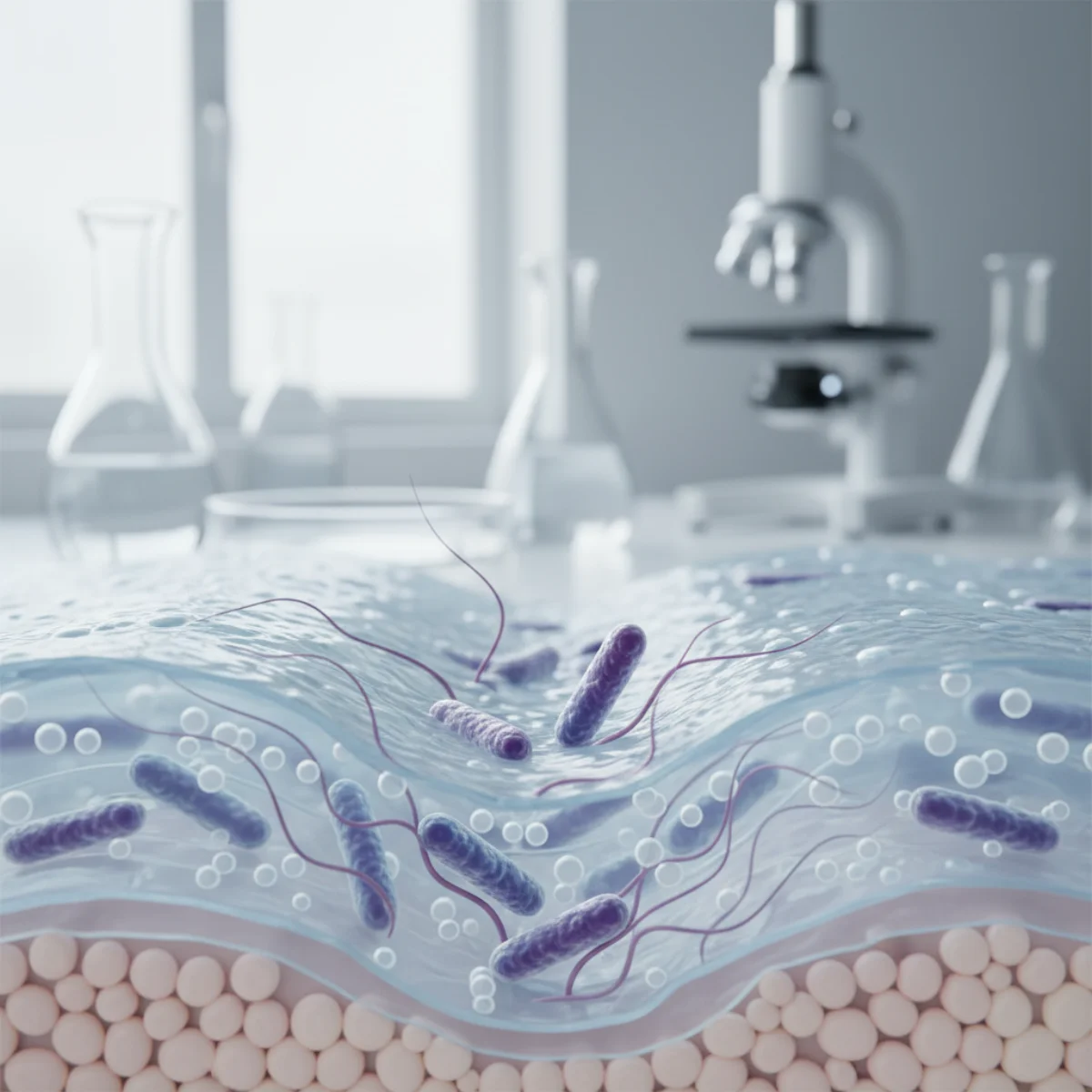
Akkermansia muciniphila is a commensal bacterium found throughout the human gastrointestinal tract, comprising 1–4% of the fecal microbiota in healthy adults. It is gram-negative and anaerobic, meaning it thrives in oxygen-free environments typical of the colon. The name "muciniphila" reflects its primary ecological niche: it feeds on mucins—the glycoproteins that make up the protective mucus layer lining the intestinal epithelium.
This bacterium plays a structural role in gut health by degrading mucins and producing short-chain fatty acids (particularly propionate and acetate) as metabolic byproducts. These metabolites support intestinal barrier function, immune tolerance, and may influence systemic metabolic processes including glucose regulation and energy homeostasis. Studies in animal models have linked Akkermansia abundance to improved insulin sensitivity, reduced metabolic endotoxemia, and favorable shifts in GLP-1 signaling—a pathway involved in glucose control and appetite regulation.
Akkermansia muciniphila is not naturally abundant in processed-food diets and tends to decline with aging, obesity, and certain medications (including proton-pump inhibitors). Supplemental forms are typically delivered as lyophilized (freeze-dried) whole cells or as pasteurized cell suspensions, sometimes in enteric-coated capsules to improve survival to the colon.
Evidence-based benefits of Akkermansia Muciniphila
Although Akkermansia muciniphila is recognized as a keystone organism in healthy microbiota, human clinical evidence for supplementation remains preliminary. Most supportive data comes from animal studies, mechanistic work, and a small number of early-stage RCTs. The following benefits show promise but should be understood as preliminary.
Gut Barrier Integrity & Intestinal Health
Akkermansia muciniphila strengthens the intestinal epithelial barrier by promoting mucus layer thickness and supporting tight-junction proteins. In mouse models, restoration of Akkermansia levels correlates with reduced intestinal permeability ("leaky gut") and lower lipopolysaccharide (LPS) translocation. A small placebo-controlled pilot in humans found that 8-week Akkermansia supplementation was associated with improvements in fecal calprotectin (a marker of intestinal inflammation) and subjective digestive symptoms, though the sample size was modest.
Metabolic & Glucose Support
Preclinical data suggests Akkermansia influences glucose metabolism and insulin sensitivity through microbial metabolite production and modulation of GLP-1 receptor signaling. In diet-induced obese mice, Akkermansia colonization reduced fasting glucose and improved glucose tolerance. Human studies are sparse, but preliminary evidence from small trials suggests supplementation may be associated with modest improvements in insulin resistance markers and fasting blood glucose in overweight or metabolically compromised individuals. Larger RCTs are needed to confirm efficacy.
Systemic Inflammation & Immune Tolerance
Akkermansia muciniphila is associated with immune homeostasis through production of short-chain fatty acids and interactions with intestinal immune cells. Low abundance of Akkermansia correlates with elevated systemic LPS levels and pro-inflammatory markers in observational studies. Animal studies show that Akkermansia supplementation can lower circulating TNF-α and IL-6. Human mechanistic data is limited, but observational work suggests that individuals with adequate Akkermansia levels show more favorable lipopolysaccharide-binding protein (LBP) and inflammatory cytokine profiles.
Metabolic Endotoxemia & Microbial Dysbiosis
Akkermansia depletion is associated with increased translocation of gram-negative bacterial endotoxin (LPS) across a compromised gut barrier—a condition termed metabolic endotoxemia, linked to obesity and metabolic dysfunction. Restoration of Akkermansia in animal models reduces circulating LPS levels and associated endotoxemia markers. Preliminary human evidence suggests supplementation may lower fecal dysbiosis indices and restore microbial diversity, though causality has not been firmly established.
Aging & Longevity-Related Microbiota Decline
Akkermansia abundance naturally declines with age and is considered a marker of healthy aging in some microbiota studies. Early work suggests that supplementation may help maintain or restore age-related Akkermansia loss. No human longevity trials have been completed, and the degree to which Akkermansia restoration translates to functional health or lifespan extension remains speculative.
Supplement forms of Akkermansia Muciniphila, compared
Akkermansia muciniphila supplements are typically sold as lyophilized (freeze-dried) whole bacterial cells, sometimes in pasteurized form, and are usually delivered in enteric-coated capsules to protect viability during stomach transit. Brand variants may differ in CFU count, strain source, and delivery method, but comparative bioavailability data from human studies is not yet available.
How much Akkermansia Muciniphila should you take?
Standardized dosing recommendations do not yet exist, as clinical trials have used a range of CFU counts and duration. Current supplements typically provide 1–10 billion CFU (colony-forming units) per serving, with most pilot human studies using doses in the low-to-mid range.
- Pilot study doses: 1–2 billion CFU daily, administered for 8–12 weeks in early-stage human trials.
- Commercial supplement range: 1–10 billion CFU per capsule, once daily, typically taken with or without food.
- Special populations: Dosing data for children, pregnant individuals, or immunocompromised persons is insufficient; medical guidance is strongly advised in these groups.
Most supplements recommend taking Akkermansia with food to improve tolerability and stomach acid protection. Enteric-coated formats should be swallowed whole, not chewed. Limited evidence exists on optimal duration of supplementation; pilot studies have run 8–12 weeks continuously. If using concurrently with other probiotics, separate administration by at least 2 hours, though formal interaction data is sparse.
Safety, side effects, and risks
Akkermansia muciniphila is a commensal organism naturally present in human microbiota, and it has a favorable presumed safety profile based on its ecological niche and early-stage trials. However, long-term safety data in large populations, pregnant individuals, children, and immunocompromised patients remains limited. Anyone with significant health conditions or immunosuppression should consult a clinician before supplementing.
Common Side Effects
Transient gastrointestinal symptoms (bloating, mild changes in stool consistency, flatulence) have been reported in some users, particularly during the first 1–2 weeks of supplementation. These typically resolve without intervention. No serious adverse events have been reported in published pilot RCTs, though post-marketing surveillance is limited.
Rare or Serious Risks
In theory, excessive bacterial translocation or probiotic overgrowth could pose a risk in severely immunocompromised individuals (e.g., those with AIDS, on intensive chemotherapy, or with severe neutropenia). Cases of probiotic-associated bacteremia are very rare with commensal strains, but case reports exist in the literature. Individuals with critical illness, central lines, or profound immunosuppression should avoid Akkermansia without explicit medical clearance.
Pregnancy & Lactation
Safety data in pregnant and lactating individuals is absent. Given the lack of human evidence, supplementation during pregnancy or breastfeeding is not recommended unless specifically advised by an obstetrician or maternal-fetal medicine specialist.
Medical Guidance
Talk to your clinician before using Akkermansia muciniphila if you have active inflammatory bowel disease, critical illness, severe immunosuppression, are on immunosuppressive medications (including post-transplant regimens), or if you are pregnant or nursing.
Drug and nutrient interactions
- Proton-pump inhibitors (PPIs) may reduce Akkermansia viability and colonic pH-dependent survival; if taking PPIs, inform your healthcare provider before supplementing.
- Broad-spectrum antibiotics will likely kill supplemented Akkermansia; wait at least 2 hours after an antibiotic dose before taking a probiotic, and consider restarting supplementation after the antibiotic course ends.
- Other probiotics (Lactobacillus, Bifidobacterium, Bacillus species) do not have documented antagonism with Akkermansia, but evidence on synergy is also sparse; stagger administration by 2+ hours if possible.
- Prebiotic fibers (inulin, FOS, acacia fiber) may enhance Akkermansia engraftment by providing substrate for fermentation; combining prebiotics with Akkermansia supplementation is commonly recommended, though formal RCT data is limited.
- Immunosuppressive medications (azathioprine, methotrexate, calcineurin inhibitors, biologic immunomodulators) may theoretically increase risk of bacterial translocation; use Akkermansia only under medical supervision in these settings.
For a comprehensive assessment of supplement–drug interactions, consult the dietary supplement interaction checker.
Who might benefit — and who shouldn't self-supplement without guidance
| Most Likely to Benefit from Supplementing | Use with Caution or Seek Medical Guidance First |
|---|---|
| Individuals with low dietary fiber intake and dysbiotic microbiota patterns on testing | Patients with inflammatory bowel disease (Crohn's, ulcerative colitis) without medical oversight |
| People seeking metabolic health support and glucose regulation optimization | Severely immunocompromised individuals (AIDS, post-transplant, on intensive chemotherapy) |
| Those with elevated markers of systemic inflammation or endotoxemia | Pregnant or nursing individuals without obstetric guidance |
| Individuals with age-related microbiota changes and declining Akkermansia levels | Patients on long-term broad-spectrum antibiotics or PPI therapy without coordinated timing |
| Health-conscious adults interested in microbiota diversity and barrier function optimization | Children under 18 years (insufficient safety data) |
Frequently asked questions
How long does it take for Akkermansia muciniphila to show effects?
Most pilot human studies ran for 8–12 weeks before measuring outcomes such as inflammatory markers or glucose tolerance. Anecdotal reports of improved digestion may emerge within 2–4 weeks, but robust measurable changes typically require 8+ weeks. This timeline can vary significantly between individuals and depends on baseline microbiota composition and diet.
Can I take Akkermansia muciniphila with other probiotics?
Yes, generally safe. Akkermansia is not known to antagonize other probiotic strains like Lactobacillus or Bifidobacterium. To minimize competition and maximize viability, space them out by at least 2 hours. Evidence on whether combining them enhances benefits is sparse, but there is no known contraindication.
Should I take Akkermansia with food or on an empty stomach?
Taking it with food may improve tolerability and protect the bacteria from stomach acid, particularly if the capsule is not enteric-coated. If your supplement is enteric-coated, food may slightly delay its release, but either approach is reasonable. Follow the manufacturer's instructions on your specific product.
Is Akkermansia safe to take long-term?
Akkermansia muciniphila is a natural gut bacterium, so it is presumed safe for long-term use. However, long-term safety data beyond 12 weeks in humans is limited. If you are considering indefinite supplementation, discuss this with a healthcare provider, particularly if you have chronic conditions or are on medications.
Can I take Akkermansia if I am on antibiotics?
Broad-spectrum antibiotics will likely kill the supplemented bacteria, making the dose ineffective. Wait at least 2 hours after taking an antibiotic before taking a probiotic, and consider restarting your Akkermansia supplement after your antibiotic course is complete, once your microbiota is recovering.
Does Akkermansia help with weight loss?
Animal and mechanistic studies suggest Akkermansia may support metabolic health and glucose regulation, which could theoretically support metabolic function. However, no human RCTs have directly studied weight loss as a primary outcome. Akkermansia is best viewed as a microbiota-supporting supplement rather than a weight-loss agent.
What is the difference between live and pasteurized Akkermansia supplements?
Live (lyophilized) Akkermansia aims to provide viable bacteria that can colonize the colon, while pasteurized Akkermansia is heat-killed but may still exert immunological effects through bacterial components and metabolites. Most commercial supplements use lyophilized live cells. Comparative efficacy has not been tested in head-to-head human trials.
Related ingredients
Acacia Fiber
Related ingredient — see the Acacia Fiber reference page.
Beta Glucan
Related ingredient — see the Beta Glucan reference page.
Digestive Enzymes
Related ingredient — see the Digestive Enzymes reference page.
Bacillus Coagulans
Related ingredient — see the Bacillus Coagulans reference page.
Curcumin
Related ingredient — see the Curcumin reference page.
Disclaimer: This information is for educational purposes only and should not replace medical advice. Always consult a qualified healthcare provider before starting any supplement, especially if you have a medical condition, are pregnant, or take prescription medications. These statements have not been evaluated by the Food and Drug Administration. This product is not intended to diagnose, treat, cure, or prevent any disease.