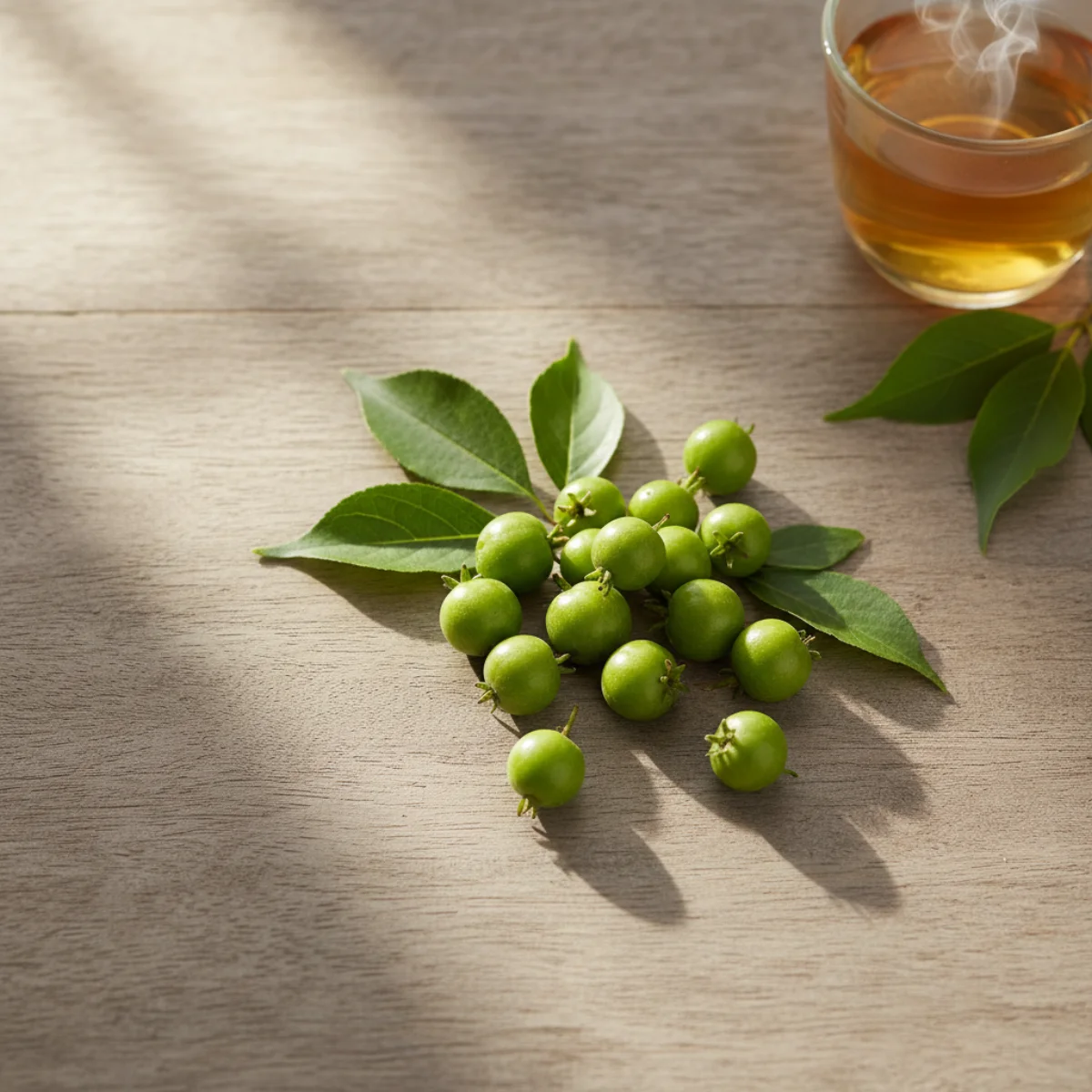
Vitex, also known as chasteberry or Vitex agnus-castus, is a berry from a Mediterranean shrub that has been used in traditional medicine for centuries to support women's hormonal health. Modern clinical research has examined whether vitex can help regulate menstrual cycles, reduce premenstrual syndrome (PMS) symptoms, and support luteal-phase progesterone levels. While evidence is most compelling for menstrual regularity, smaller studies suggest potential benefits for mood-related and physical PMS symptoms. This guide explores what the science shows, how vitex may work, appropriate dosing, and who might benefit most from supplementation.
What Vitex Is and How It Works
Vitex is derived from the dried berries of the chaste tree, a plant native to the Mediterranean region and parts of central Asia. The berry contains several bioactive compounds, including flavonoids, iridoid glycosides, and diterpenes, though the exact mechanism of action remains incompletely understood.
The leading theory is that vitex acts primarily on the hypothalamic-pituitary-ovarian (HPO) axis by reducing prolactin secretion. Prolactin, a hormone released by the pituitary gland, can suppress luteal-phase progesterone production when elevated. By keeping prolactin in check, vitex may indirectly support progesterone synthesis, which is critical for a healthy luteal phase—the second half of the menstrual cycle. Some evidence also suggests vitex may have mild dopaminergic activity, which aligns with prolactin's regulation by dopamine at the pituitary.
Additionally, vitex may influence the balance of estrogen and progesterone throughout the cycle, though human studies have not consistently demonstrated measurable shifts in serum hormone levels. Rather, the clinical effects (improved cycle length, reduced PMS) may reflect subtle neuroendocrine adjustments that are not always captured by single-point hormone testing.
Menstrual Cycle Regularity and Anovulation
One of the most studied uses of vitex is supporting regular menstrual cycles and addressing anovulatory cycles (cycles without ovulation). Several randomized controlled trials have examined this outcome.
A landmark study published in the American Journal of Clinical Nutrition found that women taking a standardized vitex extract had significantly higher progesterone levels in the luteal phase and reported shorter cycle lengths compared to placebo. Another trial in women with luteal-phase defect (characterized by low progesterone and short luteal phases) showed improvements in luteal-phase length and pregnancy rates in the vitex group.
However, response is not universal. Studies typically show that 40–60% of participants experience meaningful cycle improvements—an effect larger than placebo but not applicable to all users. Benefits usually become apparent after 2–3 months of consistent daily use, and some sources recommend a 6-month trial before concluding vitex is ineffective.
Women with polycystic ovary syndrome (PCOS) represent a subgroup with particular interest in vitex, since irregular cycles are a hallmark of the condition. Evidence specific to PCOS is limited, but one small trial suggested vitex may help lengthen short luteal phases in this population. For fertility support, vitex is often recommended alongside other strategies, though it is not a first-line fertility treatment and should not replace evaluation by a reproductive endocrinologist.
Premenstrual Syndrome (PMS) and Luteal-Phase Symptoms
Beyond cycle regularity, vitex is widely promoted for PMS symptom relief. Symptoms of PMS—such as bloating, breast tenderness, mood changes, and irritability—cluster during the luteal phase when progesterone naturally declines.
Several trials have measured vitex's effect on PMS severity. A double-blind randomized trial in Archives of Gynecology and Obstetrics reported that women receiving vitex showed significant reductions in physical symptoms (breast tenderness, bloating) and mood-related symptoms (irritability, depression, anger) compared to placebo, with improvements emerging over 3 months. Another meta-analysis of smaller trials found vitex superior to placebo for overall PMS symptoms, with effect sizes considered moderate.
It is important to note that not all PMS symptoms respond equally. Physical symptoms such as breast tenderness and bloating may improve more consistently than mood symptoms. Additionally, individual variation is substantial—some women experience dramatic relief, while others see minimal change. The mechanism linking progesterone to mood remains incompletely understood, so predicting who will respond well to vitex is difficult.
When considering vitex for PMS, it is worth noting that other evidence-supported options exist, including chasteberry-vitex supplementation at proven dosages, cognitive-behavioral therapy, exercise, and dietary adjustments. Vitex is often one tool among several rather than a standalone solution.
Hormonal Acne and Skin Health
Acne that flares during the luteal phase is driven in part by androgens and changes in sebum production. Since vitex may support luteal-phase progesterone and has a mild anti-androgenic reputation (though human evidence is weak), some advocates suggest it for hormonal acne.
Clinical evidence directly testing vitex for acne is scarce. Anecdotal reports are common, but rigorous trials are lacking. One small open-label study noted improvement in hormonal acne severity in women using vitex, but lacked a control group. The mechanism—whether through prolactin reduction, progesterone support, or anti-androgenic effects—remains speculative.
If you are interested in vitex for acne control, it is reasonable to trial it as an adjunct to other evidence-based approaches (topical retinoids, oral contraceptives if appropriate, dietary management). However, do not rely on vitex as a primary acne treatment without professional guidance.
Dosing and Duration of Use
Vitex products vary considerably in strength and formulation. Most clinical trials have used standardized extracts delivering 20–40 mg of vitex per day, often standardized to a percentage of active compounds such as iridoid glycosides or casticin.
Typical dosing recommendations are:
- Liquid extract (1:1 tincture): 0.5–1 mL once or twice daily
- Dried herb (capsule or powder): 300–500 mg once or twice daily
- Standardized extract (typically 5:1 or higher concentration): 20–40 mg once daily
Consistency matters more than dose flexibility. Vitex is not a