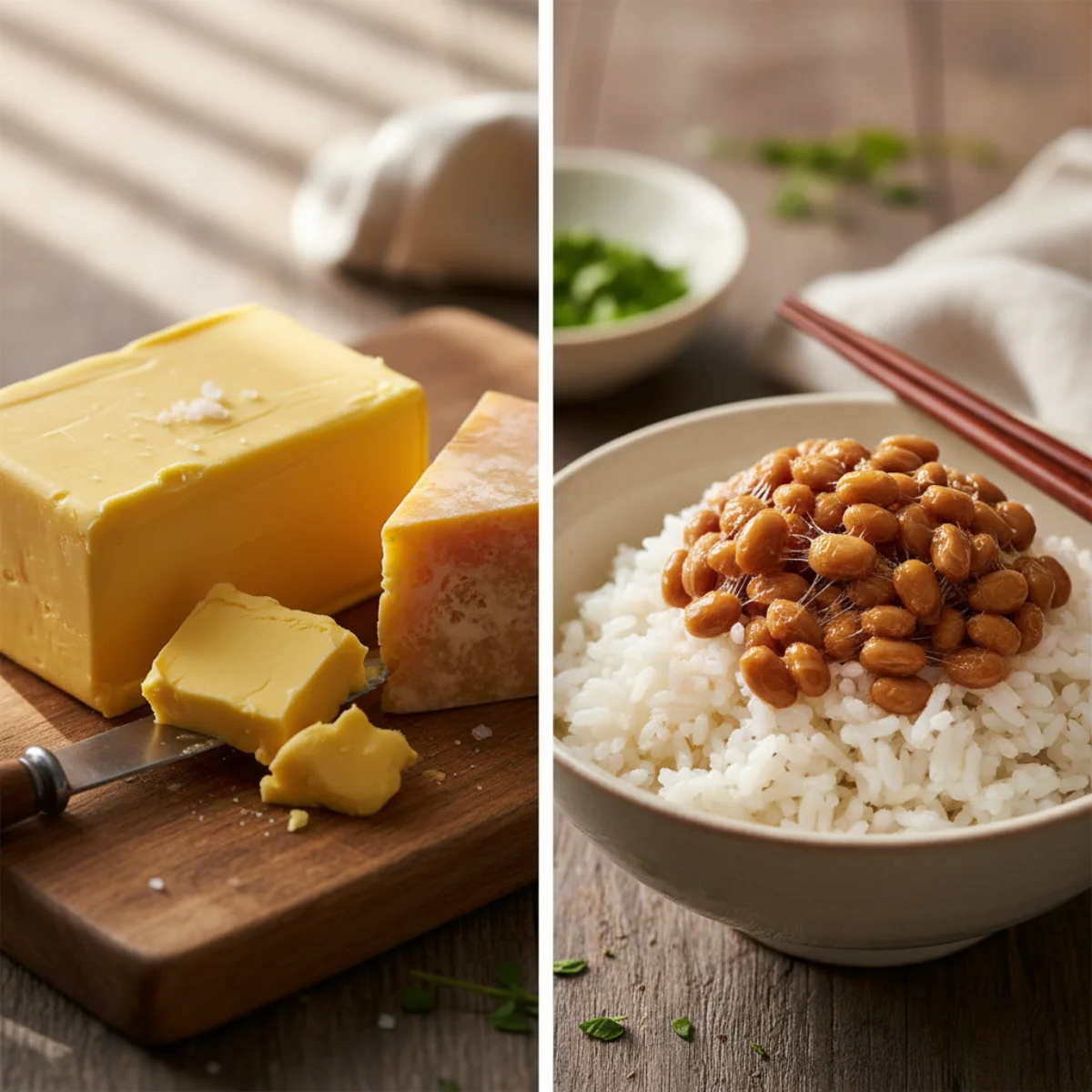
Vitamin K2 comes in multiple forms, with MK-4 and MK-7 being the two most studied and commercially available subtypes. Both are menaquinones—long-chain forms of vitamin K that differ in the length of their side chain—but they behave differently in your body in terms of absorption speed, tissue distribution, and how long they remain active. This comparison examines the evidence behind each form to help you decide which is more appropriate for your individual needs.
What Each Is and How It Works
MK-4 (menatetrenone) is a shorter-chain vitamin K2 with four isoprene units in its side chain. It is synthesized endogenously from phylloquinone (vitamin K1) by your body, though only in small amounts. Dietary sources are primarily animal-based: grass-fed butter, aged cheeses, egg yolks, and meat products. When you consume MK-4, your intestines absorb it relatively quickly via passive diffusion and carrier-mediated uptake, sending it directly to the liver and then to peripheral tissues.
MK-7 (menaquinone-7) is a longer-chain variant with seven isoprene units, derived almost exclusively from fermented foods like natto (fermented soybeans), certain cheeses, and some fermented plant-based products. It is also produced by certain gut bacteria, though supplementation or dietary intake of fermented foods is a more reliable source. Structurally, the extended side chain affects how MK-7 is packaged and transported in your bloodstream, resulting in slower initial absorption but longer tissue residence time.
Both forms perform the same fundamental biochemical role: they act as a cofactor for carboxylase enzymes that activate vitamin K–dependent proteins. These proteins include osteocalcin (involved in bone mineralization), matrix Gla protein (involved in vascular calcification prevention), and other Gla-containing proteins involved in coagulation, inflammation, and cellular regulation. The difference lies in where and how long they work.
Evidence by Outcome
Bone Health: Several trials have examined both forms for bone mineral density and fracture risk. A well-cited Japanese trial found that MK-4 supplementation (45 mg/day) reduced fracture incidence in postmenopausal women over three years. European studies with MK-7 (90–180 µg/day) have shown improvements in bone mineral density and reduced undercarboxylated osteocalcin (a marker of bone metabolism). Evidence suggests both may support bone health, but MK-7's longer half-life may allow for more consistent osteocalcin carboxylation over time, reducing the need for frequent dosing. Direct head-to-head trials are limited, so neither can be declared superior based on current evidence.
Cardiovascular Health: MK-7 has received more cardiovascular attention in recent years. Studies show that adequate K2 status is associated with lower arterial calcification and reduced cardiovascular mortality risk. The Rotterdam Study, a large observational study, found that higher dietary K2 intake was associated with lower cardiovascular events, with some suggestion that the effect was stronger for longer-chain menaquinones. However, no definitive mechanistic proof exists that MK-7 outperforms MK-4 in this context. Both activate matrix Gla protein, the protein responsible for vascular calcification suppression.
Coagulation: Both MK-4 and MK-7 support the synthesis of coagulation factors II, VII, IX, and X. Anyone on warfarin or other anticoagulants should maintain consistent intake of either form to avoid fluctuating INR (International Normalized Ratio). There is no evidence that one form is safer or more likely to interfere with anticoagulation therapy than the other.
Bioavailability and Dose-Form
Absorption and Half-Life: MK-4 is absorbed quickly (peak blood levels within 1–2 hours) but has a very short serum half-life of approximately 1–2 hours. This rapid clearance does not mean it isn't working—once absorbed, MK-4 is rapidly taken up by tissues and activated—but it does mean that frequent dosing (multiple times per day) or dietary intake throughout the day is theoretically advantageous.
MK-7 is absorbed more slowly (peak levels in 2–12 hours) but persists in circulation far longer, with a half-life estimated at 2.5–3 days. This extended availability allows MK-7 to continuously reach target tissues over multiple days, meaning a single daily dose may maintain therapeutic levels. The longer serum persistence of MK-7 is one reason supplementation studies often use lower daily doses of MK-7 compared to MK-4.
Tissue Accumulation: Long-term MK-7 supplementation can lead to measurable plasma accumulation over weeks and months, suggesting tissue storage. MK-4 does not accumulate in the same way; each dose is metabolized and cleared relatively quickly. For bone and vascular applications where you want sustained K2 activity, MK-7's accumulation profile may be advantageous. For sensitive populations (e.g., those on strict anticoagulation regimens), MK-4's rapid clearance profile offers faster adjustment if intake is suddenly changed.
Fat Solubility: Both are fat-soluble vitamins, so absorption is enhanced when taken with dietary fat. Supplements containing MK-7 are often formulated with MCT oil or other lipids to optimize bioavailability. MK-4 supplements also benefit from fat co-ingestion. Interestingly, the longer side chain of MK-7 makes it more hydrophobic and may improve retention in fat-rich tissues like bone and adipose tissue.
Safety and Interactions
Anticoagulation Drug Interactions: Both MK-4 and MK-7 are vitamin K, so both can theoretically antagonize warfarin and similar vitamin K antagonist drugs. The key is consistency: sudden increases in either form may lower INR, and sudden cessation may raise it. Anyone on anticoagulants should consult their clinician before introducing either form at supplemental levels. The longer half-life of MK-7 means changes in status take longer to manifest, which could be either reassuring (slow, predictable changes) or concerning (difficulty in rapid adjustment).
Toxicity: Vitamin K is fat-soluble and can theoretically accumulate, but human toxicity from dietary or supplemental K2 has not been documented. Studies using very high MK-7 doses (up to 720 µg/day for years) have shown no serious adverse effects. MK-4 at very high doses (45 mg/day) has also been used in clinical trials without serious safety signals.
Drug Interactions: Beyond anticoagulants, both forms may interact with certain antibiotics (that inhibit gut bacteria) and bile-acid sequestrants (that reduce fat absorption). No major interaction has been documented with other supplements, though stacking with vitamin D is common and evidence-based, as both support bone health.
Who Should Pick Which
Choose MK-4 if: You prefer animal-derived, naturally occurring sources (dairy, eggs, meat); you want rapid absorption for quick tissue saturation; you live in a region where fermented foods are less culturally available or palatable; you are on a strict anticoagulation regimen and want faster washout if you need to adjust intake; or you prefer dividing doses throughout the day with food.
Choose MK-7 if: You want once-daily dosing convenience; you have limited dietary access to animal K2 sources; you are vegan or vegetarian and can access fermented soy products or natto; you are seeking sustained, long-term bone or cardiovascular support where consistent tissue levels are desirable; or you prefer to minimize total daily supplement burden through longer-acting compounds.
Both forms may be suitable if: You are interested in synergistic effects (though evidence is limited); you wish to rotate between forms to avoid monotony; or you are tailoring intake to specific seasonal or dietary changes.
Practical Buying Notes
MK-4 Supplements: Often dosed at 1–5 mg per serving, though clinical trials have used 45 mg/day. Formulations typically use menadione (a synthetic precursor) or true MK-4. Derived forms and true forms may have different potencies, so check labels carefully. Cost is typically moderate. Brands and quality vary; third-party testing is helpful.
MK-7 Supplements: Usually dosed at 90–180 µg per serving, reflecting its longer half-life. Many brands source from natto fermentation. Formulations often include a lipid matrix (MCT oil or similar) to enhance absorption. Price per dose may be higher than MK-4, but the requirement for less frequent dosing may offset this. Natto allergies are rare but possible; check ingredient sourcing if you have soy sensitivity.
Dietary Sources: If cost or pill aversion is a concern, natural K2 intake can be substantial. Three ounces of grass-fed cheddar contains roughly 10 µg of MK-7; a single serving of natto provides 200+ µg. Two egg yolks contain approximately 4 µg of MK-4. For those with consistent dietary access, supplementation may not be necessary.
Quality and Testing: Look for supplements third-party tested by NSF, USP, or ConsumerLab. Ensure the product specifies which menaquinone form (MK-4 vs. MK-7) is used and the amount in micrograms or milligrams. Be wary of proprietary blends that mask the dose of individual K2 forms.
Key Takeaway
MK-4 and MK-7 are complementary forms of vitamin K2, each with distinct pharmacokinetic profiles and practical advantages. MK-4 is faster-acting and widely available in animal foods; MK-7 is longer-acting and better suited to daily supplementation. Current evidence does not definitively prove one superior to the other for all outcomes, so your choice should reflect your dietary patterns, dosing preferences, health goals, and any medications you take. If bone and cardiovascular health are priorities and you lack consistent dietary K2, a once-daily MK-7 supplement is a straightforward, evidence-supported choice. If you prefer animal-based nutrition or have anticoagulation concerns, MK-4 from whole foods or supplements is equally valid. Consulting with a healthcare provider, especially if you are on anticoagulants or have a clotting disorder, ensures your K2 strategy aligns with your clinical needs.