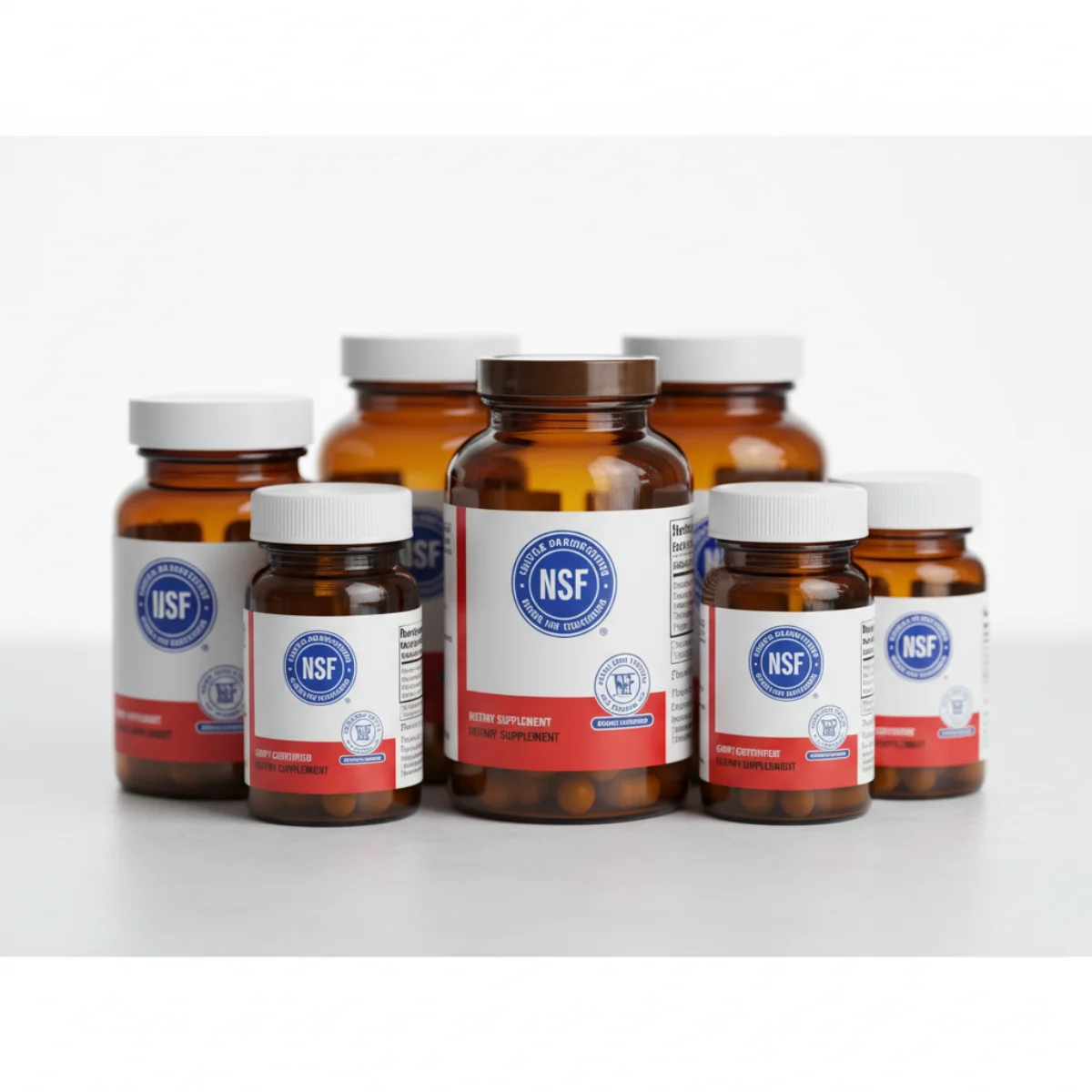
When shopping for dietary supplements, you may notice seals or logos on bottles for USP, NSF, or cGMP. These certifications can feel like alphabet soup, but they represent real third-party verification that a product has met strict manufacturing, purity, and potency standards. Understanding what each certification means helps you identify higher-quality supplements and make more confident purchasing decisions.
What Is cGMP and Why It Matters
cGMP stands for current Good Manufacturing Practice, a set of FDA regulations that establish minimum standards for how dietary supplements must be manufactured, processed, and packaged. The term "current" reflects that these standards are updated as science and manufacturing evolve.
cGMP requirements cover facility design, equipment maintenance, staff training, record-keeping, and quality control testing. Every dietary supplement manufacturer in the United States is legally required to follow cGMP standards. However, enforcement is inconsistent, and FDA inspection resources are limited—meaning some manufacturers cut corners despite the legal requirement.
This is where third-party certification becomes valuable. When a product displays a USP or NSF certification, it means an independent organization has verified that the manufacturer actually follows cGMP standards and has tested the finished product itself.
Understanding USP Certification
USP (United States Pharmacopeia) is a nonprofit scientific organization founded in 1820 that sets standards for drugs and supplements in the United States. USP certification for dietary supplements means the product has passed rigorous testing for three key criteria:
- Identity: The supplement contains the ingredients listed on the label.
- Strength (Potency): The product contains the amount of active ingredient claimed—not more, not less.
- Purity: The product is free of harmful contaminants like heavy metals, pesticides, and microbial pathogens.
USP also verifies that manufacturers follow cGMP standards and maintain proper documentation. Products that pass receive the "USP Verified" mark, one of the most respected symbols in the supplement industry. The USP testing process is expensive and rigorous, so products bearing this seal typically cost more than untested alternatives—but the higher price reflects the verification cost, not necessarily product superiority.
Understanding NSF Certification
NSF International is an independent, not-for-profit organization that certifies products across many industries, including dietary supplements. NSF's supplement certification program is similar to USP's in scope: testing for identity, strength, and purity, plus verification of cGMP compliance.
NSF uses a slightly different testing methodology than USP, and they also maintain a public database where consumers can verify certified products. One notable aspect of NSF's program is that they test for banned substances—particularly important for athletes, since NSF Certified for Sport products guarantee they do not contain banned performance-enhancing substances or steroids.
Like USP, NSF certification is expensive and voluntary, so seeing the NSF seal indicates a manufacturer's commitment to transparency and quality assurance above the legal minimum.
How Third-Party Testing Protects Consumers
Without independent certification, a supplement manufacturer could claim almost anything on a label with minimal risk of immediate consequences. The FDA does not test every product before it reaches the market; they typically investigate only after receiving complaints or detecting problems.
Third-party organizations like USP and NSF conduct rigorous laboratory testing of finished products to verify label claims. This protects consumers by identifying products that are mislabeled, contaminated, or underpotent. Studies have shown that uncertified supplements have significantly higher rates of quality failures than certified ones. When you consult a comprehensive supplement buying guide, one consistent recommendation is to prioritize products with third-party certifications—precisely because the testing catches problems that manufacturer-only quality control might miss.
What Gets Tested and Why
Third-party testers assess several critical parameters:
- Active Ingredient Content: Does the product contain the amount of the active ingredient stated on the label? Underpotent products are ineffective; overpotent products risk safety.
- Contaminants: Tests screen for heavy metals (lead, cadmium, mercury, arsenic), pesticide residues, microbial contamination (E. coli, salmonella), and mold toxins.
- Undeclared Ingredients: Testers verify that no unlisted ingredients are present—a particular concern with some herbal products that may contain pharmaceutical drugs not disclosed on the label.
- Allergen Cross-Contamination: Testing checks for unintended presence of major allergens like gluten, peanuts, or tree nuts.
The reason these tests matter is that dietary supplements, unlike drugs, do not undergo FDA pre-market review. Manufacturers are responsible for ensuring safety and efficacy. Third-party testing closes a critical gap by providing external verification that should already exist.
Other Quality Certification Programs
While USP and NSF are the most recognized, other reputable third-party certifiers exist:
- ConsumerLab: An independent laboratory that tests supplements and publishes results online. ConsumerLab does not award a "seal," but their passing test results are widely trusted.
- Informed Choice: Primarily focused on sports supplements, testing for banned substances and manufacturing standards.
- BSCG (Banned Substances Control Group): Another sports-focused program certifying that products do not contain banned performance-enhancing agents.
In markets outside the United States, equivalents exist—for example, European supplements may carry certification from similar bodies. The key principle is the same: independent third-party verification of quality and safety claims.
Limitations of Certifications
While third-party certifications significantly reduce risk, they are not perfect guarantees. Here are important limitations to understand:
- Cost and Coverage: Testing is expensive, so not every supplement product is certified. Many legitimate, quality products lack certification simply because manufacturers cannot afford it.
- Scope: Certifications verify identity, strength, and purity—but they do not evaluate whether a supplement is actually effective for claimed health benefits. A certified product could contain exactly what the label says and still not work for a particular condition.
- Snapshot Testing: Certifications represent a snapshot in time. If a manufacturer later changes suppliers or processes and cuts corners, the old certification may not reflect current quality.
- No Efficacy Verification: Third-party certification is about quality and safety, not clinical effectiveness. Just because USP or NSF certifies a product does not mean it will produce the results you hope for.
How to Use This Information When Shopping
When evaluating a supplement, look for USP, NSF, or ConsumerLab marks as a positive indicator of quality. However, absence of a mark does not automatically mean the product is poor—it may simply reflect the manufacturer's choice not to pay for third-party testing.
Use certifications as one factor among several. Also consider the brand's reputation, ingredient transparency, dosage appropriateness, and any relevant clinical evidence for the supplement itself. If you are comparing two otherwise similar products and one is certified while the other is not, the certification adds meaningful assurance that the certified product contains what the label claims.
For individuals with health conditions, allergies, or who take medications, third-party certification is particularly valuable because contamination or mislabeling could have serious consequences. The small premium you may pay for a certified product is worthwhile insurance against quality failures.