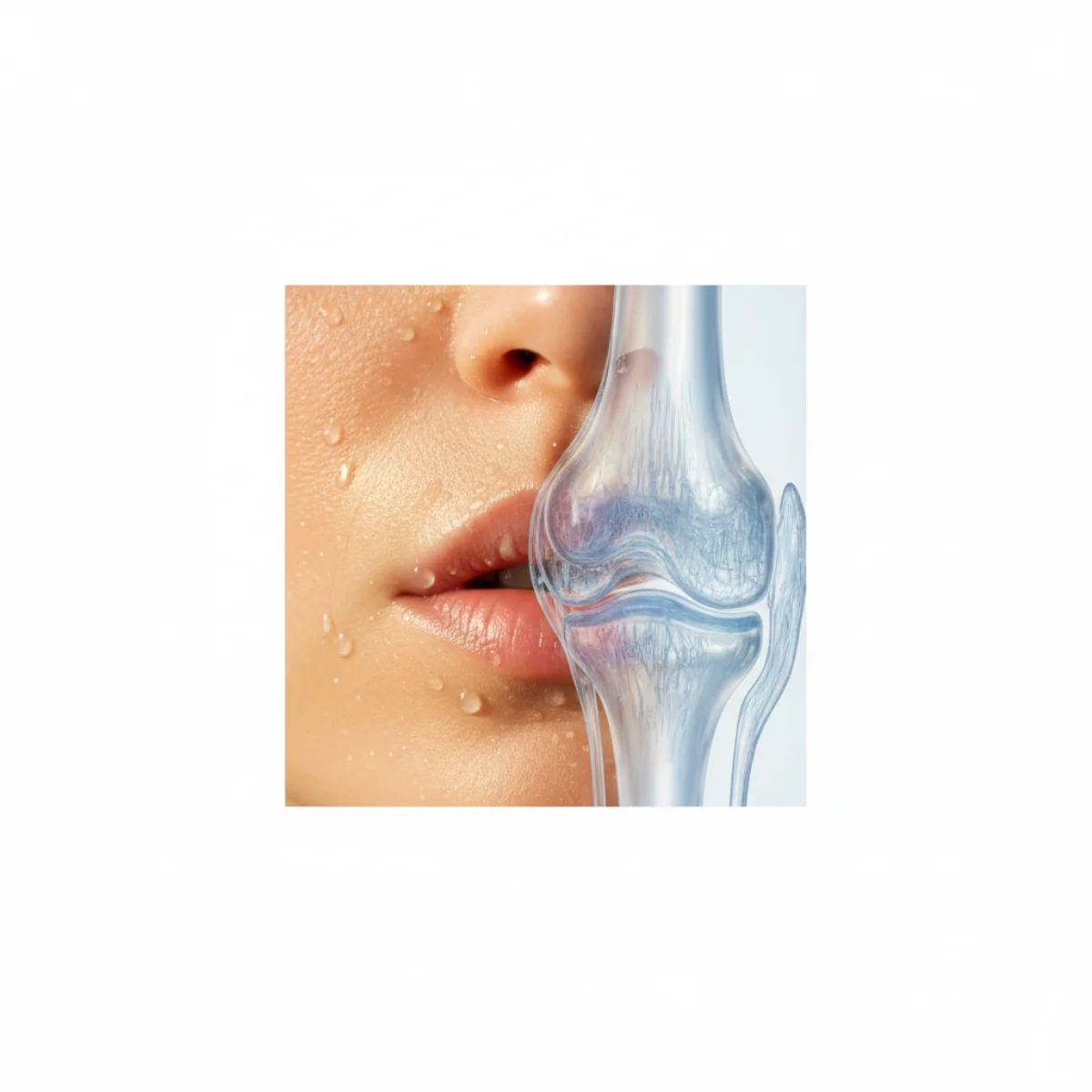
Collagen is the most abundant protein in the human body, but not all collagen is the same. Type I and Type II collagen are the two most common forms—each with distinct structures, locations, and biological roles. If you're considering a collagen supplement, understanding these differences is essential to choosing a form that actually aligns with your wellness goals. Type I dominates skin, bone, and tendons, while Type II is the specialized collagen of cartilage. This guide breaks down what each is, how they work, and which may be best for you.
What Each Is and How It Works
Type I collagen accounts for roughly 70–80% of total body collagen. It forms the structural scaffold in skin, bone, tendons, ligaments, and the cornea. Type I molecules are organized in tightly bundled fibers that provide tensile strength—the ability to resist pulling and stretching forces. When Type I is present and organized, skin maintains elasticity; bones remain dense; and tendons can bear load.
Type II collagen comprises most of the organic matrix of cartilage—the smooth, shock-absorbing tissue that lines joint surfaces. Unlike Type I's tight bundles, Type II fibers form a more loosely woven network interspersed with proteoglycans (water-binding molecules). This architecture allows cartilage to compress, absorb impact, and then spring back. Type II is found almost exclusively in cartilage and the vitreous humor of the eye; it is not a structural player in skin or bone the way Type I is.
At the molecular level, the difference lies in amino acid sequence and how the triple helix is organized. Both are made of three polypeptide chains wound in a helix, but the proportions of glycine, proline, and hydroxyproline—and their cross-linking patterns—differ. These variations make each type suited to its specific tissue environment.
Evidence by Outcome
Skin elasticity and appearance. Most research on collagen and skin focuses on Type I. Several small to moderate trials have found that hydrolyzed Type I collagen (collagen peptides) taken orally may improve skin hydration, elasticity, and dermal collagen density over 8–12 weeks. A 2019 systematic review noted the evidence is promising but modest; studies are often small, sponsored by manufacturers, or conducted in women only. Type II has not been studied for skin outcomes.
Bone health. Type I is the primary collagen of bone. Some observational and short-term trial data suggest collagen peptides may support bone mineral density and fracture risk reduction, particularly when combined with resistance training and adequate calcium and vitamin D. However, no large randomized controlled trials have definitively shown Type I collagen supplements prevent fractures. The evidence is preliminary.
Joint mobility and cartilage. This is where Type II collagen has the most specific evidence. Undenatured Type II collagen, commonly marketed as UC-II, has been studied in several double-blind trials for osteoarthritis and exercise-related joint discomfort. A 2016 meta-analysis found modest improvements in joint pain and mobility with UC-II dosing (around 40 mg daily) over 8–12 weeks, particularly in people with mild to moderate joint stress. The proposed mechanism involves immune tolerance: when native (undenatured) Type II reaches the gut, it may trigger a regulatory T-cell response that reduces joint inflammation. Hydrolyzed Type II collagen peptides have less specific evidence for joint outcomes.
Tendon and ligament integrity. Type I is the predominant collagen in tendons and ligaments. Evidence that supplemental Type I improves tendon healing or strength is limited to animal studies and case reports. No large human trials confirm benefit, though preliminary data and mechanistic plausibility have generated clinical interest.
Bioavailability and Dose Form
How the supplement is processed affects absorption and effectiveness. Hydrolyzed collagen (collagen peptides) is created by breaking down the protein into smaller chains via heat, acid, or enzyme treatment. This dramatically improves solubility and small-intestine absorption. Most Type I supplements on the market are hydrolyzed; peptides are absorbed as amino acids and dipeptides, distributed systemically, and incorporated or utilized across tissues.
Undenatured collagen is native collagen that is minimally processed—heated gently or not at all—to preserve its triple-helix structure. UC-II is the branded form of undenatured Type II collagen. It is not well-absorbed intact; instead, the theory is that small amounts reach the gut immune system and trigger oral tolerance. It is typically dosed at 40 mg per day, taken on an empty stomach to maximize immune contact before digestion. Hydrolyzed Type II collagen peptides are better absorbed as amino acids but may lose the immune-signaling property.
Typical dosing varies by intent. Type I hydrolyzed collagen is often dosed 2.5–15 g daily in trials showing skin or bone benefits, split across one or two servings. UC-II is dosed much lower, at 40 mg once daily, due to its mechanism. If choosing a hydrolyzed Type II for general collagen intake, manufacturers often recommend 5–10 g daily, though specific efficacy evidence is limited.
Safety and Interactions
Both Type I and Type II collagen supplements are generally well-tolerated. Collagen is a food-derived protein with no known serious toxicity at supplemental doses. Side effects are rare but may include mild digestive symptoms (bloating, nausea, or constipation), particularly if taken in large quantities or on an empty stomach. Most people tolerate 5–15 g daily without incident.
Allergic reactions are uncommon but possible, especially if the collagen source (typically bovine or fish) triggers sensitivity. Anyone with a shellfish or fish allergy should verify the collagen source before using a marine-derived product.
Drug interactions are unlikely. Collagen is a protein substrate and does not inhibit major drug-metabolizing enzymes. However, if you take medications that affect connective tissue remodeling (such as certain anticoagulants at high doses or bisphosphonates for bone), discuss supplementation with a clinician.
Pregnancy and breastfeeding data are sparse. Collagen is a food protein and theoretically safe, but formal safety studies in pregnant women do not exist. Conservative guidance is to check with an obstetrician before starting supplements during pregnancy or lactation.
Who Should Pick Which
Choose Type I if: Your primary goals are skin health, elasticity, or anti-aging; you want to support bone density (alongside diet, exercise, and other nutrients); or you are addressing general connective-tissue integrity in tendons and ligaments. Type I is the most studied for skin outcomes and is what dominates structural tissues.
Choose Type II if: You have joint discomfort, early signs of cartilage wear, or engage in repetitive high-impact activities that stress joints. If you opt for undenatured Type II (UC-II), expect a lower dose (40 mg daily) with a mechanism centered on immune modulation rather than direct structural replacement.
Choose both if: You are older, athletic, or concerned about multiple tissue types simultaneously. Some people take 5–10 g of Type I hydrolyzed collagen daily for skin and bone, plus 40 mg UC-II daily for joints. This approach is not contraindicated, though evidence that combination therapy is superior to either alone is absent.
Practical Buying Notes
When shopping for a collagen supplement, look for third-party testing (NSF, USP, or Informed Choice certification) to verify purity and label accuracy. Many retail collagen products are not independently tested, and contaminant risk (heavy metals, pathogens) is a genuine concern with animal-derived proteins.
Source matters. Bovine (beef) collagen is the most common Type I source; marine (fish) collagen is also widely available and sometimes claimed to have smaller peptide size, though this difference is not clinically meaningful. For Type II, the majority of UC-II products are derived from chicken sternal cartilage.
Form and convenience. Hydrolyzed collagen peptides typically come as flavored powders that dissolve in cold or warm liquid. UC-II usually comes in capsules (40 mg per capsule). Powders offer flexibility in dosing and cost; capsules offer convenience and precise dosing.
Cost and value. Quality Type I hydrolyzed collagen costs roughly $0.05–$0.15 per gram. A 10 g daily dose at a typical supplement price point runs $15–$30 per month. UC-II supplements with 40 mg per capsule cost $20–$40 monthly. Neither is exorbitant, but budget accordingly and avoid ultra-cheap products (which may be heavily diluted or inadequately tested).
When to Talk to a Clinician
If you have a diagnosed joint condition (osteoarthritis, rheumatoid arthritis), bone disorder (osteoporosis, Paget's disease), or connective-tissue disease (lupus, Ehlers-Danlos syndrome), consult your doctor before starting collagen supplements. These conditions involve complex immune or metabolic factors that may interact with supplementation in ways not yet fully understood. Additionally, if you are taking blood thinners, immunosuppressants, or bisphosphonates, seek professional guidance to rule out interactions.