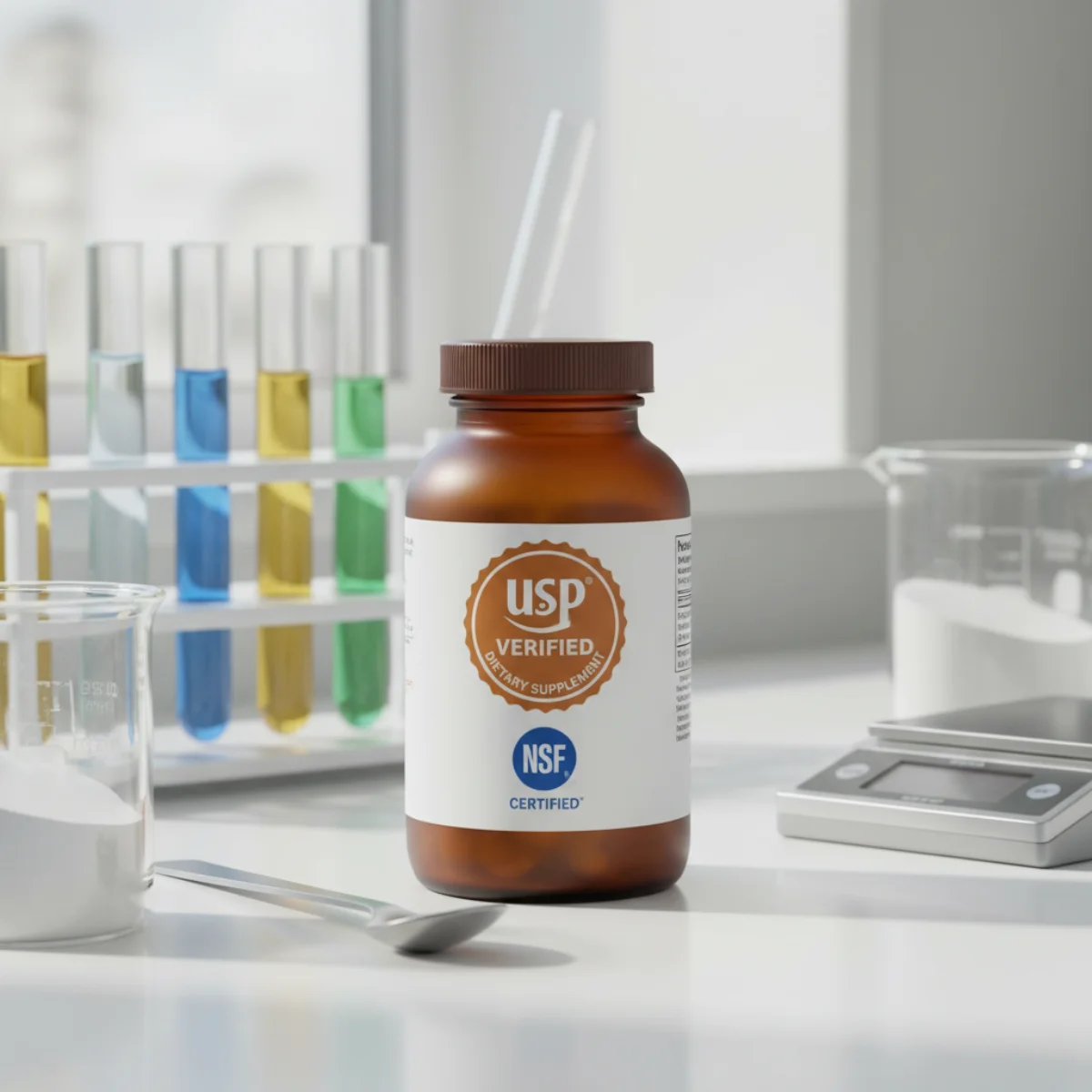
When you buy a dietary supplement, you're trusting the manufacturer's promise that the bottle contains what the label says. Unlike pharmaceutical drugs, supplements face less rigorous pre-market regulation by the FDA, making independent verification crucial. Third party testing supplements involve sending products to accredited labs that verify identity, purity, potency, and safety—offering consumers confidence that their purchase is legitimate and safe. Understanding what these tests cover, who performs them, and how to spot certified products is essential for informed supplement shopping.
What Is Third Party Testing and Why It Matters
Third party testing is quality assurance conducted by independent laboratories with no financial stake in a supplement's sales. A manufacturer sends products to an accredited third party lab, which runs a battery of tests before returning results and issuing a certificate or seal if standards are met. This separation of interests is critical: the testing company has no incentive to overlook problems.
The supplement industry's regulatory environment makes this testing especially important. The FDA does not pre-approve dietary supplements before they reach consumers, unlike prescription medications. Instead, manufacturers bear responsibility for safety and accuracy. Third party testing fills this gap, providing objective verification that products are manufactured according to standards and contain no dangerous contaminants or mislabeled ingredients.
For consumers, third party testing offers several practical benefits. It reduces the risk of buying adulterated products, confirms that label claims about potency are accurate, screens for heavy metals and microbial pathogens, and identifies products that contain unlisted pharmaceutical ingredients. When you follow a comprehensive supplement buying guide, one of the first recommendations is to prioritize third party tested products—a simple visual marker of quality assurance.
The Main Testing Standards and Certifications
Several organizations run third party testing programs and award seals when products pass their standards. The most recognized certifications include:
USP (United States Pharmacopeia)
USP is a nonprofit scientific organization that sets standards for medicines and supplements. A USP-verified seal means the product was tested for identity, strength, quality, purity, and potency according to USP monographs—detailed technical standards. USP verification is particularly stringent: it includes retesting of multiple batches and ongoing manufacturing oversight. Products with the USP Verified mark are among the most reliable in the market.
NSF International
NSF is an independent certification body that tests supplements for banned substances, heavy metals, microbial contaminants, and label-claim accuracy. NSF certification is popular among sports supplements because it includes screening for prohibited athletic ingredients. An NSF Certified for Sport seal indicates the product is free from banned substances and accurately labeled.
ConsumerLab
ConsumerLab conducts independent testing and publishes detailed reports on product quality. Unlike some other certifiers, ConsumerLab tests products purchased directly from retail shelves, simulating real-world purchasing. Their website provides transparency: they list which products passed and failed testing, helping consumers make informed choices.
Other Certifiers
The Natural Products Association (NPA) and Informed Choice also offer third party certification programs. Each has slightly different testing scopes and emphasis, but all aim to verify identity, purity, and potency.
What Third Party Tests Actually Measure
Third party testing is not a single test but a suite of analytical procedures. Understanding what is tested—and what is not—clarifies what certification actually guarantees.
Identity and Potency
Identity testing confirms that the supplement contains the ingredient listed on the label. High-performance liquid chromatography (HPLC) and mass spectrometry identify compounds at the molecular level. Potency testing measures the quantity of the active ingredient and verifies it matches the label claim. If a bottle states 1000 mg of vitamin C, potency testing confirms that's what's actually inside.
Purity and Contaminants
Third party labs test for heavy metals (lead, cadmium, mercury, arsenic) and microbial contamination (E. coli, Salmonella, mold). These tests use inductively coupled plasma mass spectrometry (ICP-MS) for metals and culture media or PCR for microbes. Screening also identifies undisclosed pharmaceutical ingredients—active drugs not listed on the label—which is a common fraud in certain supplement categories.
Banned and Prohibited Substances
For sports supplements, testing includes screens for banned substances under sports regulations. This matters both for competitive athletes and consumers who want assurance their supplement won't trigger positive drug tests.
What Third Party Testing Does NOT Verify
Importantly, third party testing cannot prove that a supplement is effective for any health claim. It does not test whether a product actually supports joint health, boosts immunity, or improves sleep. Testing verifies what's in the bottle and that it's safe; it does not verify that the ingredient works as marketed. This distinction is crucial: a third party tested supplement may be pure and accurately labeled but still ineffective for a claimed benefit.
How to Identify Third Party Tested Supplements
Finding third party tested products requires knowing where to look:
Look for Certification Seals
The clearest indicator is a visible seal on the product label or website: USP Verified, NSF Certified, ConsumerLab Approved, or others. These seals are your immediate signal that the product underwent independent testing.
Check the Manufacturer's Website
Reputable brands often display third party test results prominently on their product pages. Some manufacturers provide batch-specific certificates of analysis, allowing you to verify that the exact product you're buying passed testing.
Use Testing Organization Databases
ConsumerLab and USP maintain searchable databases of tested products. You can look up a specific brand and product to see whether it passed or failed. This transparency is valuable; if a product failed testing, the database will say so.
Ask the Manufacturer
If a product lacks a visible seal, contact the manufacturer and ask whether it's third party tested. A responsive company will provide certificates of analysis. If they decline or deflect, that's a warning sign.
The Testing Process and Batch Variability
Third party testing typically follows this workflow: a manufacturer submits product samples from a specific batch to a lab, the lab runs tests over several weeks, results are compared against established standards, and a certificate is issued if all tests pass. Some programs, like USP verification, require retesting of subsequent batches and announced or unannounced facility inspections.
Batch variability is important to understand. A product may be third party tested and pass, but that certification applies to a specific batch. If a manufacturer reformulates the product or sources ingredients from a different supplier, a new batch should be retested. Some certifications are continuous (the lab monitors the manufacturing process), while others are one-time checks. The most robust programs conduct periodic retesting to ensure consistency.
Common Misconceptions About Third Party Testing
Misconception 1: Third party testing proves efficacy. Testing confirms purity and label accuracy, not that the supplement works. A rigorously tested product may be pure but ineffective.
Misconception 2: Only third party tested supplements are safe. Many untested supplements are also safe. Third party testing is a quality indicator, not a minimum requirement for safety. However, testing does screen for specific contaminants, so it does reduce certain risks.
Misconception 3: All third party testing is identical. Different certifiers use different standards. USP verification is generally more stringent than a simple ConsumerLab test. Understand which certification you're looking at.
Misconception 4: Third party tested means pharmaceutical-grade. Third party testing confirms the product meets stated standards, not that it matches pharmaceutical manufacturing standards. Some supplements are made to pharmaceutical standards, but third party testing alone doesn't guarantee this.
Choosing Between Certified and Non-Certified Supplements
Not every supplement is third party tested, and not every tested supplement is right for every person. When deciding whether to prioritize third party certification, consider:
Prioritize testing for: products you'll use long-term, supplements with variable manufacturing (like botanical extracts), products sold by unfamiliar brands, and items used by sensitive populations (children, pregnant people, individuals with compromised immune systems).
Testing is less critical for: simple single-ingredient products from established manufacturers, supplements you're trying as a short-term experiment, and ingredients with minimal contamination risk (like simple vitamins in capsule form).
That said, third party testing has become increasingly accessible and affordable for manufacturers, so the absence of certification on a product that's otherwise similar to tested competitors may suggest the brand takes shortcuts elsewhere.
How Third Party Testing Fits Into Supplement Safety
Third party testing is one layer of supplement quality assurance, not a complete guarantee of safety. A comprehensive approach to supplement safety includes: choosing established manufacturers with good reputations, prioritizing third party tested products, checking for drug interactions with a healthcare provider, starting with low doses, monitoring how your body responds, and consulting a clinician if you're on medications or have underlying health conditions.
The FDA also monitors supplements after they're on the market. If serious adverse events are reported, the agency can issue warnings or recalls. Third party testing works alongside regulatory oversight to create multiple checkpoints for safety.
Reading and Understanding Certificates of Analysis
Many manufacturers provide certificates of analysis (COAs)—detailed lab reports showing test results. Understanding how to read one helps you make more informed decisions. A typical COA includes: the product name and batch number, the date of testing, the specific tests performed, the results for each test and whether they met standards, and the lab's accreditation information. If a result shows a contaminant below the established limit, that's acceptable; if above the limit, the product failed. Limits are set conservatively to protect consumers.