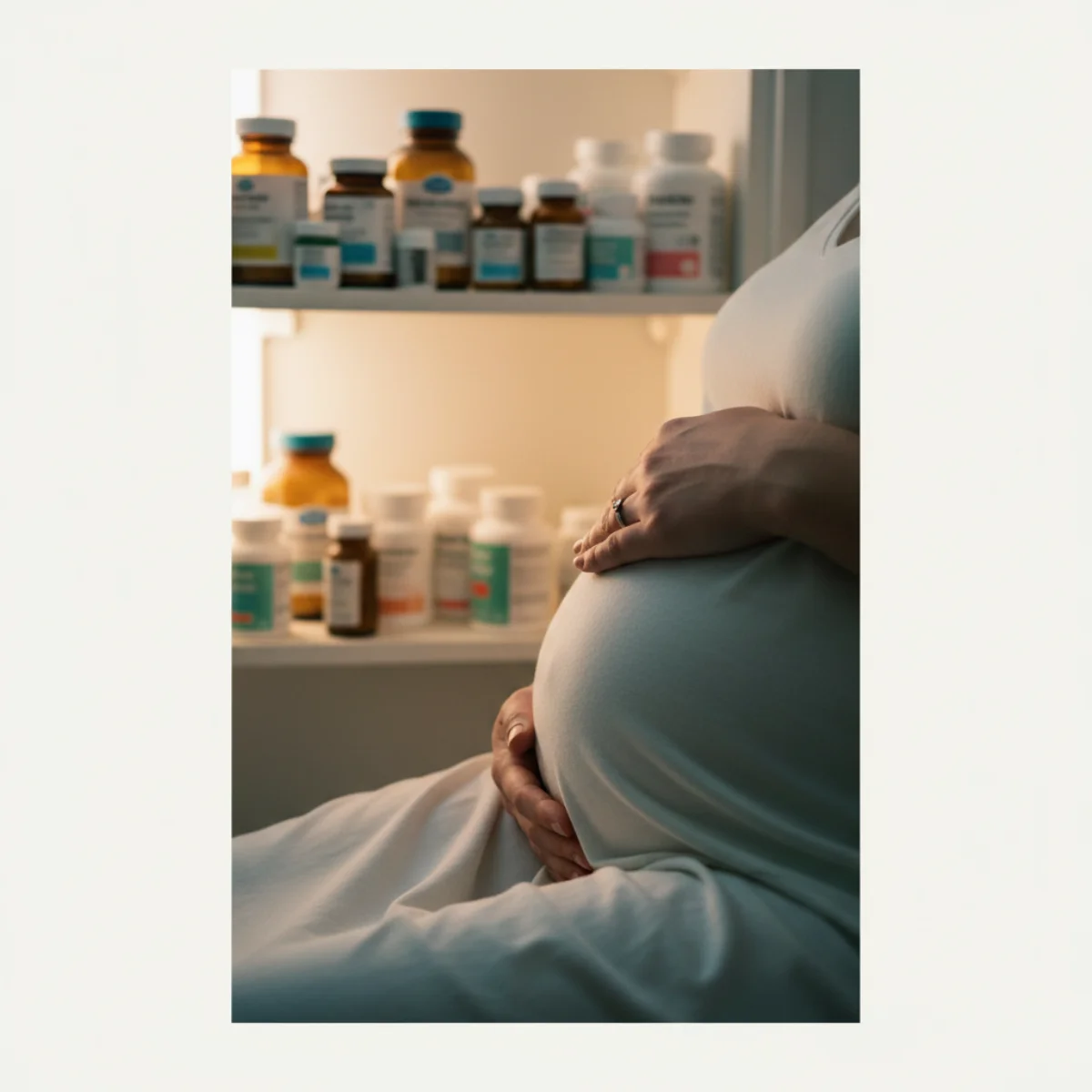
Pregnancy fundamentally changes how your body processes substances. The placenta acts as a barrier, but it is not a perfect filter—many compounds cross freely to reach your developing baby. While some supplements are considered safe or even beneficial during pregnancy, others carry meaningful risks of miscarriage, preterm birth, low birth weight, or birth defects. This guide identifies the supplements most evidence suggests avoiding during pregnancy, explains the mechanisms behind those risks, and points you toward safer alternatives for maintaining health during this critical period.
Why Supplements Behave Differently During Pregnancy
During pregnancy, your body undergoes profound physiological changes. Blood volume increases by 40–50%, kidney filtration rises, and liver enzyme activity shifts—all of which alter how supplements are absorbed, distributed, metabolized, and excreted. What might be a safe dose for a non-pregnant adult can accumulate to unsafe levels in a pregnant person or cross the placenta in higher concentrations than expected.
Additionally, the developing fetus is uniquely vulnerable during the first trimester, when organs and systems are forming. Some supplements that pose minimal risk in the second or third trimester may still be hazardous early on. Conversely, some compounds are safest only in certain windows of pregnancy. This is why a one-size-fits-all approach to supplements in pregnancy is insufficient; risk assessment must be individualized and timing-aware.
High-Dose Vitamin A and Retinoids
Vitamin A is essential for fetal development, vision, and immune function. However, excessive intake—particularly from synthetic retinoids or high-potency supplements—carries a well-documented risk of birth defects, including cleft palate, heart defects, and neural tube anomalies. Studies have consistently shown that intakes above 10,000 IU per day during the first trimester elevate teratogenic risk.
The concern applies especially to retinoid medications (isotretinoin, tretinoin) and supplements containing retinyl palmitate in doses exceeding 3,000 mcg (10,000 IU) daily. Plant-based beta-carotene from food sources or food-based supplements has not been associated with the same risk, as your body only converts what it needs. Prenatal vitamins are formulated to contain safe levels of vitamin A—typically 770 mcg (2,565 IU) for pregnant people—making prenatal vitamins the appropriate choice for micronutrient supplementation rather than high-potency vitamin A supplements.
Herbal Supplements Associated with Miscarriage Risk
Many herbal supplements are marketed as "natural remedies," but several carry evidence of uterotonic activity (ability to stimulate uterine contractions) or other mechanisms that may increase miscarriage risk. Because the herbal supplement industry is less tightly regulated than pharmaceuticals, potency and purity vary between brands, making safe dosing difficult to establish.
Licorice root is one of the most concerning. Even modest intakes (1–2 grams daily) have been associated in some studies with preterm birth and reduced birth weight. The mechanism involves mineralocorticoid effects that may alter maternal–fetal fluid balance.
Cohosh (both black and blue varieties) has uterine-stimulating properties and is traditionally used to induce labor; avoid entirely during pregnancy. Similarly, pennyroyal, mugwort, and rue are recognized abortifacients in traditional medicine and have documented toxicity. Dong quai (angelica) is used in traditional Chinese medicine for gynecological conditions but may increase bleeding risk and uterine activity. Ginger, while commonly used for morning sickness and generally considered safe in small amounts (under 1 gram daily), should be used cautiously and only under clinical guidance, as high doses are under-studied in pregnancy.
Herbal Stimulants and Adaptogens
Ephedra (ma huang) is a sympathomimetic that raises heart rate and blood pressure; it is banned by the FDA but still appears in some imported supplements. Avoid entirely. Caffeine supplements in high doses (over 200 mg daily) have been associated with increased miscarriage risk in some cohort studies, though causality remains debated. If you consume caffeine, pregnancy guidelines suggest limiting total intake to 200 mg daily from all sources, making concentrated caffeine supplements unnecessary and risky.
Adaptogens like rhodiola, ashwagandha, and ginseng are under-studied in pregnancy. While individual case reports are sometimes reassuring, robust pregnancy safety data does not exist for most adaptogens. Given the availability of evidence-based stress-management approaches and safer herbal options (such as chamomile or lemon balm in limited amounts), adaptogens are best avoided during pregnancy pending further research.
Other High-Risk Supplements
High-dose iron supplements (above the prenatal standard of 27 mg daily) can increase maternal nausea and constipation, and excess iron may enhance oxidative stress in the fetus. Standard prenatal supplementation covers iron needs; additional supplementation should only be guided by a healthcare provider assessing maternal hemoglobin.
Vitamin E supplements in doses above 400 IU daily are not recommended in pregnancy. Some studies suggest that high-dose vitamin E may increase hemorrhage risk postpartum or affect fetal vascular development. The antioxidant paradox—that excessive antioxidant intake can paradoxically increase oxidative stress—applies here.
Saw palmetto, commonly used for prostate health, has not been adequately tested in pregnancy and may carry hormonal activity that affects fetal development. St. John's Wort induces hepatic enzymes and may reduce the efficacy of medications crucial in pregnancy (such as anticonvulsants), and it is not adequately studied for direct fetal safety. Echinacea, while sometimes used for immune support, lacks sufficient pregnancy data and should be replaced with evidence-based infection prevention.
Kava kava has hepatotoxic potential even in non-pregnant populations; pregnancy compounds that risk. Colloidal silver and other unregulated mineral supplements may bioaccumulate and damage fetal organs. Angelica (not the same as dong quai, but related) and evening primrose oil in high doses may increase miscarriage or hemorrhage risk, particularly in the first trimester.