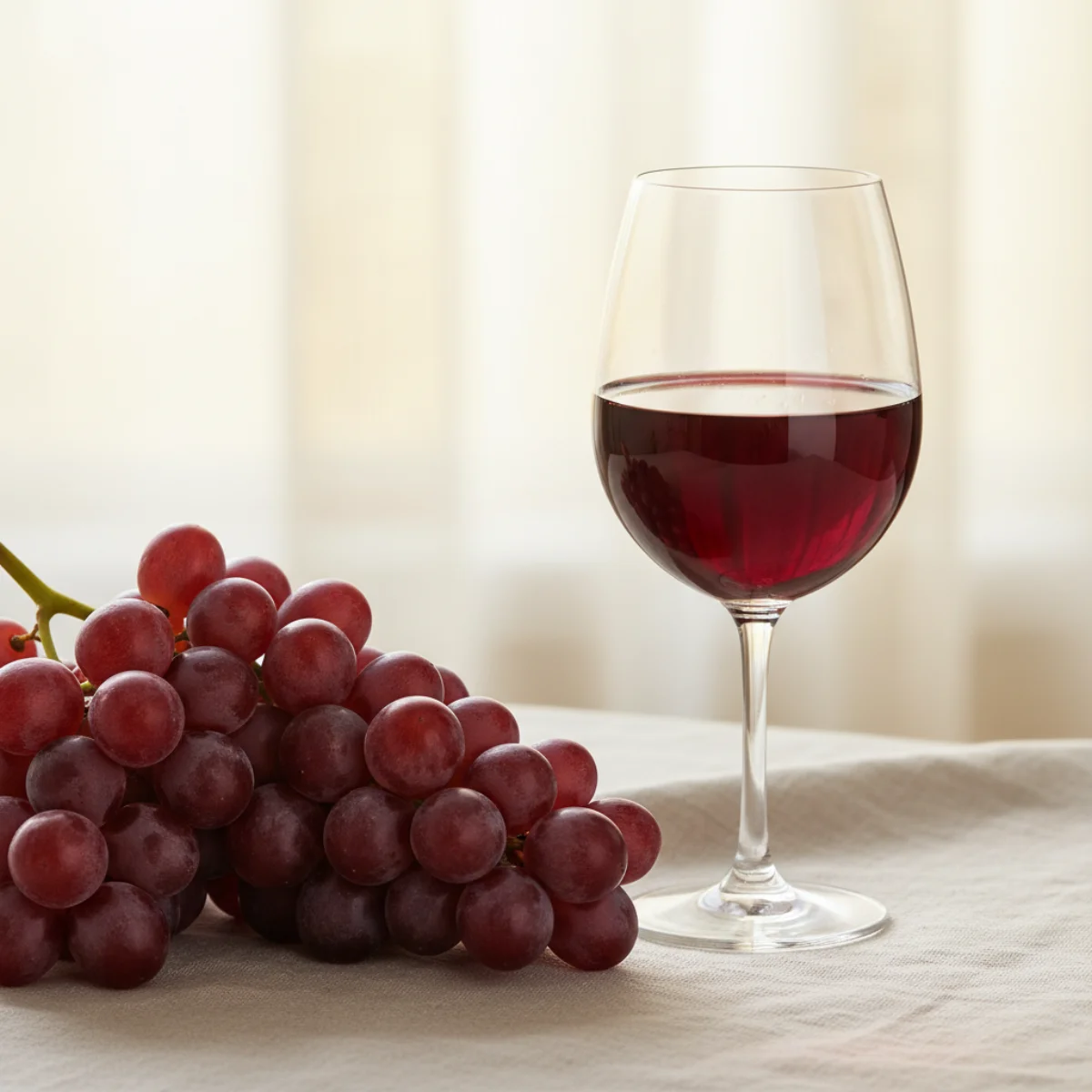
Resveratrol dosage in human studies ranges from as low as 150 mg to as high as 1,500 mg per day, yet no universally agreed optimal dose exists. The polyphenol, found primarily in grape skin and red wine, has attracted research interest for its antioxidant and anti-inflammatory properties. However, determining the right dose requires understanding both the evidence on efficacy and the unique absorption challenges that affect how much of what you take actually reaches your bloodstream.
What Resveratrol Is and How It Works
Resveratrol is a naturally occurring polyphenol compound synthesized by plants in response to stress or infection. In supplement form, it is typically extracted from Japanese knotweed or sourced from grape and wine derivatives. The compound is studied for its potential role in activating sirtuins—proteins involved in cellular stress response and metabolism—though human evidence for this mechanism remains limited.
Resveratrol acts as an antioxidant and may influence multiple pathways related to inflammation and cellular aging. Animal studies and some in vitro research suggest promise, but the translation to human benefit depends heavily on dose, bioavailability, and individual factors. The wide range of doses used across studies reflects genuine uncertainty about what amount is needed to produce meaningful biological effects.
Typical Dose Ranges in Research
Clinical trials examining resveratrol have employed a broad spectrum of doses. Studies investigating cardiovascular outcomes, metabolic health, and cognitive function have used doses between 150 mg and 1,500 mg daily. Some of the more commonly cited doses include:
- 150–500 mg daily: Used in shorter-term trials examining antioxidant markers and inflammation; generally considered a lower-efficacy range.
- 500–1,000 mg daily: The most frequently studied range in human trials; associated with outcomes on endothelial function, blood pressure, and glucose metabolism, though results remain mixed.
- 1,000–1,500 mg daily: Higher doses employed in longer trials; evidence is preliminary and concerns about tolerability increase at these levels.
Important note: higher doses have not consistently shown superior outcomes compared to moderate doses. The relationship between dose and benefit is not linear, and evidence is preliminary regarding what constitutes a truly optimal level.
Bioavailability and Absorption
A major complication in determining resveratrol dosage is its extremely poor bioavailability. Studies indicate that less than 1% of orally ingested resveratrol reaches systemic circulation unchanged; the compound is rapidly metabolized in the gut and liver into less active or inactive sulfate and glucuronide conjugates.
This means that taking a 500 mg dose does not deliver 500 mg of active resveratrol to your tissues. Factors that may slightly improve absorption include:
- Taking resveratrol with a meal containing dietary fat, which slows gastric emptying and may enhance absorption
- Consistent daily dosing at the same time, which allows for some accumulation in tissues
- Formulation choice (trans-resveratrol, the active form, is better absorbed than cis-resveratrol)
- Individual differences in gut microbiota, which influence metabolite formation
Because of low bioavailability, some researchers question whether oral supplementation at any practical dose can achieve the concentrations used in animal or cell-culture studies. This uncertainty underscores why human evidence on efficacy remains modest compared to preclinical promise.
How Much Resveratrol Comes from Food
Red wine, grapes, and berries contain natural resveratrol, but the amounts are small. A typical glass of red wine provides approximately 0.3–3 mg of resveratrol depending on the grape variety and production method. Raw red grapes contain roughly 0.3–0.5 mg per 100 grams. To reach even a 150 mg daily dose through food would require consuming impractical amounts—dozens of glasses of wine or kilograms of grapes daily.
For this reason, if resveratrol supplementation is considered, the dose must come from pills or powders; food sources alone cannot deliver therapeutic quantities. This distinction is important when evaluating marketing claims that suggest eating grapes or drinking wine provides the same benefit as supplementation.
Evidence on Dosage and Outcomes
Research on resveratrol has examined doses ranging from 150 mg to 1,500 mg for various health claims. Small trials suggest potential effects on:
- Endothelial function and blood pressure: Doses of 500–1,000 mg may modestly improve vascular function markers, though clinical significance remains unclear.
- Metabolic markers: Some evidence, primarily preliminary, suggests 500–1,500 mg daily may influence lipid profiles or glucose handling, but robust human trials are lacking.
- Cognitive function and neuroprotection: No strong human evidence supports a specific dose; animal studies suggest potential, but this has not translated consistently to people.
- Inflammation and joint health: Limited human data; small studies use doses in the 500–1,000 mg range with mixed results.
The key phrase across these findings is preliminary evidence and small trials. Doses above 1,000 mg daily have not demonstrated superior outcomes in head-to-head comparisons with lower doses, and dose-response relationships remain poorly defined. This ambiguity is why there is no authoritative recommendation for a single optimal dose.
Safety and Tolerability by Dose
Resveratrol is generally considered safe at doses up to 1,500 mg daily in short-term studies (weeks to a few months). However, long-term safety data are sparse. Common mild side effects reported at higher doses include gastrointestinal upset, nausea, and diarrhea.
More important are potential interactions and contraindications:
- Blood thinners: Resveratrol has mild anticoagulant and antiplatelet properties. If you take warfarin, clopidogrel, aspirin (at therapeutic doses), or other anticoagulants, resveratrol supplementation may increase bleeding risk and should only be considered under clinician supervision.
- Immunosuppressive medications: Some evidence suggests resveratrol may modulate immune function; caution is warranted with transplant or autoimmune medications.
- Hormone-sensitive conditions: Limited data suggest resveratrol may have mild estrogenic activity; use with caution if hormone-sensitive cancers or conditions are a concern.
- Pregnancy and breastfeeding: Insufficient safety data; supplementation is not recommended without medical guidance.
Doses above 1,500 mg daily are not well-studied in humans and carry greater uncertainty regarding safety and side effects.
Who Should Consider Resveratrol and At What Dose
Resveratrol supplementation may be worth discussing with a healthcare provider if you are interested in antioxidant or anti-inflammatory support and have no contraindications. Reasonable starting doses, based on available literature, fall in the 250–500 mg daily range, taken with food. Some individuals monitor tolerance and gradually increase to 500–1,000 mg daily if well-tolerated and if there is a clear reason to do so (e.g., investigating potential cardiovascular or metabolic support).
However, resveratrol is not a first-line recommendation for any established medical condition. It is most appropriately considered as part of a broader wellness approach for those seeking additional antioxidant support and who understand that evidence of clinical benefit remains preliminary. If you have a bleeding disorder, take anticoagulants, are pregnant or nursing, or have a history of hormone-sensitive cancer, consult your clinician before starting any resveratrol regimen.
Practical Dosing Guidance
If you decide to supplement with resveratrol after appropriate medical review, the following practical guidance may help:
- Start low: Begin with 150–250 mg daily to assess tolerance.
- Take with food: Consume with a meal containing fat to optimize absorption and reduce gastrointestinal upset.
- Consistent timing: Take your dose at the same time each day to allow tissue accumulation and maintain stable levels.
- Choose trans-resveratrol: Look for supplement labels specifying trans-resveratrol (the active form), not cis-resveratrol.
- Realistic expectations: Understand that evidence of dramatic health benefits is limited; supplementation is a low-risk, speculative wellness choice, not a medical intervention.
- Monitor and reassess: If you use resveratrol for more than a few months, periodically reassess whether you perceive any personal benefit. If not, discontinuing may be reasonable.
No governing body has set a Recommended Dietary Allowance (RDA) for resveratrol, and supplement companies are not required to follow a standard dose. This means you have responsibility for selecting a dose and form that aligns with evidence and your individual health status. Reading labels carefully and choosing reputable manufacturers is essential.