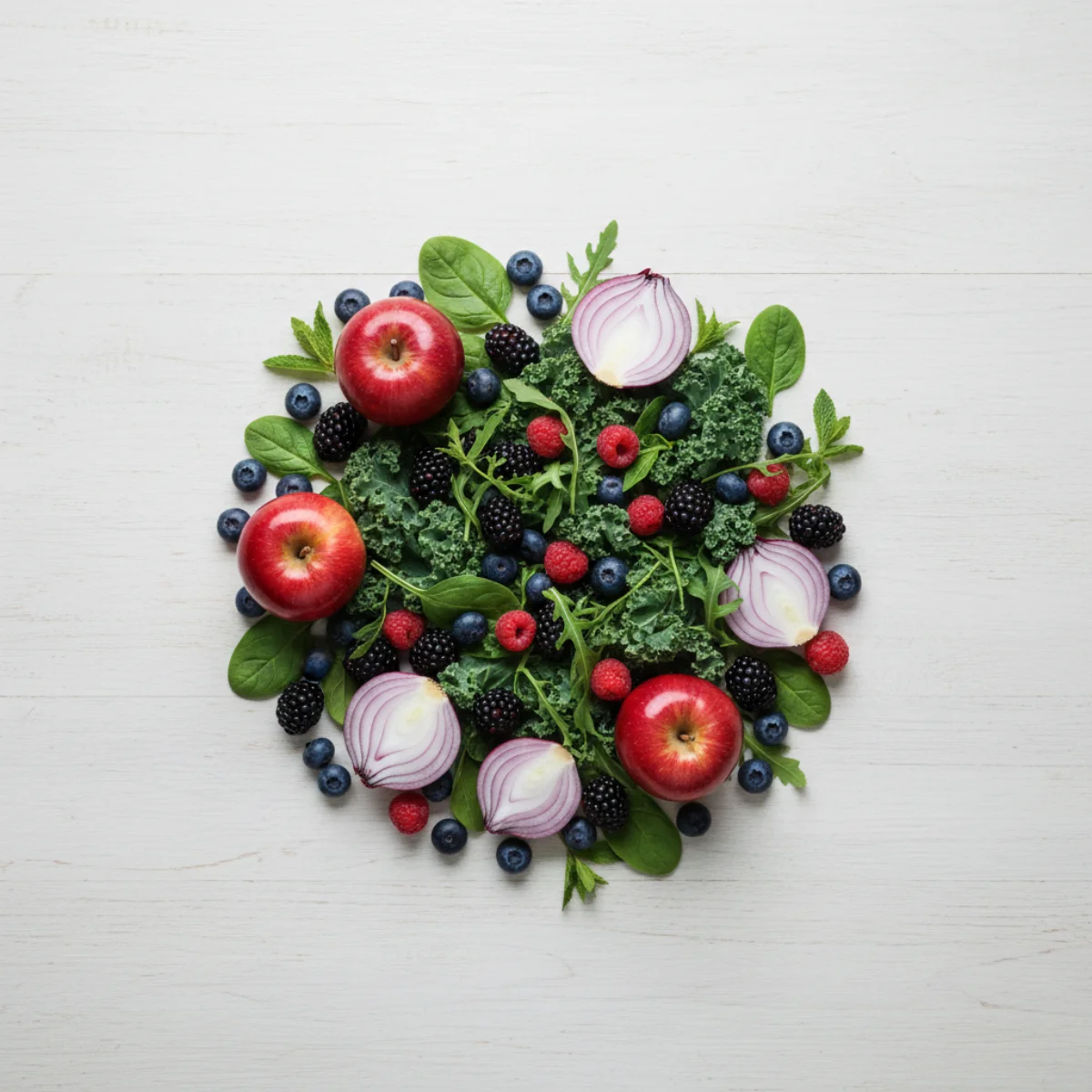
Quercetin is a naturally occurring plant flavonoid and one of the most abundant polyphenols in the human diet. It's found in high concentrations in apples, onions, berries, grapes, and leafy greens, and is increasingly available as a standalone supplement. Emerging research suggests that quercetin may support immune function, reduce oxidative stress, and promote cardiovascular and exercise recovery benefits, making it popular among both general wellness seekers and athletes. While evidence is still preliminary in many areas, the scientific case for quercetin has grown substantially over the past decade.
What Quercetin Is and How It Works
Quercetin belongs to a class of plant compounds called flavonoids, which act as powerful antioxidants in the body. These molecules work by neutralizing free radicals—unstable atoms that can damage cells and contribute to aging and disease. Beyond simple antioxidation, quercetin also interacts with cellular signaling pathways that regulate inflammation, immune response, and stress resistance.
When you consume quercetin, much of it is metabolized in the small intestine and liver, where it can exert systemic effects. The compound crosses cell membranes and accumulates in tissues, particularly the brain, heart, and immune cells. This broad tissue distribution suggests quercetin benefits may extend across multiple physiological systems, though the exact mechanisms are still being mapped.
Antioxidant and Anti-Inflammatory Effects
One of the most well-established properties of quercetin is its antioxidant capacity. Laboratory and animal studies consistently demonstrate that it scavenges free radicals more effectively than many other dietary polyphenols. Human evidence, while more limited, supports the idea that quercetin supplementation may lower markers of oxidative stress, such as malondialdehyde (MDA) and other lipid peroxides.
Beyond antioxidation, quercetin shows anti-inflammatory promise. It inhibits the activation of mast cells and basophils—immune cells that release histamine and other inflammatory mediators. In test-tube and animal models, quercetin suppresses the production of pro-inflammatory cytokines like TNF-α and IL-6. Small human trials have found reductions in C-reactive protein (CRP), a marker of systemic inflammation, though results are not uniform. Evidence is preliminary, but the combination of antioxidant and anti-inflammatory pathways may explain why quercetin is studied for so many different wellness applications.
Immune Support and Seasonal Wellness
Quercetin is widely marketed for immune support, particularly during high-stress seasons. The mechanism is plausible: by reducing oxidative stress and dampening excessive inflammation, quercetin may help the immune system maintain balance rather than swing into either immunosuppression or harmful overreaction. In vitro studies show that quercetin enhances certain aspects of immune cell function, including T-cell differentiation and antibody production.
Human evidence for quercetin benefits in immune health remains mixed. A few small randomized controlled trials have reported modest reductions in the incidence or duration of common respiratory symptoms in exercisers or stressed populations, but effect sizes are typically small and not all studies show benefit. Some researchers believe that quercetin may be most valuable for people under high physical or mental stress, where oxidative stress is elevated. If you're interested in synergistic immune support, combining quercetin with zinc or vitamin C may offer complementary mechanisms, though this combination requires more human research.
Exercise Performance and Recovery
Athletes and active individuals have adopted quercetin supplements with the hope of improving endurance, reducing muscle damage, and speeding recovery. The theoretical basis is solid: intense exercise generates reactive oxygen species (ROS) and inflammation, and quercetin's antioxidant and anti-inflammatory properties could theoretically mitigate this damage.
Laboratory data support this idea. Quercetin enhances mitochondrial function and biogenesis in cell models, suggesting a potential boost to aerobic capacity. Several small human trials in cyclists and runners found improvements in time-to-exhaustion and modest gains in VO₂ max at doses of 500–1,000 mg daily, though not all studies replicate these results. Most robust gains appear when quercetin is taken consistently for 5–12 weeks before and during training. Recovery markers like muscle soreness and creatine kinase (a sign of muscle damage) show inconsistent improvements; some trials find small benefits while others show no difference. Evidence is mixed, but the risk-to-benefit ratio is favorable enough that many endurance athletes use it.
Cardiovascular and Metabolic Benefits
Quercetin has attracted interest in cardiovascular health because flavonoids in general are associated with better heart health outcomes in large observational studies. The mechanisms are multiple: quercetin may improve endothelial function (the health of blood vessel linings), reduce LDL oxidation, and lower blood pressure through vasodilation.
In small clinical trials, quercetin supplementation has been associated with modest reductions in systolic blood pressure (typically 2–5 mmHg) and improvements in flow-mediated dilation, a marker of endothelial health. Some evidence also suggests benefits for lipid profiles, with reductions in triglycerides or oxidized LDL. However, these studies are generally small and short-term, and results are not always consistent. Quercetin alone is not a substitute for blood-pressure medication or standard cardiovascular prevention (diet, exercise, stress management). Rather, it may serve as a complementary strategy for people seeking additional antioxidant support as part of a broad wellness approach.
Dosage and Bioavailability
Quercetin is poorly absorbed when taken alone, with bioavailability estimated at 3–17% depending on the form and individual factors. To enhance absorption, manufacturers often combine quercetin with vitamin C (ascorbic acid) or use special formulations such as phytosome or nanoparticle complexes.
Typical supplemental doses range from 500 to 1,000 mg daily, often divided into 2–3 doses. Athletes in research studies have used doses as high as 1,000 mg twice daily for extended periods without serious adverse effects. Some formulations include bromelain (an enzyme from pineapple) or other compounds purported to enhance absorption, though evidence for synergy is limited. Taking quercetin with a meal containing fat may also improve absorption. If you use a high-dose quercetin supplement, spacing it away from iron supplements or certain medications may be prudent, as quercetin can chelate some minerals and compounds.
Safety, Side Effects, and Interactions
Quercetin has a favorable safety profile at typical supplemental doses. Most users experience no side effects, though some report mild gastrointestinal upset, headache, or tingling in the limbs at very high doses. Long-term safety studies in humans are limited, but animal and short-term human trials have not identified serious toxicity concerns.
The main interaction concern is with blood-thinning medications such as warfarin. Because quercetin can inhibit certain enzymes involved in drug metabolism, it may potentiate anticoagulant effects, increasing bleeding risk. Similarly, people on immunosuppressive medications (such as calcineurin inhibitors) should check with their healthcare provider, as quercetin's immune-modulating properties might theoretically interfere. Quercetin may also interact with certain cancer therapies or drugs metabolized by the cytochrome P450 system. Pregnant and nursing women should consult a practitioner before supplementing, as safety data in these populations is scarce.
Who Should Consider Quercetin
Quercetin may be particularly suited for endurance athletes seeking natural support for exercise performance and recovery, individuals under chronic physical or mental stress, people with elevated oxidative stress markers, and those interested in general antioxidant wellness—especially as a complement to other dietary polyphenols from fruits and vegetables. It is less likely to benefit sedentary individuals with no specific health concerns who eat a rich, colorful diet naturally high in quercetin-containing foods.
People with mast-cell activation disorders, histamine intolerance, or certain immune dysregulation conditions may respond to quercetin in unpredictable ways and should work with a knowledgeable clinician. If you have a bleeding disorder, take anticoagulants, or use immunosuppressive or cytochrome P450-metabolized medications, consult your healthcare provider before starting quercetin supplementation.
Food Sources vs. Supplements
Quercetin occurs naturally in a wide variety of plant foods, with the highest concentrations in red onions, apples (especially the skin), berries, grapes, and capers. A medium apple with skin contains roughly 5–10 mg of quercetin, while a cup of raw red onion can provide 20–50 mg. Eating a diverse, colorful diet rich in fruits and vegetables is an excellent way to obtain quercetin and thousands of other phytochemicals.
Supplementation, however, delivers doses (500–1,000+ mg) far exceeding what food alone typically provides in a day. For athletes and those seeking concentrated antioxidant and anti-inflammatory effects, supplementation may offer practical advantages. The trade-off is that food-derived quercetin comes packaged with other beneficial compounds, fiber, and nutrients that supplements do not. An optimal approach for many people is to maximize dietary intake of quercetin-rich foods while considering supplementation for specific goals (e.g., endurance training support) under appropriate guidance.