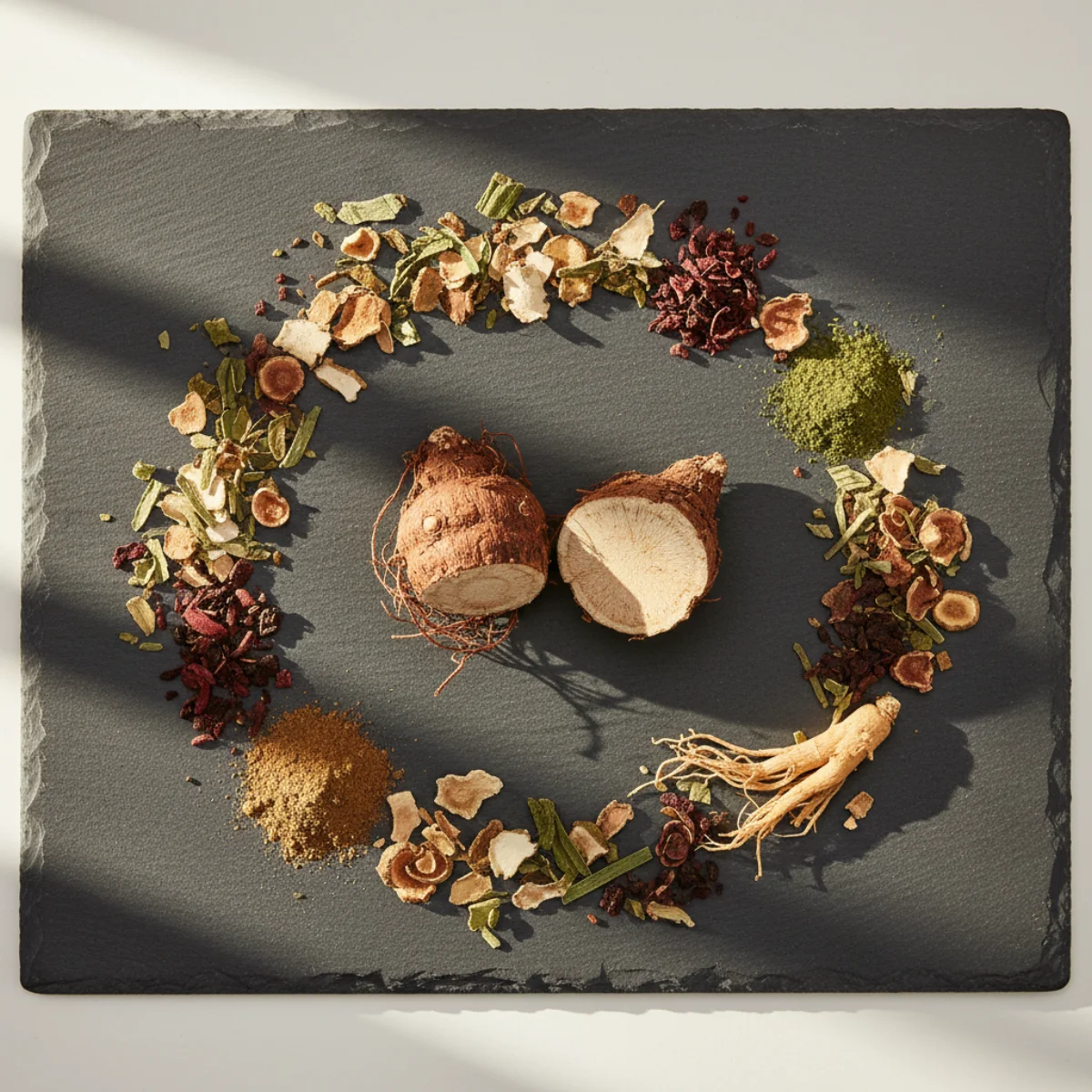
Maca and tongkat ali are two of the most popular herbal remedies marketed for sexual function, energy, and vitality—yet they come from different plant sources, work through distinct mechanisms, and carry different safety profiles. Both are adaptogens used in traditional medicine for centuries, but modern research shows they deliver different benefits and suit different goals. This guide compares them head-to-head so you can make an informed choice.
What Each Is and How It Works
Maca is a root vegetable from the Peruvian Andes, botanically related to broccoli and cabbage. It has been used in traditional Peruvian medicine for over 2,000 years as a fertility aid and energy tonic. Maca root contains glucosinolates, flavonoids, and alkaloids thought to influence sexual desire and mood. Its mechanism is not fully understood, but evidence suggests it may work through multiple pathways: improving blood flow, modulating neurotransmitters like serotonin and dopamine, and supporting hormonal balance rather than directly boosting testosterone.
Tongkat ali is the common name for Eurycoma longifolia, a tree root native to Malaysia, Indonesia, and other parts of Southeast Asia. It has long been used in traditional medicine for male virility and stamina. Tongkat ali contains quassinoids and other alkaloids that appear to act as a testosterone modulator and adaptogen. Research suggests it may increase free testosterone levels, enhance luteinizing hormone (LH) signaling, and improve markers of muscle recovery and physical performance—making it more directly tied to androgen physiology than maca.
Evidence by Outcome
Sexual Function & Libido: Both herbs show evidence for improving sexual desire and satisfaction. Maca has several small randomized trials showing improvements in erectile function and sexual satisfaction in men, as well as increased libido and sexual satisfaction in women. Tongkat ali also shows benefits for erectile function and sexual performance, particularly in men with low testosterone, though the evidence base is somewhat smaller. Neither has large-scale, long-term data, but both are supported by consistent if modest trial results.
Testosterone & Hormonal Health: Tongkat ali has stronger evidence for directly raising testosterone levels in men, especially those with low-normal baseline levels. Multiple trials show increases in free and total testosterone, with corresponding improvements in mood and muscle strength. Maca does not reliably raise testosterone; instead, it appears to improve sexual satisfaction and erectile response without major hormonal shifts. This distinction matters if hormone support is your primary goal.
Energy & Athletic Performance: Maca is traditionally used for energy and endurance; small studies suggest it may enhance exercise capacity and reduce fatigue, though evidence is preliminary. Tongkat ali shows stronger evidence for athletic performance, with trials demonstrating improvements in muscle strength, recovery time, and lean body mass in trained men, alongside higher free testosterone. For gym-focused goals, tongkat ali has a more robust research base.
Mood & Stress: Maca shows promise for mood improvement and stress resilience in preliminary research. Tongkat ali is classified as an adaptogen and may reduce cortisol and anxiety in high-stress populations, though this evidence is also limited. Both may contribute to overall well-being, but neither is a substitute for clinical depression or anxiety treatment.
Bioavailability and Dose-Form
Maca is typically sold as a gelatinized (pre-cooked) powder or capsule containing 1.5–3 g per dose. Gelatinization improves digestibility and makes nutrients more bioavailable. The root is relatively stable and shelf-stable; quality varies by supplier and processing method, but reputable brands offer consistent potency.
Tongkat ali is often standardized to contain 40% or higher quassinoid alkaloids, sold as an extract powder or capsule. Standardized extracts improve consistency and efficacy; doses typically range from 200–400 mg daily. The extract form is more potent than whole root powder, allowing smaller, more convenient doses. Both herbs are reasonably bioavailable when taken with meals.
Safety and Interactions
Maca has an excellent safety profile in research and traditional use. It is non-toxic at typical doses and reports of adverse events are rare. Some users report mild digestive upset, restlessness, or insomnia at high doses, but these are uncommon. No major drug interactions have been documented. It is generally considered safe for long-term use.
Tongkat ali is also generally well-tolerated, but carries more cautionary flags. It may interact with blood thinners (warfarin, dabigatran) and stimulants, potentially increasing the risk of bleeding or overstimulation. Some users report increased heart rate, sleep disruption, or aggression at high doses, particularly in men prone to mood reactivity. Pregnant women and those with hormone-sensitive cancers should avoid it. Individuals on medications should discuss tongkat ali use with their clinician before starting.
Who Should Pick Which
Choose maca if: You want a gentler, broader-spectrum adaptogen with fewer interactions; you are interested in improving sexual satisfaction without raising testosterone directly; you value traditional use and prefer a whole-food-derived supplement; you take other medications or have hormone-sensitive conditions; or your primary goals are energy, mood, and overall vitality rather than athletic performance or androgen optimization.
Choose tongkat ali if: You have low-normal testosterone and want evidence-backed testosterone support; you are focused on athletic performance, muscle building, or recovery; you tolerate herbal extracts well and have no bleeding risk or sensitivity to stimulants; you do not take blood thinners or medications that interact with adaptogens; or you prefer a more targeted, mechanism-specific supplement over a generalist tonic.
Practical Buying Notes
Quality & Third-Party Testing: Both herbs are susceptible to adulteration and quality variation. Buy from reputable brands that provide third-party testing (USP, NSF, or ConsumerLab). For maca, look for gelatinized powder or capsules; for tongkat ali, choose standardized extract products that specify quassinoid content (40% or higher).
Timing & Duration: Both require consistent use over 8–12 weeks to assess effects; neither delivers immediate results. Maca is usually taken in the morning with food; tongkat ali is often split into two doses daily. Starting at a lower dose and titrating upward minimizes risk of side effects.
Stacking Considerations: Maca stacks well with most supplements and is often combined with other adaptogens or nutrients for sexual health. Tongkat ali should be used cautiously with stimulants, blood thinners, or other hormone-modulating supplements; consult a clinician if considering stacks. Some users combine both for complementary effects, though evidence for this approach is anecdotal.
Cost & Availability: Maca is widely available, generally affordable ($10–30/month), and sold by most supplement brands. Tongkat ali is slightly less ubiquitous but increasingly stocked at mainstream retailers; standardized extracts command a premium ($20–50/month) due to processing costs. Both are legal in most jurisdictions and available without prescription.