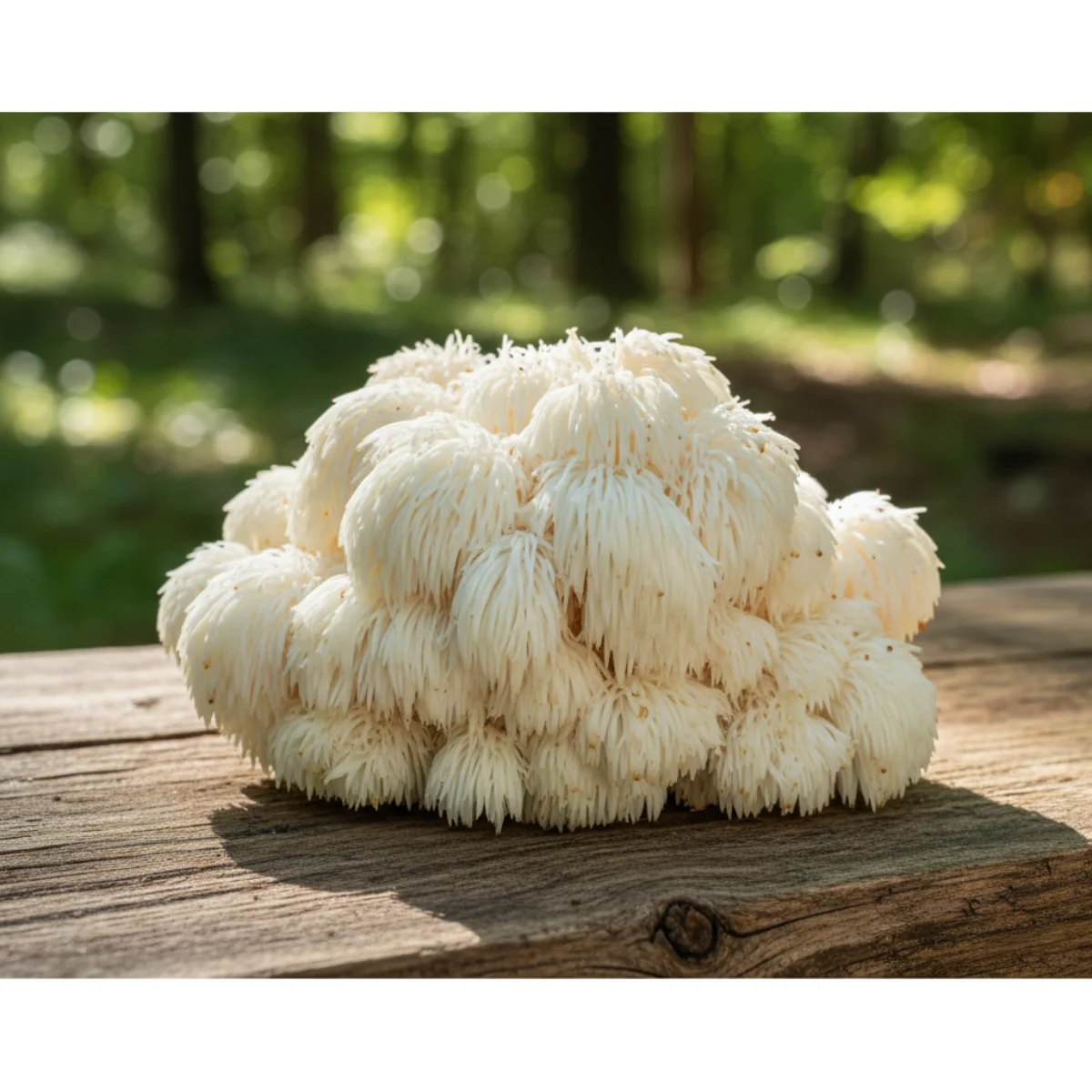
Lion's mane dosage is not one-size-fits-all. The right dose depends on the extract form (fruiting body powder, mycelium extract, or concentrated standardized extract), your health goals, and the product's bioactive compound content. Most people taking lion's mane for cognitive support fall into a 500–3,000 mg daily range, though the clinical evidence is strongest for doses between 1,000–3,000 mg. This guide walks you through how to choose an effective dose and what the research actually shows.
What Lion's Mane Is and How It Works
Lion's mane mushroom (Hericium erinaceus) is an edible fungus native to Asia and North America. Unlike many medicinal mushrooms studied primarily in animal models, lion's mane has generated a growing body of human clinical trials. The mushroom contains bioactive compounds—chiefly beta-glucans, hericenones, and erinacines—believed to stimulate nerve growth factor (NGF) production, a protein crucial for neuron growth and repair.
When you take a lion's mane supplement, you're consuming either dried fruiting body (the visible, meaty part), mycelium grown on grain substrate, or a concentrated extract. Each form has a different density of bioactive compounds, which directly affects how much you need to take for a measurable effect.
Forms and Their Typical Dosing Ranges
Fruiting body powder. This is the whole dried mushroom ground into powder. It contains the full spectrum of compounds but at lower concentration than extracts. Typical effective doses range from 1,500–3,000 mg daily. Many traditional use patterns and some clinical studies used 2,000–3,000 mg per day.
Mycelium extract. Mycelium grown on grain and then extracted contains concentrated bioactive compounds. Doses typically fall between 500–2,000 mg daily, though the grain substrate can dilute potency. Always check the label for the ratio of mycelium to final product.
Standardized fruiting body extract. This is the mushroom fruiting body processed to concentrate specific bioactive compounds (often labeled as containing a minimum percentage of beta-glucans or polysaccharides). These are most potent and efficient. Effective doses are usually 500–1,500 mg daily, sometimes lower if highly concentrated.
Evidence for Common Dosing Ranges
The clinical research on lion's mane dosing is still emerging, but several well-designed human trials inform current practice. A landmark 2021 randomized controlled trial in healthy adults used 3,000 mg daily of a fruiting body extract and found improvements in cognitive function and mood over 16 weeks. Another trial in older adults with mild cognitive impairment used 1,000 mg three times daily (3,000 mg total) and showed benefits on standardized memory tests.
Smaller trials and observational studies have tested doses as low as 500–1,000 mg daily, though evidence at these levels is less robust in humans. Some research suggests that doses below 1,000 mg may not produce measurable cognitive changes, though individual variability exists.
Importantly, most positive findings required consistent use over 8–12 weeks, not immediate effect. The timeline matters: you are not likely to feel a difference after one dose, or even after one week.
Dosing for Specific Goals
General cognitive support and brain health. If you're taking lion's mane to support focus, memory, or overall brain function, doses in the 1,000–2,000 mg range daily (of standardized extract) or 2,000–3,000 mg (of fruiting body powder) are commonly used and align with clinical evidence. This is a good starting point if you're unsure.
Recovery from mild cognitive decline. Older adults or those experiencing age-related cognitive changes may benefit from the higher clinical doses: 2,000–3,000 mg daily, for at least 8–12 weeks. Consistency matters more than size of single dose.
Mood and anxiety support. Some evidence suggests lion's mane may support mood, but research in this area is more preliminary. Doses used in mood-related studies range from 500–3,000 mg daily. If mood is your primary goal, you might start at the lower–middle end (1,000 mg daily) and adjust based on tolerance and response.
Bioavailability and Dosing Strategy
Bioavailability—the fraction of a dose that actually reaches your bloodstream—varies by form. Fruiting body extracts are thought to have better absorption than raw powder, partly because the extraction process breaks down the mushroom's tough cell walls, making compounds more accessible.
Dosing frequency also matters. Rather than taking the entire dose at once, splitting it across two doses (e.g., 1,000 mg twice daily) may improve absorption and provide steadier blood levels. Some manufacturers recommend taking lion's mane with a fat-containing meal, as some compounds are fat-soluble, though evidence for this specific optimization is limited.
If you are taking lion's mane extract for the first time, starting at the lower end of the range (500–1,000 mg daily) and increasing over 1–2 weeks allows you to assess tolerance before committing to a full maintenance dose.
Safety and Interactions
Lion's mane is generally well-tolerated across a wide dosing range. Clinical trials and observational reports have used doses up to 3,000 mg daily without serious adverse effects in healthy adults. The most commonly reported side effects are mild gastrointestinal effects (nausea, upset stomach, or mild diarrhea), which often resolve with continued use or dose reduction.
Rare reports of allergic reactions exist, typically in people with mushroom or mold allergies. If you have a known mushroom allergy, exercise caution and consider consulting a clinician before use.
Interactions with medications are unlikely at typical doses, but lion's mane may theoretically potentiate anticoagulant or antiplatelet agents (blood thinners) in susceptible individuals, though human evidence for this is absent. If you take prescription blood thinners, discuss lion's mane supplementation with your healthcare provider. Similarly, those with upcoming surgery should inform their surgical team of lion's mane use.
Pregnancy and breastfeeding data are insufficient; if you are pregnant or nursing, consult your doctor before supplementing.
How to Choose a Dosing Protocol
Step 1: Identify your supplement form. Check the label to confirm whether you're taking fruiting body powder, mycelium extract, or standardized fruiting body extract. This determines the baseline dose range.
Step 2: Check bioactive compound content. Look for labels specifying beta-glucan content (ideally ≥20–25% for extracts) or hericenone/erinacine concentrations. Generic labels saying only