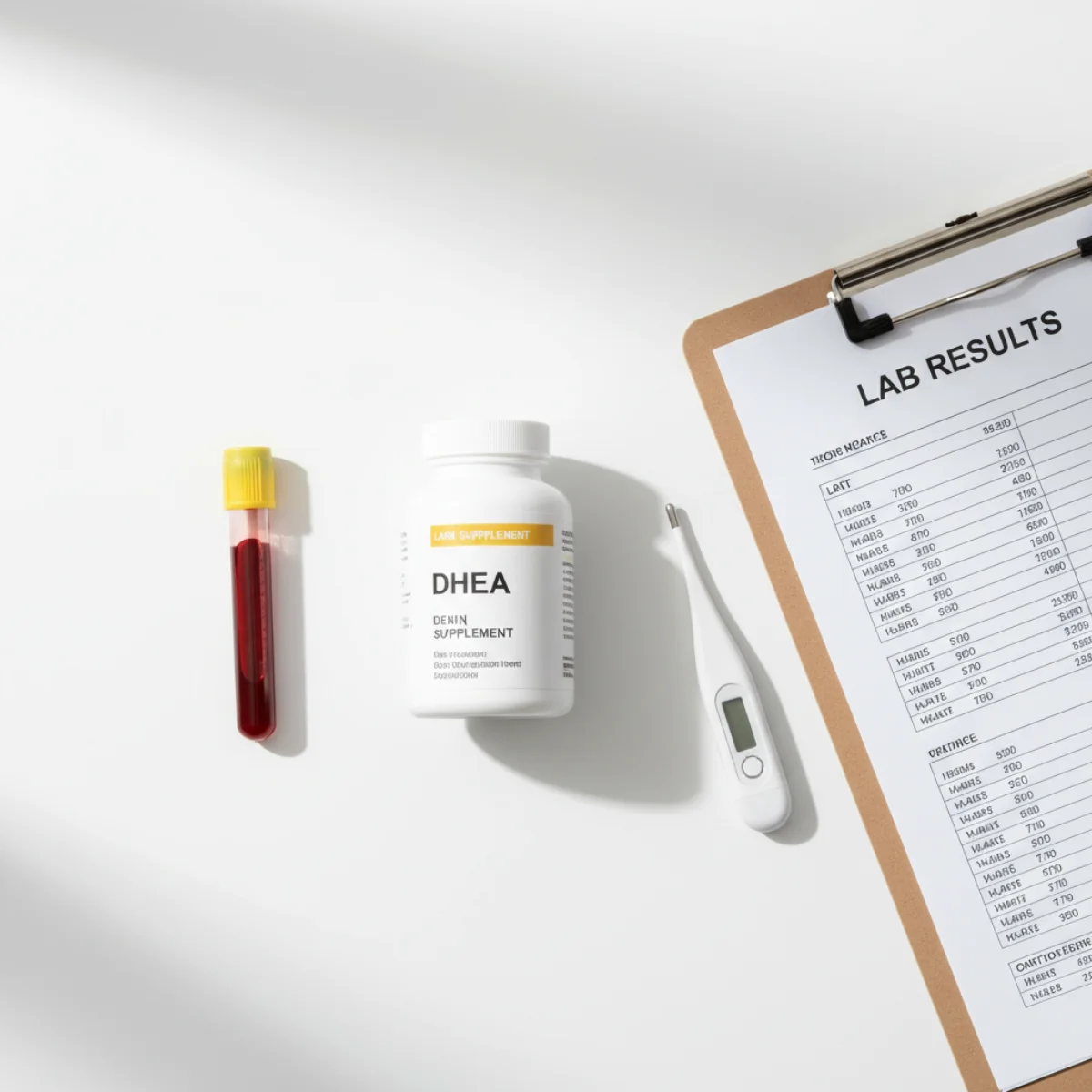
DHEA (dehydroepiandrosterone) is a hormone precursor that converts to estrogen and testosterone in the body, making it a popular anti-aging supplement. However, because it directly influences sex hormone levels, DHEA carries real risks of adverse effects—some mild and reversible, others serious and potentially long-lasting. This guide reviews the evidence on DHEA side effects to help you make an informed decision about whether supplementation suits your health profile.
What DHEA Is and How It Works
DHEA is a steroid hormone naturally produced by the adrenal glands. Levels peak in the 20s and decline steadily with age. DHEA supplements aim to restore youthful hormone levels, as some research associates DHEA with bone density, muscle, mood, and sexual function. However, once ingested, DHEA is not inert—it is metabolized into active estrogens and androgens that affect tissues throughout the body, particularly skin, reproductive organs, liver, and breast tissue.
The degree of conversion varies by individual genetics, age, sex, and existing hormone status. This variability is crucial: one person's tolerable dose may trigger side effects in another.
Common Mild to Moderate Side Effects
The most frequently reported adverse effects occur within weeks to months of starting DHEA supplementation and often resolve if the dose is reduced or supplementation is stopped.
Acne and Skin Reactions
Elevated androgens stimulate sebaceous gland activity, leading to increased oil production and acne—particularly on the face, chest, and back. This is one of the earliest and most noticeable side effects, especially in individuals with a history of acne. The risk increases with dose and duration.
Hair Loss and Hair Growth Changes
In genetically predisposed individuals, elevated androgens can accelerate androgenetic alopecia (male or female pattern hair loss). Conversely, some women report unwanted facial or body hair growth (hypertrichosis) due to androgen elevation. These effects may take weeks or months to appear and can persist even after stopping the supplement.
Mood and Sleep Disturbances
DHEA influences neurotransmitter synthesis and may affect serotonin and GABA activity. Some users report irritability, anxiety, mood swings, or insomnia, particularly at higher doses. Others report improved mood. The direction and severity vary widely between individuals.
Breast Tenderness and Nipple Discharge
Elevated estrogen can cause breast sensitivity or mild gynecomastia (breast tissue enlargement) in men. Women may experience breast tenderness or changes in menstrual cycle. These effects are typically reversible with dose reduction.
Serious and Long-Term Risks
Evidence is preliminary but concerning for several severe complications, particularly with high doses or prolonged use.
Hormone-Dependent Cancer Risk
DHEA increases circulating estrogen and testosterone. In postmenopausal women, elevated estrogen is a known risk factor for breast and endometrial cancer. In men, elevated estrogen and testosterone increase prostate cancer risk. Although no prospective trial has proven that DHEA supplementation directly causes cancer, the mechanism is biologically plausible, and observational data raise concern. Women or men with a personal or family history of these cancers should not use DHEA without medical oversight.
Liver Toxicity
The liver metabolizes DHEA and its products. Long-term high-dose use has been associated with elevated liver enzymes and, rarely, hepatotoxicity. Individuals with existing liver disease or who take multiple supplements or medications should exercise caution and monitor liver function.
Cardiovascular and Thrombotic Effects
Elevated estrogen and testosterone both affect clotting factors and vascular function. Some case reports and small studies suggest DHEA may increase thrombotic risk (blood clots), though the evidence remains mixed. People with a history of deep vein thrombosis, pulmonary embolism, or thrombophilia should avoid DHEA.
Prostate Enlargement and PSA Elevation
In men, DHEA-derived androgens may stimulate prostate growth and increase prostate-specific antigen (PSA) levels. Older men or those with prostate cancer risk factors should have baseline PSA measurement and medical clearance before use.
Virilization in Women
Women taking DHEA, even at moderate doses, risk virilization: deepening of voice, clitoral enlargement, facial hair growth, and male-pattern baldness. These changes may be irreversible. Evidence suggests risk rises significantly above 50 mg daily, but individual sensitivity varies widely.
Dose, Duration, and Individual Risk Factors
DHEA side effects are dose- and duration-dependent. Most trials showing benefit use 25–100 mg daily; doses above 200 mg daily substantially increase adverse-event risk and are not recommended for general populations.
Risk factors that increase susceptibility to DHEA side effects include:
- Sex: Women are at higher risk for virilization and hormone-sensitive cancer effects; men risk gynecomastia and prostate issues.
- Age: Older individuals, particularly postmenopausal women and men over 50, have lower baseline hormone levels and may tolerate exogenous DHEA poorly.
- Personal or family cancer history: Any history of breast, endometrial, or prostate cancer is a relative contraindication.
- Liver or kidney disease: Impaired clearance increases drug accumulation and toxicity risk.
- Genetic sensitivity: Polymorphisms in hormone-metabolizing enzymes (CYP17, CYP3A4, others) affect how quickly DHEA is broken down and converted.
- Concurrent supplements or medications: Estrogen therapy, oral contraceptives, hormone replacement therapy, or other hormonal agents may synergize with DHEA to elevate risk.
- Acne or androgenic alopecia history: Prior or active androgen sensitivity increases likelihood of acne and hair loss.
Safety Profile by Duration
Short-term (weeks to 3 months): Mild side effects (acne, mood changes, sleep disturbance) are most common. Most are reversible with dose reduction or discontinuation.
Medium-term (3–12 months): Hair loss, virilization, and liver enzyme elevation may emerge. Prostate growth and PSA rise become more likely in men.
Long-term (>1 year): The risk profile shifts toward serious complications—cancer promotion, cardiovascular effects, and irreversible changes (virilization). Long-term DHEA use is not well-studied in humans, and safety beyond 12 months is poorly defined.
Who Should Avoid DHEA
DHEA is contraindicated or requires extreme caution in:
- Women (especially postmenopausal) with a personal or family history of breast or endometrial cancer.
- Men with a personal or family history of prostate cancer or with elevated baseline PSA.
- Individuals with a history of deep vein thrombosis, pulmonary embolism, or thrombophilia.
- People with active liver disease or elevated liver enzymes.
- Those taking hormone therapy (estrogen, testosterone, hormone replacement therapy) without medical coordination.
- Women of childbearing age (DHEA is not studied for pregnancy safety and may interfere with fetal development).
- Anyone with severe androgenic alopecia or uncontrolled acne.
Monitoring and Risk Reduction Strategies
If you and a healthcare provider decide DHEA use is appropriate, adopt these protective measures:
- Start low: Begin with 25–50 mg daily rather than higher doses. Gradual titration allows you to detect early side effects before they escalate.
- Monitor symptoms: Keep a log of acne, mood, sleep, hair loss, or other changes. Report them promptly.
- Baseline lab work: Before starting, obtain liver enzymes (ALT, AST, bilirubin), lipid panel, PSA (if male and >40), and hormone levels (total testosterone, estradiol, DHEA-S). Recheck every 3–6 months during use.
- Limit duration: Use DHEA for defined periods (e.g., 6–12 months) rather than indefinitely. Regular breaks reduce cumulative risk.
- Use the lowest effective dose: Evidence is modest even at 50 mg daily; higher doses do not consistently produce better outcomes and increase side-effect probability.
- Coordinate with other supplements: Avoid stacking DHEA with other hormone-altering agents (saw palmetto, tribulus, or other testosterone boosters) without medical guidance.
- Report new symptoms immediately: Chest pain, shortness of breath, severe headache, jaundice, or sudden mood/behavioral changes warrant urgent medical evaluation.
When to Talk to a Clinician
Consult a healthcare provider before using DHEA if you have any of the contraindications listed above, or if you develop any of the following during supplementation: acne unresponsive to standard treatment, noticeable hair loss, mood or anxiety changes, breast tenderness or nipple discharge (men), menstrual irregularities or virilization symptoms (women), fatigue or jaundice, or any cardiovascular symptoms. Additionally, inform your provider if you are taking any medications or supplements, so they can assess drug interactions and monitor for cumulative hormonal effects.
DHEA is a potent hormonal agent, not a benign vitamin. While some individuals tolerate it well at modest doses, the potential for serious adverse effects—particularly in older adults, those with cancer risk, and women—is real. A personalized risk-benefit discussion with a clinician is the most responsible approach to deciding whether DHEA is right for you.