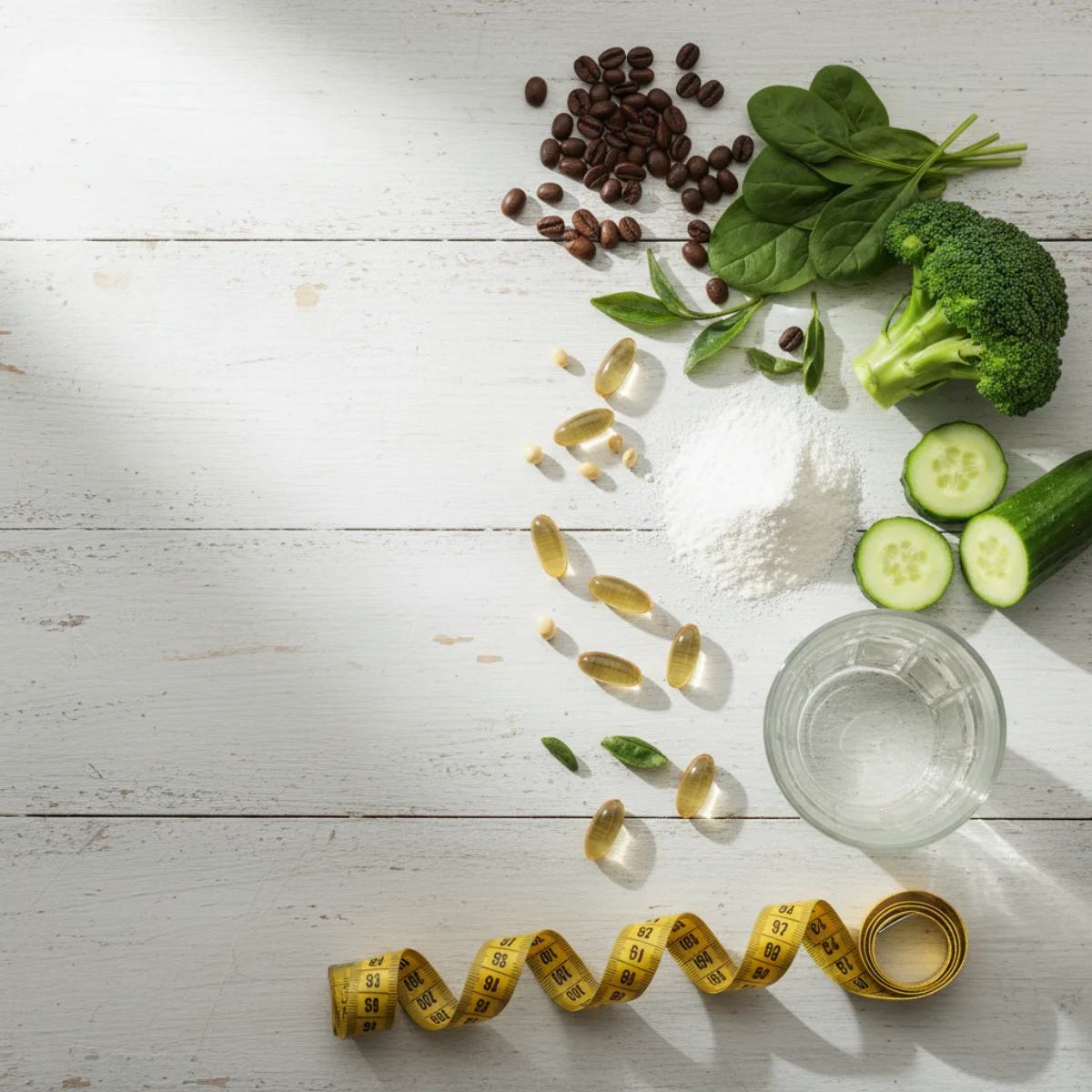
Finding an effective weight loss supplement is challenging when marketing claims far outpace actual research. This guide reviews the most credible options based on human clinical trials, mechanism of action, and real-world safety data. We focus on supplements with published evidence showing they can modestly support fat loss when paired with diet and exercise—not miracle cures, but tools that may tip the scales in your favor.
Our Scope and Methodology
We evaluated over 40 weight loss ingredients and formulations using these criteria: published human trials (preference for randomized controlled trials), effect size (clinically meaningful fat loss, typically at least 2–4 pounds more than placebo over 12 weeks), safety profile, third-party testing availability, and real-world tolerability. We excluded ingredients with no human evidence, unproven mechanisms, or serious adverse-event reports. Our selections represent options available in the United States and suitable for generally healthy adults; they are not substitutes for medical weight loss supervision in cases of obesity-related health conditions.
Caffeine + L-Theanine for Steady Energy and Appetite Control
How it works: Caffeine is a central nervous system stimulant that increases metabolic rate, fat oxidation, and alertness. L-theanine, an amino acid from tea, smooths caffeine's jittery edge by promoting calm focus. Together, they enhance fat burning during exercise and reduce hunger signaling without the crash.
Evidence: Meta-analyses consistently show caffeine (200–400 mg daily) increases energy expenditure by 3–11% and supports modest fat loss over 12 weeks—typically 1–2 extra pounds compared to placebo. L-theanine adds a synergistic calming effect without reducing efficacy. The combination is most effective in people who exercise regularly.
Typical dose: 200–400 mg caffeine paired with 100–200 mg L-theanine daily, ideally taken in the morning or before workouts. Effects appear within 30–60 minutes and sustain for 4–6 hours.
Safety: Generally safe at recommended doses in people without cardiovascular contraindications. Side effects may include jitteriness, sleep disruption (if taken late), or mild GI upset. Not recommended for those with uncontrolled hypertension, heart arrhythmias, or severe anxiety. Tolerance builds over time.
Who it suits: Active individuals seeking sustained energy and mild appetite suppression without stimulant dependency. Those who already drink coffee or tea will see smaller incremental benefits.
Green Tea Extract (EGCG) for Gentle Fat Oxidation
How it works: Green tea extract contains catechins—polyphenols that enhance fat burning by inhibiting catechol-O-methyltransferase, an enzyme that breaks down noradrenaline. This prolongs fat mobilization during activity.
Evidence: Systematic reviews document that standardized green tea extract (250–500 mg EGCG daily) combined with moderate exercise produces 2–3 extra pounds of fat loss over 12 weeks versus placebo. Effects are modest but consistent, particularly in people who exercise 3–4 times weekly. Standalone (without exercise), benefits are minimal.
Typical dose: 300–500 mg EGCG (or 2–3 cups of brewed green tea) daily with a meal to optimize absorption and minimize stomach irritation.
Safety: Very safe; green tea is a food. High doses (>800 mg EGCG/day) may rarely cause liver stress in susceptible individuals. Generally well-tolerated with no significant drug interactions.
Who it suits: People seeking a gentle, lower-stimulant option; those already drinking green tea for antioxidant benefits; anyone who prefers plant-based supplements. Best paired with regular aerobic exercise for maximum effect.
Glucomannan (Konjac Fiber) for Appetite and Satiety
How it works: Glucomannan is a water-soluble dietary fiber that absorbs water in the digestive tract, expanding to create a viscous gel. This increases fullness cues, slows gastric emptying, and reduces subsequent calorie intake—a purely mechanical effect supported by hunger hormones.
Evidence: Clinical trials show glucomannan (3–5 grams daily, taken 30 minutes before meals with plenty of water) reduces daily calorie intake by ~200 kcal and supports 3–5 pounds of fat loss over 8–12 weeks. Effects are modest but occur independent of exercise. Works best when meals are regular and hydration is adequate.
Typical dose: 1–2 grams mixed with 8 oz water, taken 30–60 minutes before meals. Maximum 5 grams daily split across doses. Critical: always consume with at least 8 oz water to prevent blockage.
Safety: Well-tolerated; mild bloating or flatulence is common initially and usually resolves within 1–2 weeks. Contraindicated in anyone with dysphagia, esophageal narrowing, or a history of bowel obstruction. Ensure adequate daily hydration (minimum 2 liters) and spacing from medications (take 2+ hours apart from pills).
Who it suits: People who struggle with hunger between meals or have sedentary jobs; those preferring non-stimulant options; individuals with constipation (the fiber also supports regularity). Requires discipline with water intake and meal timing.
Conjugated Linoleic Acid (CLA) for Lean Mass Preservation
How it works: CLA is a naturally occurring fatty acid (found in beef and dairy) that may shift the body composition ratio by promoting fat loss while sparing muscle tissue. Proposed mechanisms include increased fat oxidation and reduced fat cell proliferation.
Evidence: Meta-analyses of CLA supplementation (3–6 grams daily) show modest effects: approximately 1–2 extra pounds of fat loss over 12 weeks, with a potential small reduction in fat cell size. The gains are marginal and inconsistent across studies. Exercise amplifies benefits slightly.
Typical dose: 3–6 grams daily, usually split across meals. Effects take 8–12 weeks to appear; most trials used at least 12 weeks.
Safety: Generally safe; mild GI upset (bloating, loose stools) occurs in 10–15% of users. Safe for long-term use. No significant drug interactions. Not recommended for people with uncontrolled diabetes (may transiently affect glucose).
Who it suits: People combining weight loss with resistance training (to preserve muscle); those seeking a non-stimulant supplement; anyone interested in body composition changes, not just scale weight. Requires patience and consistency.
Garcinia Cambogia (Hydroxycitric Acid) — Limited Evidence
How it works: Garcinia cambogia contains hydroxycitric acid (HCA), which theoretically inhibits citrate lyase (an enzyme in fat synthesis) and increases serotonin, reducing appetite.
Evidence: Evidence is mixed and disappointing. Most well-controlled trials show negligible difference from placebo (less than 1 pound extra loss over 12 weeks). A few small studies report 3–4 extra pounds, but publication bias and poor blinding limit confidence. The most rigorous meta-analysis concluded HCA is ineffective for weight loss in humans.
Why we included it: It remains widely marketed and purchased; transparency about its limited efficacy is important for informed choice. It is safe, but cost-benefit is poor.
Typical dose: 500–1000 mg HCA (standardized to 50–60% HCA) taken 30–60 minutes before meals, three times daily.
Safety: Well-tolerated; headache and GI upset are rare. Safe long-term use. Few interactions.
Who it suits: This supplement is not strongly recommended. If considering it, ensure the product is standardized and third-party tested. Money is better spent on proven options like caffeine or glucomannan.
Comparing Mechanisms and Choosing Your Best Option
The most effective weight loss supplement depends on your lifestyle, constraints, and goals:
- For sustained energy and exercise performance: Caffeine + L-theanine offers the strongest evidence and most immediate effects. Ideal if you work out regularly and tolerate stimulants.
- For appetite and fullness: Glucomannan works via a non-stimulant pathway and is best if you struggle with snacking or late-day hunger. Requires water discipline.
- For gentle fat oxidation: Green tea extract is ideal for those avoiding stimulants or preferring whole-food sources of bioactives. Works best paired with exercise.
- For body composition: CLA may slightly preserve muscle during weight loss, making it valuable if strength training is part of your plan.
- Combination approach: Many people benefit from pairing caffeine + L-theanine (for energy and metabolism) with glucomannan (for satiety), creating complementary mechanisms without excess stimulation.
Remember: no supplement replaces a calorie deficit. All of these work best when diet and exercise are your foundation. If you are exploring a weight loss supplement, pair it with consistent movement and whole-food eating.
Safety, Interactions, and When to See Your Doctor
Before starting any supplement, verify third-party testing (NSF, USP, or Informed Choice certification reduce contamination and false labeling). Check for ingredient interactions with your medications—caffeine can interfere with some antidepressants and blood pressure drugs; glucomannan can delay absorption of pills if not spaced correctly; CLA may affect diabetes medication dosing.
Stop any supplement and seek medical advice if you experience chest pain, severe headache, difficulty breathing, or allergic reactions. Weight loss supplements are not appropriate during pregnancy or breastfeeding. People with eating disorders, uncontrolled thyroid disease, or a history of stimulant abuse should avoid these products without medical supervision.
Consult a registered dietitian or physician before combining multiple supplements or if weight loss plateaus after 8–12 weeks—this may signal a need to adjust diet or exercise, or point to an underlying metabolic or medical issue requiring different treatment.
How We Chose These Picks
Our selection prioritized human clinical trial evidence over cell or animal studies, real-world tolerability over theoretical potency, and transparency about limitations. We excluded supplements with a single small study, animal-only evidence, or serious adverse-event reports. We favored options with dose-response data and long-term safety profiles (12+ weeks of human testing). We also assessed cost-effectiveness: an expensive supplement with 1-pound-per-year advantage over a cheap one may not justify its cost. Finally, we weighted practical concerns—water requirements for glucomannan, stimulant sensitivity for caffeine, and the need to pair most supplements with exercise—because the best supplement is one you'll use consistently and tolerate well. For each pick, we've linked to the evidence base and offered guidance on how to assess product quality before you buy. Your success with weight loss supplements depends equally on choosing the right one and using it as a complement to sustainable diet and movement changes, not as a substitute for them. Start with one supplement, use it consistently for 8–12 weeks, and reassess before adding another.