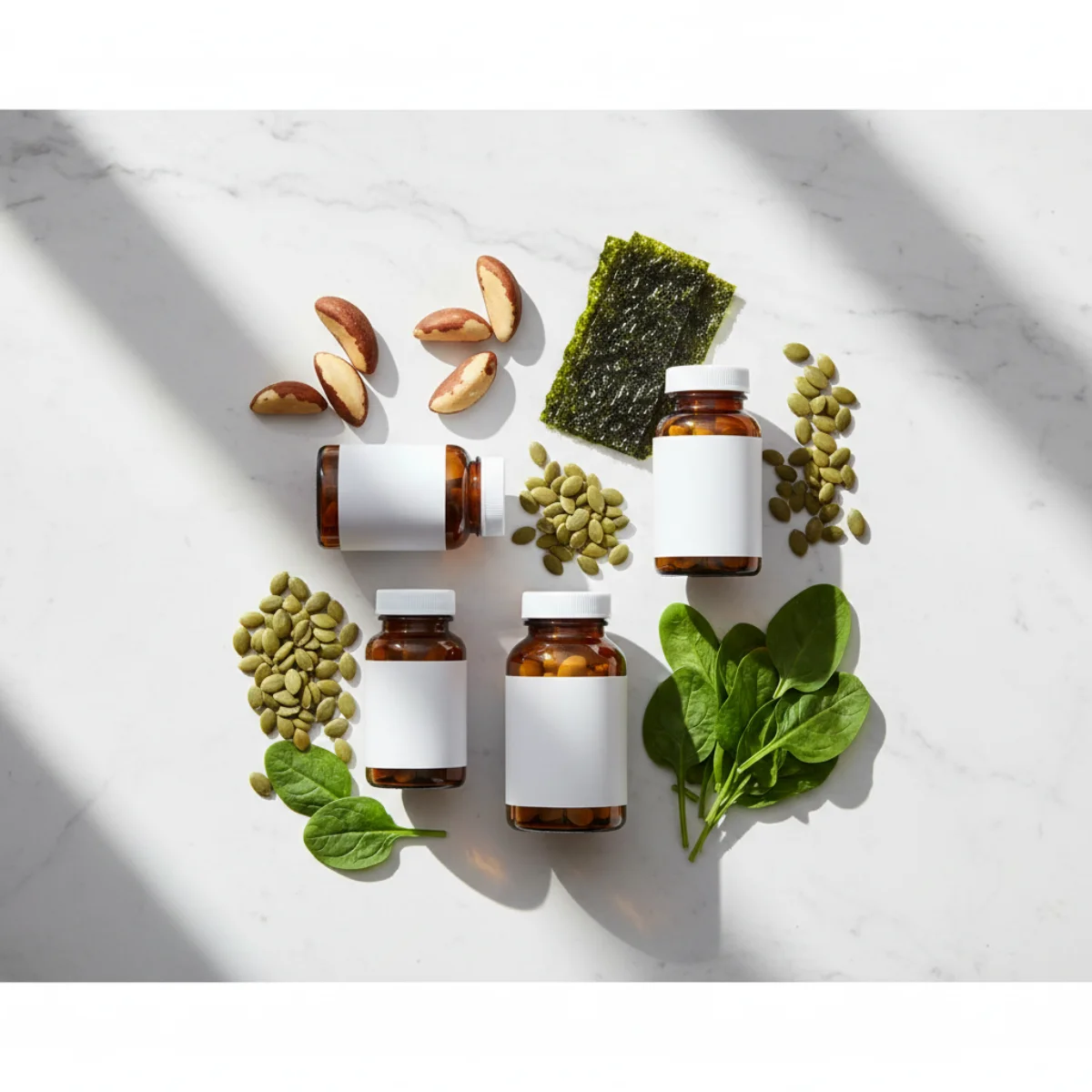
Thyroid health depends on several micronutrients, and if you're falling short of them through diet alone, a targeted supplement may help support normal thyroid function. We reviewed the most evidence-backed thyroid supplements on the market—looking at ingredient quality, clinical backing, safety, and real-world usability—to help you choose the best option for your needs. Whether you need a single nutrient or a comprehensive formula, here's what works and what to watch out for.
Scope and Methodology
We evaluated thyroid supplements based on four key criteria: clinical evidence (peer-reviewed studies showing the ingredient supports thyroid function), bioavailability and dose form (how well your body absorbs and uses the nutrient), safety and interaction risk (especially with thyroid medications), and ingredient transparency (clear labeling and third-party testing). We excluded products with underdosed or untested botanicals, proprietary blends, and formulas containing artificial additives. Our picks span single-nutrient and combination supplements to match different needs and budgets.
Best Overall: Selenium Supplement
Why it wins: Selenium is a core micronutrient for thyroid peroxidase (TPO), an enzyme essential for thyroid hormone synthesis and regulation. Most thyroid support strategies begin with adequate selenium status, and deficiency—though rare in the US—does impair thyroid function. Mechanism: Selenium is incorporated into selenoproteins, including glutathione peroxidase, which protects thyroid cells from oxidative damage and supports the conversion of T4 (inactive thyroid hormone) to T3 (active form). Typical dose: 100–200 mcg daily. Safety: Selenium is well-tolerated at these doses; excess intake (>400 mcg/day long-term) can cause selenium toxicity, characterized by hair loss, brittle nails, and neurological symptoms. Who it suits: Anyone with low selenium intake or confirmed deficiency on bloodwork, or those managing thyroid function proactively. Form: Selenomethionine (organic form) is better absorbed than selenite.
Best for Iodine Deficiency: Potassium Iodide Supplement
Why it wins: Iodine is the raw material thyroid cells need to produce thyroid hormones T3 and T4. Without adequate iodine, thyroid hormone synthesis stalls—but most people in iodized-salt regions get enough. If you're deficient (confirmed by urinary iodine test), a targeted iodine supplement can restore function quickly. Mechanism: Iodine is incorporated directly into thyroid hormone molecules. Deficiency causes the thyroid to enlarge (goiter) and slows metabolism and energy. Typical dose: 100–150 mcg daily for maintenance; higher doses under medical supervision for deficiency. Safety: More than 500 mcg/day can suppress thyroid function in susceptible people (Wolff–Chaikoff effect). High-dose iodine is also linked to iodine-induced hyperthyroidism in people with iodine-replete bodies. Who it suits: People with confirmed iodine deficiency, those avoiding iodized salt for health reasons, or vegans with minimal sea vegetable intake. Form: Potassium iodide (KI) is more stable than iodine and better absorbed.
Best for Energy and Metabolism: Zinc Supplement
Why it wins: Zinc is a cofactor for thyroid hormone receptors and is needed for converting T4 to T3. Zinc deficiency is linked to low thyroid function and sluggish metabolism. Unlike iodine and selenium, zinc status is easier to deplete with a suboptimal diet, especially in vegetarians and vegans. Mechanism: Zinc stabilizes thyroid hormone receptors on cells and supports the enzyme 5'-deiodinase, which converts inactive T4 to active T3. Typical dose: 8–11 mg daily (RDA); some formulas use 15–25 mg for borderline deficiency. Safety: Long-term intake above 40 mg/day can cause copper deficiency and immune suppression. Zinc can also interfere with some antibiotics if taken close together. Who it suits: People with low energy despite adequate sleep, vegetarians and vegans, those recovering from illness or surgery. Form: Zinc citrate or glycinate are gentler on the stomach than zinc oxide.
Best Combination Formula: Multi-Nutrient Thyroid Support
Why it wins: Thyroid function isn't driven by a single nutrient—it also depends on iron, copper, vitamin A, and B vitamins. A well-formulated combination supplement can address multiple gaps in one dose, which is especially useful if you're deficient in more than one micronutrient or prefer not to juggle multiple bottles. Mechanism: These formulas typically combine selenium, iodine, zinc, iron (often as a small amount for absorption cofactor), and B vitamins (especially B12 and folate for methylation and energy). Together, they support thyroid hormone synthesis, conversion, and cellular action. Typical dose: 1–2 capsules daily, depending on formula. Safety: Combination formulas carry slightly higher risk of overdosing a single nutrient if you're also supplementing it elsewhere or eating fortified foods heavily. Always check the label and tell your doctor what you're taking. Who it suits: People with multiple micronutrient gaps, those wanting a convenient all-in-one thyroid support regimen, or anyone with comprehensive thyroid support needs. Form: Look for formulas with transparent labeling (no proprietary blends) and third-party testing (USP, NSF, or ConsumerLab verified).
Best Budget Option: Iron Supplement
Why it wins: Iron is often overlooked in thyroid support, but deficiency directly impairs thyroid peroxidase function and reduces conversion of T4 to T3. Iron supplements are affordable, widely available, and highly effective if you're anemic or have low ferritin. Mechanism: Iron is a key cofactor for thyroid peroxidase and other enzymes involved in thyroid hormone metabolism. Low iron = sluggish thyroid, even if selenium and iodine are adequate. Typical dose: 15–18 mg daily for women; 8 mg for men (RDA); higher under medical supervision for iron-deficiency anemia. Safety: Iron can cause constipation, nausea, and dark stools at high doses. Never take more than prescribed without a hemoglobin test, since excess iron (hemochromatosis) damages organs. Iron interferes with certain medications (antibiotics, bisphosphonates) if taken simultaneously. Who it suits: Women of childbearing age (higher iron needs), people with heavy menstrual bleeding, vegetarians and vegans, those with fatigue and confirmed iron deficiency. Form: Iron bis-glycinate or iron chelate are gentler and better absorbed than ferrous sulfate.
Best for Autoimmune Thyroid: Selenium + Zinc Stack
Why it wins: If you have Hashimoto's or Graves' disease (autoimmune thyroid), your thyroid is under attack from your own immune system. Evidence is preliminary, but studies suggest selenium and zinc together may modulate immune response and reduce TPO antibodies. This is a targeted, evidence-informed combo rather than a gimmick formula. Mechanism: Selenium powers selenoproteins that reduce thyroid inflammation and oxidative stress; zinc supports immune regulation and T-cell balance. Together, they may lower the autoimmune assault on thyroid tissue. Typical dose: Selenium 100–200 mcg + zinc 15–25 mg daily. Small trials suggest this combination may reduce TPO antibody levels in Hashimoto's over 3–6 months. Safety: No major interactions between the two. Always verify your zinc and selenium status with bloodwork first, and avoid stacking if you're already taking these in a multivitamin. Who it suits: People with diagnosed autoimmune thyroid disease and confirmed micronutrient deficiency. Important note: This approach supplements but does not replace thyroid medication or immunosuppressant therapy if needed.
How We Chose
We prioritized supplements with solid clinical backing in peer-reviewed journals, formulas that match actual RDA or therapeutic doses, and products from manufacturers who invest in third-party testing. We ranked by breadth of evidence, safety profile, and real-world value—balancing potency with accessibility. Single-nutrient supplements scored high if they address a documented deficiency; combination formulas scored high if they avoid proprietary blends and include transparent dosing. We also weighted how easily each supplement stacks with medications or other supplements without interaction risk. Finally, we favored products available through major retailers or verified online sources, not obscure or unverifiable brands. Our goal is to help you find a supplement that genuinely supports your thyroid based on science, not marketing hype.